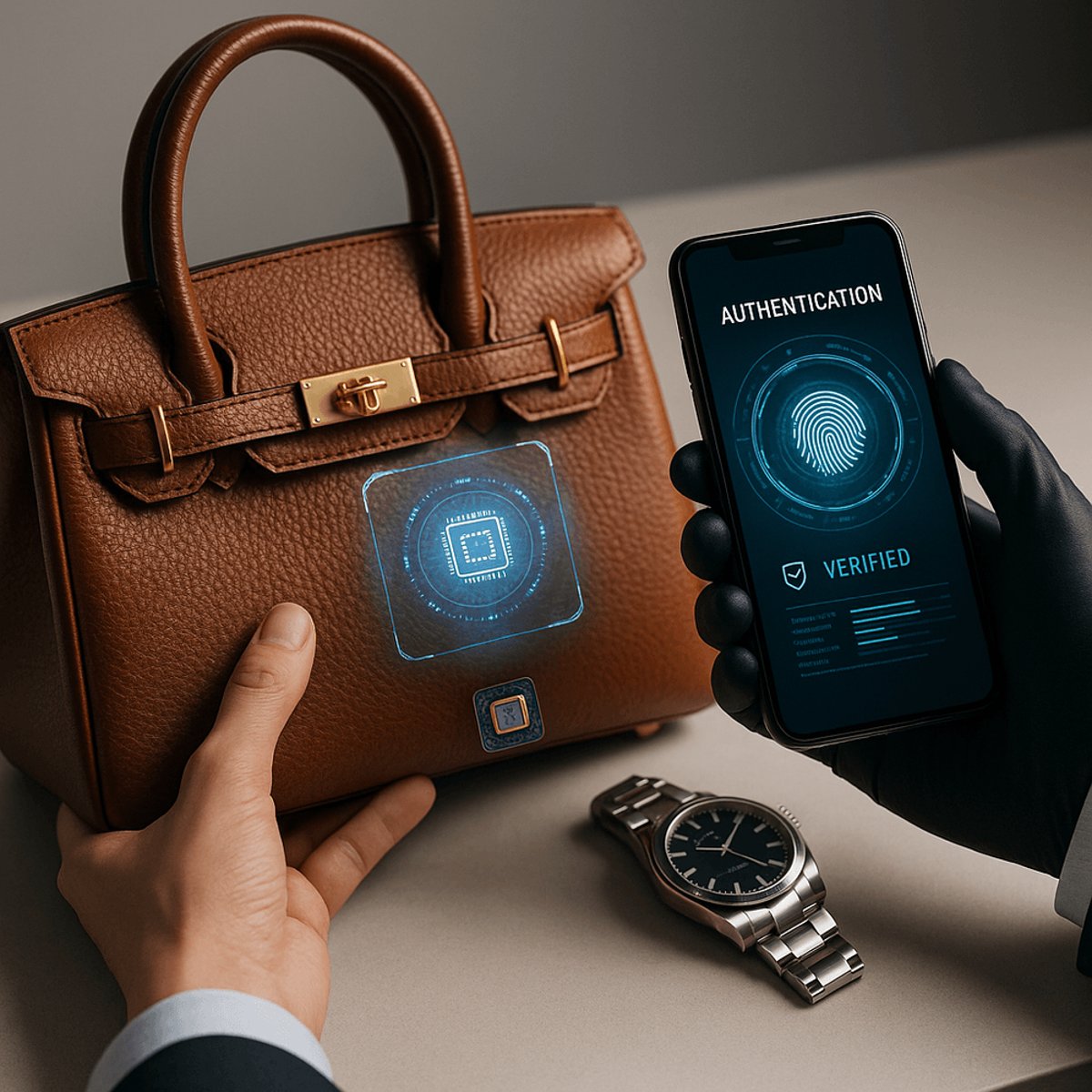
The luxury counterfeit crisis just got its first serious hardware challenger. Veritas, founded by a former Tesla product manager, is attacking the $30 billion-a-year fake goods problem with a chip-based authentication system that promises to make knockoffs impossible to replicate. With the second-hand luxury market hitting $210 billion and growing, the startup's timing couldn't be sharper - buyers have no reliable way to verify authenticity, and brands are hemorrhaging revenue to increasingly sophisticated fakes.
A former Tesla product manager is bringing automotive-grade security technology to an industry that's never had a reliable defense against fakes. Veritas just unveiled its authentication system built around custom chip technology embedded directly into luxury goods - a hardware-first approach that stands apart from blockchain certificates and serial number databases that counterfeiters routinely crack.
The numbers tell the story of why this matters now. Luxury brands are losing more than $30 billion every year to counterfeit operations that have become so sophisticated they're fooling even seasoned authentication services, according to industry estimates. Meanwhile, the second-hand luxury market has ballooned to $210 billion, driven by Gen Z and millennial buyers who want sustainable options but have zero reliable tools to verify what they're buying on resale platforms.
Veritas's founder spent years working on product authentication and supply chain security at Tesla, where counterfeit parts could literally kill someone. That same zero-tolerance mindset is now being applied to handbags and watches. The startup's system uses proprietary chip technology - details are still emerging, but the approach mirrors how automakers use tamper-proof hardware security modules to prevent vehicle theft and part cloning.
What makes this interesting isn't just the technology. It's the market timing. Platforms like The RealReal, Vestiaire Collective, and even eBay have struggled with authentication at scale. Traditional methods rely on expert inspectors examining physical characteristics that counterfeiters have learned to replicate with frightening accuracy. Veritas's chip-based system promises cryptographic verification that's physically impossible to fake - you either have the genuine chip or you don't.
The startup is backed by Seven Seven Six, the venture firm founded by Reddit co-founder Alexis Ohanian, though funding details haven't been disclosed. That connection suggests Veritas may be positioning for both B2B partnerships with luxury brands and direct-to-consumer plays in the resale authentication space.
Here's the challenge Veritas faces: convincing heritage luxury brands to embed chips in products they've been making the same way for decades. Fashion houses are notoriously protective of their design aesthetics and manufacturing processes. Any authentication chip needs to be invisible, durable enough to survive years of wear, and cheap enough not to add meaningful cost to goods that already carry luxury margins.
But the counterfeit problem has reached crisis levels. High-quality fakes now fool authentication services roughly 15-20% of the time, according to resale platform data. That uncertainty is poison for the second-hand market - buyers lose confidence, legitimate sellers get flagged incorrectly, and platforms face mounting liability.
Veritas is entering a space where others have tried and stumbled. Blockchain-based authentication startups raised millions in 2021-2022 promising to solve this exact problem with NFTs and digital certificates. Most went nowhere because they didn't address the fundamental issue: connecting a digital record to a physical object in a way counterfeiters can't replicate. A fake bag with a stolen or cloned certificate is still a fake bag.
The hardware approach sidesteps that problem but creates new ones. How do brands integrate chips into production without disrupting manufacturing? How do buyers verify authenticity - through a smartphone app? What happens when chips fail or get damaged? And most critically, what's the business model? Does Veritas charge brands per chip, take a cut of authenticated resales, or license the technology to platforms?
The Tesla connection matters here. Automotive supply chains are among the most complex and counterfeit-plagued in manufacturing. If the founder successfully tackled authentication problems at that scale, the luxury goods challenge - while culturally different - might actually be technically simpler. Cars have hundreds of high-value components that need tracking. A handbag is one discrete item.
What's clear is that doing nothing isn't an option for luxury brands anymore. The counterfeit market is growing faster than the legitimate luxury market. Young buyers who drive resale demand have no brand loyalty to authentication services that fail them. And the reputational damage from counterfeits floating through the ecosystem hurts everyone from LVMH to independent designers.
Veritas is making a bet that hardware-based authentication is the answer luxury has been waiting for. Whether brands will embrace it - and whether the technology can scale from prototype to millions of chips embedded in everything from watches to sneakers - will determine if this startup can actually crack a problem the industry has lived with for decades.
Veritas is attacking a $30 billion problem with a solution luxury brands have never seriously considered: treating handbags and watches with the same security rigor Tesla applies to vehicle components. If the technology works and brands actually adopt it, the startup could reshape both the authentication industry and the booming resale market. But hardware solutions face steep adoption curves, especially in an industry built on tradition and aesthetics. The real test isn't whether the chip works - it's whether luxury brands will let anyone put one in their products at all. For buyers navigating the $210 billion second-hand market with zero reliable authentication tools, that answer can't come fast enough.