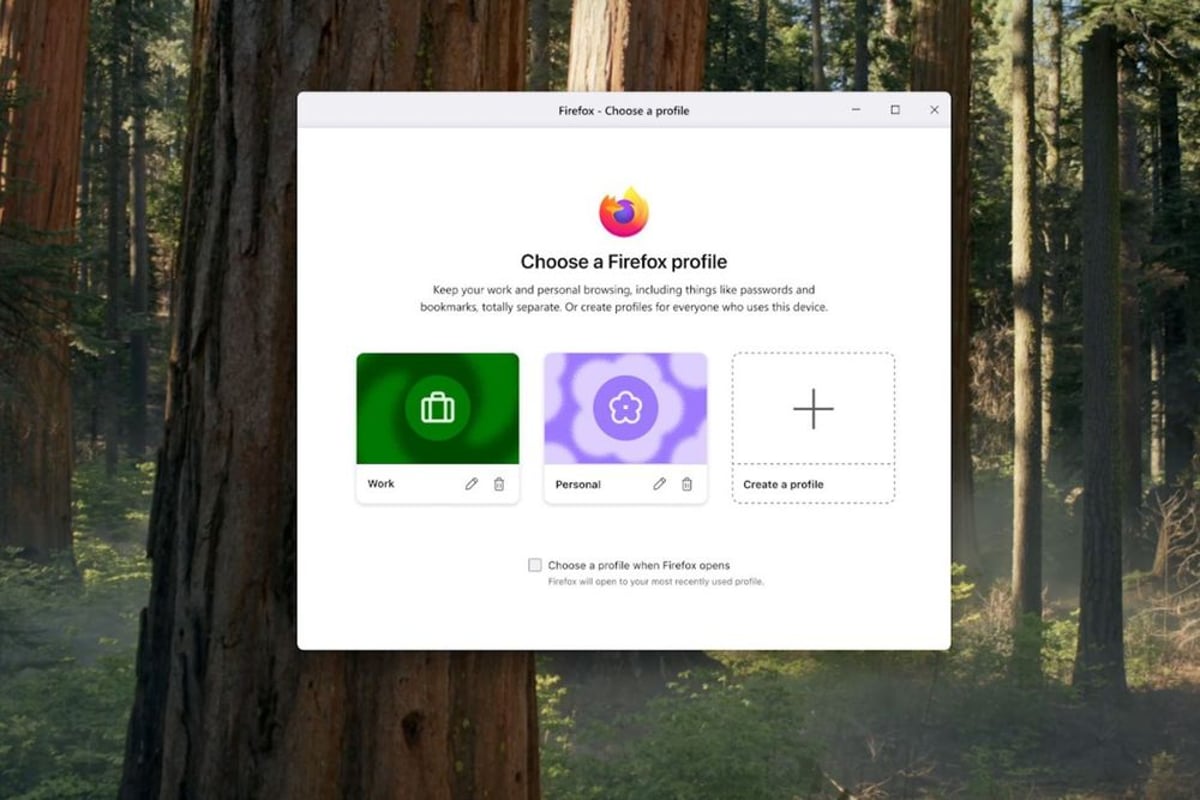
Mozilla is bringing profile management to Firefox, letting users create separate browsing environments for work, personal use, and projects. Rolling out October 14th, the feature addresses a growing need for digital organization as remote work blurs the lines between professional and personal online activity.
Mozilla just gave Firefox users something they've been quietly craving - a way to keep their work browsing completely separate from their weekend rabbit holes. The company's new profile management system launches October 14th, creating distinct browsing environments that house everything from bookmarks to browser extensions.
The timing couldn't be better. As hybrid work becomes the norm, the lines between professional and personal web browsing have gotten messy. Firefox profiles tackle this head-on by letting users create completely separate browser experiences, each with its own set of bookmarks, login credentials, browsing history, extensions, and visual themes.
"Profiles in Firefox aren't just a way to clean up your tabs. They're a way to set boundaries, protect your information, and make the internet a little calmer," Mozilla said in their announcement blog. "By keeping your different roles online neatly separate, you spend less mental energy juggling contexts and avoid awkward surprises (like your weekend plans popping up in a work presentation)."
This isn't Mozilla's first attempt at browser organization. Firefox already offers multi-account containers through an extension that separates cookies and tracking data into dedicated tabs. But profiles go much deeper, essentially creating entirely separate browser instances within one Firefox installation.
The feature puts Firefox in direct competition with Google Chrome's profile system, which has become a standard way for users to manage multiple Google accounts. But there's a key difference - Firefox profiles don't require users to create multiple accounts or provide additional email addresses. You can set up a work profile, personal profile, and side-project profile all under one Firefox installation.
Each profile can be customized with specific avatars, color schemes, and themes, making them instantly recognizable at a glance. This visual differentiation helps prevent the kind of context-switching mistakes that have become all too common in our always-online work culture.
The feature arrives as browser privacy becomes increasingly important to users. While Chrome profiles are tied to Google's ecosystem and data collection practices, Firefox profiles operate independently, maintaining Mozilla's commitment to user privacy. Each profile keeps its browsing data completely separate, creating natural barriers that prevent cross-contamination of personal and professional digital footprints.
For businesses, this could be a significant selling point. IT departments have long struggled with employees using personal browsers for work tasks, creating security and compliance headaches. Firefox profiles offer a middle ground - employees can use the same browser for everything while maintaining clear separation between work and personal activities.
The rollout represents Mozilla's continued push to differentiate Firefox in a browser market dominated by Chrome. While Firefox holds just over 3% of global browser market share according to recent data, features like this could help it carve out a niche among privacy-conscious users and remote workers who need better digital organization tools.
Mozilla hasn't detailed exactly how the profile switching interface will work, but based on their description, users will likely see a profile selector similar to Chrome's system. The real test will be whether Firefox can make the experience seamless enough to change user behavior - something even well-designed features sometimes fail to achieve.
Firefox profiles represent Mozilla's smartest move in years - addressing a real pain point that millions of hybrid workers face daily. By offering Chrome-like functionality without the Google account requirement, Mozilla positions Firefox as the privacy-conscious choice for users who want digital organization without data trade-offs. The October 14th launch will show whether good execution can help Firefox claw back market share in an increasingly competitive browser landscape.