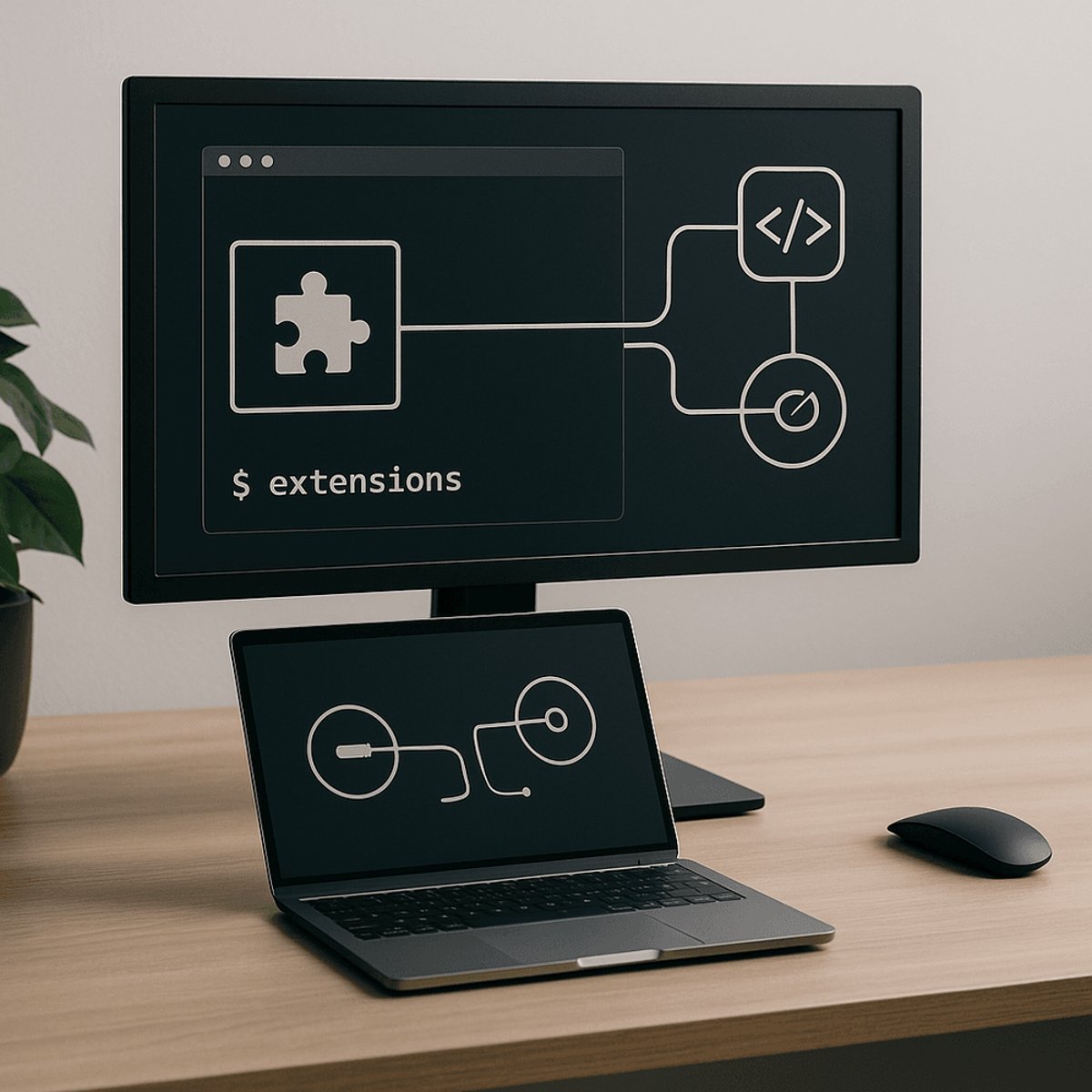
Google just cracked open its command-line AI tool to the world. The company launched Gemini CLI Extensions on Wednesday, letting any developer plug their services directly into the terminal-based coding assistant that's quietly become essential for over a million programmers.
Google just made its boldest move yet in the AI developer tools space. The search giant launched Gemini CLI Extensions on Wednesday, opening its command-line coding assistant to direct third-party integrations - and it's taking a radically different approach than the competition.
While OpenAI keeps tight control over which apps can access ChatGPT, Google is going full open-source. Any developer can publish Gemini CLI extensions through public GitHub repositories, no approval process required. "Available extensions will be hosted in public repositories on Github and installed manually by developers," according to the announcement.
The timing isn't coincidental. Google's launch comes just 48 hours after OpenAI's ChatGPT app rollout, marking another front in the escalating AI platform wars. But where ChatGPT maintains a curated ecosystem, Google is betting on developer freedom.
"That open ecosystem is vital to us," Taylor Mullen, a senior staff engineer on the project, told TechCrunch. "Everything we're doing is grounded in a fair ecosystem that anyone can participate in."
The initial launch partners reveal Google's strategy. Figma and Stripe extensions are already live, targeting the design-to-development workflow that's become crucial for modern software teams. Google even dogfooded its own system with a Nanobanana image generator extension, posted to GitHub last week.
Behind the scenes, Gemini CLI has been quietly building momentum since its June launch. The tool now serves over one million users, with usage heavily concentrated among software developers. More telling: Google uses Gemini CLI extensively for maintaining its own codebase, with product managers closely monitoring its performance in real production environments.
"The purpose of the new feature was to turn Gemini CLI into an extensibility platform, a conduit to other tools and instructions that come from elsewhere in your tool chain," Ryan J. Salva, Google's senior director of product management for developer tools, explained to TechCrunch.
This represents a fundamental shift in how AI coding assistants operate. Instead of being standalone tools, they're becoming integration hubs that connect disparate parts of the development workflow. When a developer can generate images, process payments, or sync designs without leaving their terminal, the productivity gains compound rapidly.
The open publishing model also creates interesting competitive dynamics. While Microsoft's GitHub Copilot remains the dominant AI coding assistant, it lacks this kind of extensibility. Google's approach could attract developers who want to customize their AI workflows without waiting for official partnerships.
For enterprise teams, the implications are significant. Internal tools can be wrapped as Gemini CLI extensions, creating AI-powered interfaces to proprietary systems. The manual installation process, while more complex than an app store, gives IT departments the control they need over which extensions get deployed.
The broader tech industry is watching how this open vs. closed debate plays out. OpenAI's curated approach ensures quality but limits innovation. Google's anything-goes model could spark more creative integrations while potentially creating security headaches.
Google's extension strategy for Gemini CLI represents more than just a feature launch - it's a fundamental bet on open ecosystems in AI development. By choosing radical openness over curation, Google is positioning itself as the platform for developers who want to build custom AI workflows without gatekeepers. Whether this approach can compete with more controlled environments like ChatGPT will depend on how quickly the developer community embraces the possibilities - and how well Google can manage the inevitable security and quality challenges that come with open publishing.