Ford just made a surprising move in the EV wars by embedding Apple Maps directly into its upcoming Universal Electric Vehicle Platform. The integration, announced Thursday, will debut in a $30,000 midsize pickup truck hitting roads in 2027. Unlike CarPlay's screen-mirroring approach, this marks the first time Apple's mapping software runs natively in Ford vehicles without requiring an iPhone. The partnership signals a shift in how tech giants and automakers collaborate on in-car experiences.
Ford is taking a different approach to in-car navigation by baking Apple Maps directly into its next-generation electric vehicles. According to an announcement from Apple on Thursday, the automaker will integrate Apple's mapping technology into its Universal Electric Vehicle Platform, which launches in 2027 with an affordable midsize pickup truck priced around $30,000.
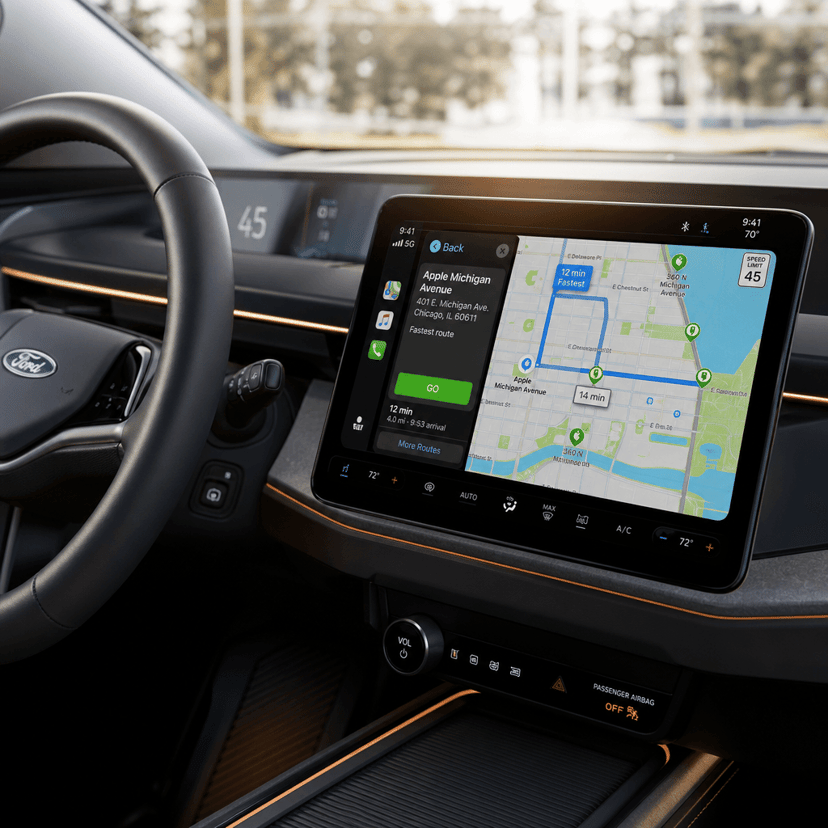
The partnership goes beyond the typical CarPlay integration most drivers know today. Instead of mirroring an iPhone's screen, Apple Maps will run natively on Ford's vehicle systems. Drivers get turn-by-turn directions using natural language, real-time traffic and incident information, intuitive search with detailed place cards, and multiple routing options - all without plugging in their phone. CarPlay will still be available for those who want it, but the native integration means the core navigation experience lives in the vehicle itself.
For EV drivers, Ford is adding intelligent routing features that account for battery range and charging infrastructure. The system will automatically plan routes that include charging stops when needed, and it'll precondition the battery to optimize charging speeds when approaching a station. These aren't groundbreaking features on their own - Tesla has offered similar trip planning for years - but the Apple Maps integration brings a familiar interface to drivers already embedded in Apple's ecosystem.
The announcement also revealed that Ford's updated BlueCruise hands-free driving system will leverage Apple Maps data. While Ford didn't share technical specifics, the integration suggests BlueCruise will tap into Apple's real-time traffic information and road condition data to make smarter decisions about when and where to engage autonomous features.
This partnership represents a subtle but significant shift in the automotive software landscape. For years, Apple and Google have relied on CarPlay and Android Auto to get their software into vehicles without directly integrating with automaker systems. That approach kept tech companies at arm's length from vehicle architecture, limiting what they could do with deeper vehicle data like battery status, charging networks, and driver assistance features.
Ford's decision to embed Apple Maps natively gives Apple a foothold it hasn't had before. It's a calculated risk for Ford, which has struggled to differentiate its EV software experience from competitors. The automaker previously invested heavily in its own Sync infotainment system, but partnering with Apple lets Ford offload mapping responsibilities while focusing on vehicle-specific features like BlueCruise and battery management.
The $30,000 price point matters here too. Ford is explicitly targeting mainstream buyers with this pickup truck, not luxury early adopters. By including Apple Maps as a standard feature rather than requiring a connected iPhone, Ford removes a potential barrier for buyers who might not be deep in the Apple ecosystem but still want a modern, easy-to-use navigation system.
Competitors are watching closely. General Motors famously announced plans to phase out CarPlay and Android Auto in favor of its own Google-powered system, betting that tighter integration would deliver better experiences. Tesla continues to go it alone with proprietary software. Ford's approach - partnering with Apple for native integration while keeping CarPlay available - threads a middle path that could appeal to a broader customer base.
The timing aligns with Ford's broader EV strategy reset. After losing billions on electric vehicles and delaying several launches, the company refocused on affordable models that could actually turn a profit. This Universal Electric Vehicle Platform represents Ford's bet on cost-effective EVs that don't sacrifice software experience. Partnering with Apple for navigation lets Ford deliver a premium feature without building it from scratch.
What remains unclear is how deep this partnership goes beyond mapping. Will Apple gain access to vehicle telemetry data? Could this integration expand to other Apple services like Music or Podcasts running natively? Ford's announcement was light on those details, suggesting this is a targeted partnership focused specifically on navigation rather than a wholesale handoff of the infotainment system to Apple.
For Apple, this represents a tangible step forward in its long-rumored automotive ambitions. After reportedly shelving plans for an Apple-branded car, the company seems focused on embedding its software more deeply into existing vehicles. Native Apple Maps integration in Ford's affordable EV platform could serve as a proof point for other automakers considering similar partnerships.
Ford's decision to natively embed Apple Maps in its Universal EV Platform signals a pragmatic shift in automotive software strategy. By partnering with Apple for navigation while keeping CarPlay available, Ford threads a middle path between full proprietary control and complete reliance on phone-mirroring. The real test comes in 2027 when that $30,000 pickup hits dealerships - if the native Apple Maps experience proves seamless and the EV routing features actually work as promised, other automakers may follow Ford's lead. For now, this partnership gives Ford a software differentiator without the development costs, and it gives Apple a deeper foothold in vehicles without building its own car.