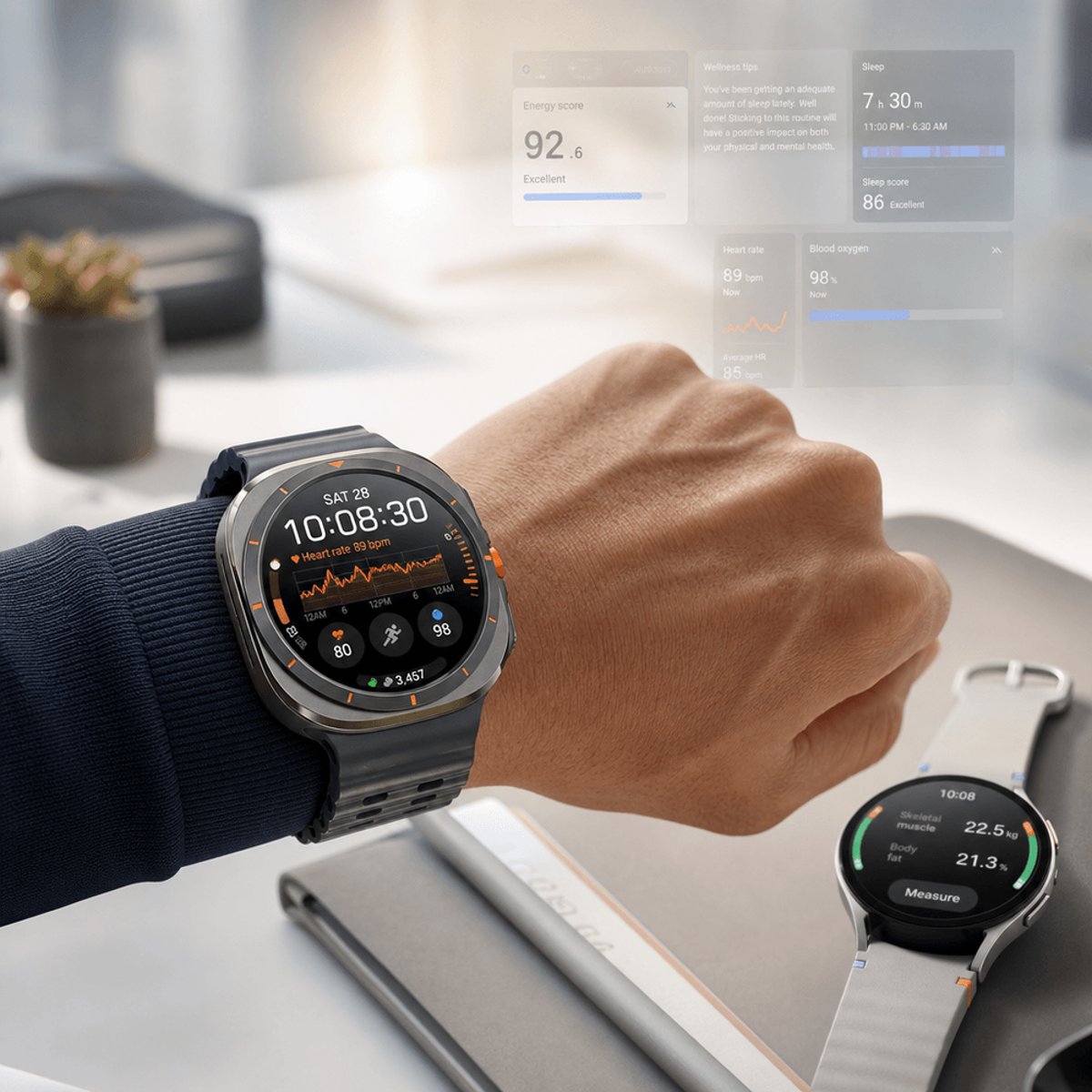
Samsung just dropped its most ambitious wearables yet. The Galaxy Watch Ultra2 and Watch9 arrive with the world's first 5,000-nit smartwatch display, an 800mAh battery that's 35% larger than the previous Ultra model, and Qualcomm's new Snapdragon Wear Elite platform. But the real story is what's happening beneath the surface - FDA-cleared AI algorithms that turn continuous biometric data into proactive health alerts, from sleep apnea detection to cardiovascular wellness scores. Pre-orders start July 22, with general availability on August 7.
Samsung is making a serious play for the health-focused wearables market. The company's new Galaxy Watch Ultra2 and Watch9, announced today, pack hardware specs that put them at the front of the smartwatch pack - but it's the AI-powered health intelligence that Samsung's betting will set these devices apart.
The Ultra2 comes with an 800mAh battery, representing a 35% capacity jump over last year's model. That's massive in a category where battery life often determines whether people actually wear these things 24/7. And 24/7 wear is exactly what Samsung's betting on, because the company's AI health features need continuous data to work their magic.
"We want to make the shift from reactive treatment to proactive care as seamless as possible," TM Roh, Samsung's President and Head of Mobile Experience, said in the announcement. "By continuously tracking health data from the wrist, these new watches act as a vigilant health companion, turning daily vital signs into proactive, actionable insights."
The display tech is equally impressive. Samsung's claiming the world's first 5,000-nit smartwatch screen on the Ultra2, with the Watch9 hitting 3,000 nits. For context, that's bright enough to read in direct sunlight during outdoor activities - critical for the trail runners and divers Samsung's targeting with the Ultra2.
Speaking of diving, the Ultra2 gets EN13319 certification, making it legitimate professional dive equipment. The watch automatically tracks depth, time, and water temperature when you enter the water. Later this year, an exclusive diving app developed with Mares, the diving equipment manufacturer, will add ascent/descent speed tracking and safe dive limits. Those features will be exclusive to the Ultra2 for two years on Wear OS devices.
But the hardware's just the foundation. Samsung's real pitch centers on AI-driven health insights that go beyond simple step counting and heart rate monitoring. The company's secured new FDA clearance for enhanced sleep apnea detection, using AI algorithms to analyze breathing disruptions during sleep. The feature requires just two nights of data within a 10-day window.
The Vitals feature monitors your personal health baseline during sleep and alerts you when key metrics - heart rate, respiratory rate, skin temperature, blood oxygen, and sleep patterns - deviate significantly from your norm. It needs at least seven nights of data to establish that baseline, which is where the improved battery life becomes crucial.
Heart Health Score distills complex cardiovascular data into a simple, actionable score with personalized recommendations. Daily Cardio Load helps athletes optimize training by tracking workout volume and estimating recovery needs. Fitness Index delivers a holistic view of physical fitness with personalized improvement goals.
All of this runs on Qualcomm's new Snapdragon Wear Elite platform, built on a 3nm process. That's a significant efficiency gain that enables the AI processing to happen on-device without destroying battery life. The chip delivers what Samsung's calling "lag-free, seamless health monitoring" with dual-frequency GPS tracking for improved accuracy.
The Ultra2 keeps its titanium casing for durability but gets 12% thinner despite the larger battery - a engineering achievement that required significant internal redesign. It's still rated IP69K, 10 ATM, and MIL-STD-810H, meaning it can handle extreme temperatures from -20°C to 55°C, high-pressure water jets, dust, and drops.
The Watch9 takes a different approach, targeting everyday wellness rather than extreme sports. It features a lightweight aluminum casing with Samsung's signature cushion silhouette, refined for a closer wrist fit. The 40mm model packs a 390mAh battery, while the 44mm version gets 445mAh. Both deliver the same AI health features as the Ultra2.
Samsung's launching an extensive band collection across both models. The Ultra2 gets Marine Band (lighter silicone for extreme conditions), PeakForm Band (hybrid material for elegance and performance), and Trail Band (fabric for breathability during running). The Watch9 offers Sports Band, Misty Band (premium soft silicone with two-tone colors), and Fabric Band for maximum comfort during sleep.
The watches come with subscription trial perks: 60 days of Strava (available worldwide except restricted markets) and two months of iFIT (available in 23 markets including the US, UK, and major European countries). Both services integrate directly with the watch for workout tracking.
Samsung Care+ extends protection with fast repairs for accidental damage, extended warranty coverage, and global expert support. Galaxy mobile users running One UI 9 can manage their Care+ plan from a new Warranty and Care settings hub that consolidates diagnostics, repair requests, and support access.
Pricing wasn't disclosed in the announcement, but pre-orders start July 22 with general availability on August 7. The Ultra2 comes in 47mm size with Titanium Silver or Titanium Gray finishes. The Watch9 ships in 40mm (Cream and Graphite) and 44mm (Graphite and Silver) variants.
This launch extends Samsung's Galaxy ecosystem play, connecting wearables to phones and home devices through shared AI capabilities. The company's betting that continuous health monitoring - made possible by better batteries, brighter displays, and on-device AI - will drive adoption beyond fitness enthusiasts to mainstream wellness-conscious consumers.
Whether that bet pays off depends on execution. The hardware looks solid, but Samsung's facing stiff competition from Apple, which continues to dominate premium smartwatches, and a growing field of specialized fitness wearables. The AI health features could be a differentiator if they deliver genuinely useful insights rather than just more data. We'll know soon enough - the watches hit shelves in about two weeks.
Samsung's new Galaxy Watch lineup represents a clear strategic bet on AI-powered preventive health care. The combination of industry-leading display brightness, significantly improved battery capacity, and FDA-cleared health algorithms positions these devices as serious health companions rather than just fitness trackers. The Ultra2's professional diving capabilities and extreme durability target a specific high-performance segment, while the Watch9's comfort-focused design aims for mainstream wellness adoption. Whether Samsung can convert impressive specs into sustained wearability and genuinely useful health insights will determine if these watches break through in a crowded market dominated by Apple. With pre-orders starting July 22 and availability on August 7, we won't have to wait long to see if consumers buy into Samsung's vision of proactive, AI-driven health monitoring.