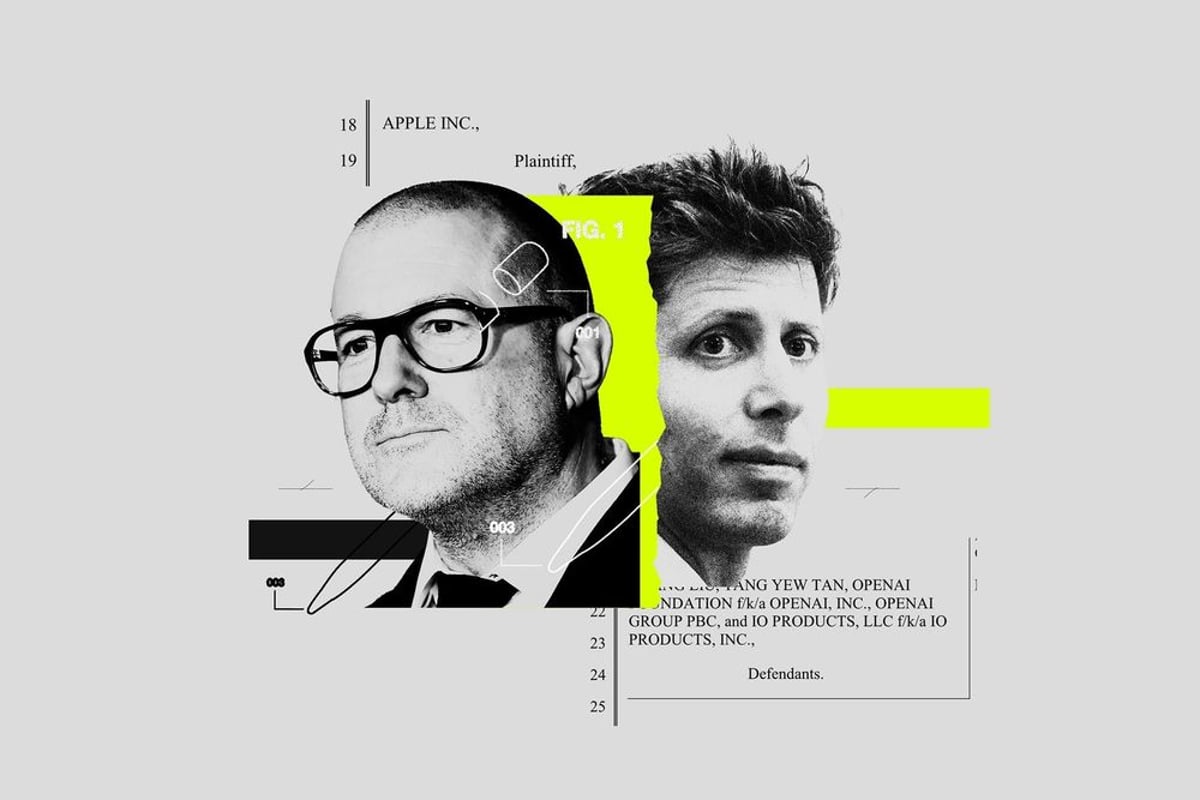
Apple just fired a legal warning shot that could reshape the entire AI industry. In an explosive trade secrets lawsuit against OpenAI, the iPhone maker alleges systematic theft of hardware manufacturing secrets during job interviews - including requests to bring confidential prototypes outside Apple's offices for "show and tell" sessions. The timing couldn't be worse for OpenAI, which faces a pre-IPO profitability crisis, executive exodus, and growing public backlash against AI.
Apple vs. OpenAI isn't just another Silicon Valley legal skirmish. It's a battle over who gets to define what comes after the smartphone - and whether OpenAI can survive long enough to find out.
The allegations are striking. According to Apple's complaint, Tang Tan, OpenAI's chief hardware officer and a 24-year Apple veteran, allegedly orchestrated a systematic campaign to extract trade secrets. During job interviews, he reportedly asked candidates about code-named Apple projects and requested they bring confidential hardware components outside Apple's campus. One message allegedly showed an employee accessing Apple's confidential systems with the note: "LOL! So funny that I can access this."
"I wrote a piece titled 'Sam Altman didn't need another lawsuit,' and that's really the situation here," The Verge's senior AI reporter Hayden Field told the Decoder podcast. "It seems pretty egregious from some of the claims that Apple is making."
But here's the twist - legal experts Field interviewed said they've seen all of this before. "They haven't seen all of it in one case with two key players," she explained. The real shock isn't the behavior, it's that it's happening between two companies fighting to control the next computing platform.
Apple has form here. In the '90s, they pushed copyright law to the limit suing Microsoft over Windows. In the 2000s, they spent years in patent battles with Samsung over Android phones, eventually extracting about $1 billion in damages. Now they're pivoting to trade secrets - the third pillar of intellectual property law.
The difference? Samsung could afford to pay $1 billion and keep building Galaxy phones. Microsoft weathered the legal storm and shipped Windows anyway. OpenAI is not that kind of company.
"They're already having a really tough year. They're about to IPO, all the investors are looking at their bottom line, wondering when they're going to turn a profit," Field said. "It's a tough time to be shelling out a ton of money to Apple."
The lawsuit's central character is Tang Tan, who Bloomberg's Mark Gurman reports had a reputation at Apple for "playing fast and loose." After leaving Apple in 2024, he joined Jony Ive's hardware startup io Products - which OpenAI acquired for $6.5 billion in 2025.
Jony Ive himself remains conspicuously absent from Apple's complaint. The legendary designer who created the iPhone, iPod, and MacBook isn't named despite now leading OpenAI's hardware ambitions. "I think it may be more that he knew how to cover his tracks," Field speculated. "When you're in a powerful enough role, you don't have to do all this stuff yourself."
Ive and OpenAI CEO Sam Altman made waves earlier this year with a video that critics called a "romantic coffee date," in which they described phones and laptops as "legacy devices." They shut down half of San Francisco to film it. The message was clear: OpenAI plans to replace the iPhone.
But with what? That's the trillion-dollar question OpenAI can't seem to answer. The company reportedly has five hardware devices in development, starting with a screenless smart speaker. Field is skeptical. "I've only been on the AI beat for six years. That is a long time in AI, and maybe I'm missing something, but I just do not see a market when everyone is buying an OpenAI hardware device."
The challenge runs deeper than product-market fit. OpenAI has pivoted repeatedly - from consumer AI champion to enterprise software to coding tools and back again. It shut down Sora, folded Atlas, and killed its sexting feature. "They've done a lot of this," Field noted. With hardware, you can't pivot. You'd better get it right the first time.
Meanwhile, consumer sentiment toward AI has curdled. College students are booing AI CEOs at graduations. The Wall Street Journal reported AI executives now face death threats. "When I became an AI reporter six years ago, none of my friends really knew or cared what I wrote about," Field said. "Starting four years ago, it would come up at the bar, at the club. Just randomly, this is coming up for people and making them extremely emotional."
The lawsuit also exposes a deeper irony: the AI industry is built on unauthorized taking. From training data scraped without permission to Suno admitting it scraped YouTube's music library, AI companies have operated on a "take first, ask permission never" model. Now Apple is saying OpenAI did the same thing with hardware secrets.
"It's really ironic that this whole industry is only possible because of the amount of data it's consumed, whether aboveboard or not," Field observed. "And AI labs get so litigious when others take that information elsewhere."
AI companies unite in fury when Chinese competitors distill their models, yet show no recognition that artists and musicians feel the exact same way about their work being fed into training datasets. "I haven't seen any of them even acknowledge that or at least even hint toward it one time, which is crazy," Field said.
For OpenAI, the timing is catastrophic. The company already delayed its IPO after rival Anthropic filed first. Executive turnover continues - Fidji Simo stepped down as AGI chief, leaving president Greg Brockman essentially running the company solo.
"This is the IPO year. Things are coming to a head," Field said. "They cannot afford a distraction right now."
But Apple can. The company spent $10 billion on a car project that went nowhere and nobody noticed because they kept shipping iPhones. Apple can hire an army of lawyers and set them loose for years. "Apple is a notoriously tenacious litigant," Field emphasized. "They really will take things far. They have a lot of money and they're willing to use it."
The fundamental question is whether OpenAI should be in the consumer hardware business at all. Enterprise AI has proven lucrative for Anthropic. But OpenAI keeps chasing the consumer dream even as Anthropic capitalized on privacy fears with Super Bowl ads dunking on ChatGPT.
"If it was just a logical gap - some people logically think it's not good, some people logically think it is good - I think they could probably close that," Field said. "But when emotions come into play, no, I don't think that they will be able to fully bridge that gap."
Apple's lawsuit against OpenAI is about more than stolen trade secrets. It's a stress test for whether the AI industry's "move fast and take things" model can survive contact with a company that spent decades perfecting the art of strategic litigation. OpenAI faces a choice: settle quickly and delay the IPO, or fight for years while burning through cash it doesn't have. Either way, the company's consumer hardware dreams just got a lot more complicated. As public sentiment turns against AI and executives flee, OpenAI might have to accept what Anthropic already figured out - enterprise is where the money is, and consumer AI can wait.