Ford is bringing back veteran engineers after a costly experiment with artificial intelligence fell short of expectations. The Detroit automaker admitted it made a critical mistake believing AI could replace decades of hands-on engineering expertise, marking one of the most candid acknowledgments yet of AI's limitations in traditional manufacturing. The move signals a broader reckoning in the auto industry about the real-world capabilities of automation versus human experience.
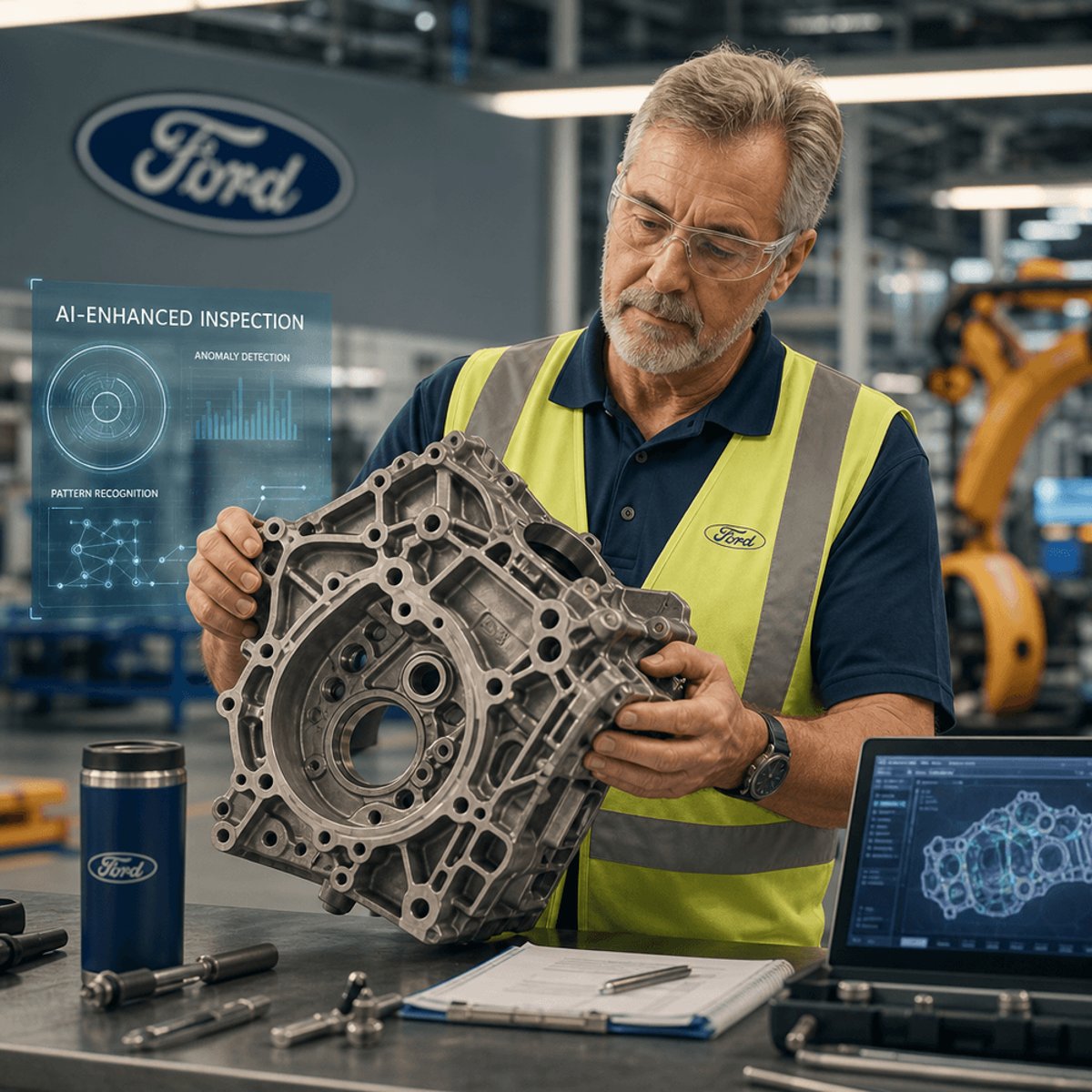
Ford just did something almost unheard of in corporate America - it admitted it was wrong about AI. The automaker is actively rehiring veteran engineers it previously let go, after discovering that artificial intelligence couldn't replicate the intuition and problem-solving skills that come from decades in the industry.
"Mistakenly we thought that by just introducing artificial intelligence that would produce a high-quality product," a Ford representative acknowledged in a statement reported by TechCrunch. It's a rare moment of transparency in an industry that's been racing headlong into automation.
The confession reveals a fundamental miscalculation that's playing out across manufacturing sectors. While Tesla and other competitors have successfully integrated AI into production lines, Ford's experience shows that wholesale replacement of human expertise with algorithms remains a bridge too far. The so-called "gray beard" engineers - industry veterans with deep institutional knowledge - weren't just doing tasks that could be automated. They were solving problems AI couldn't even recognize.
Ford's AI push was part of a broader industry trend that accelerated during the pandemic, when companies looked to reduce headcount and boost efficiency through automation. But the quality issues that emerged tell a different story. When AI systems encountered edge cases or manufacturing anomalies that fell outside their training data, they lacked the contextual understanding to adapt. Experienced engineers, by contrast, could draw on years of troubleshooting to identify root causes and implement fixes on the fly.
The timing is particularly striking. Just as companies like OpenAI and Google tout increasingly capable AI models, Ford's walk-back underscores the gap between general-purpose AI performance and specialized manufacturing needs. While large language models excel at pattern recognition and data processing, they struggle with the tactile, intuitive knowledge that defines expert craftsmanship.
Industry analysts say Ford's experience mirrors challenges across manufacturing. "You can teach AI to spot defects, but you can't teach it 30 years of knowing how a engine should sound or feel," one automotive consultant noted. That institutional knowledge - passed down through apprenticeships and hands-on experience - doesn't translate easily into training datasets.
The rehiring effort also raises questions about workforce planning in the age of AI. Ford isn't alone in discovering that letting experienced workers go creates knowledge gaps that are difficult and expensive to fill. Other automakers are watching closely, with some reportedly pausing similar AI-first initiatives until Ford's experience is better understood.
What makes this story particularly significant is Ford's willingness to admit the mistake publicly. In an era when companies routinely oversell AI capabilities, the automaker's candor offers a reality check. It suggests that successful AI integration requires augmenting human expertise rather than replacing it - a lesson that extends far beyond the factory floor.
The move could also reshape how manufacturers approach the skills gap. Instead of viewing veteran engineers as legacy costs to be automated away, Ford's reversal positions them as irreplaceable assets whose knowledge should be preserved and paired with AI tools. That's a fundamentally different strategy than the one that led to the current situation.
For the engineers being rehired, it's a moment of vindication. Many had warned that AI systems lacked the nuance needed for quality control and complex problem-solving. Now they're returning to fix the issues that emerged in their absence, though it remains unclear whether they're coming back at the same compensation levels or with guarantees against future AI-driven layoffs.
Ford's about-face on AI-driven manufacturing offers a critical lesson for an industry drunk on automation promises. The reality is that AI works best when it enhances human expertise rather than replaces it. As other manufacturers digest Ford's experience, expect a shift toward hybrid approaches that pair algorithmic efficiency with irreplaceable human judgment. The gray beards aren't going anywhere - and that might be exactly what the industry needs.