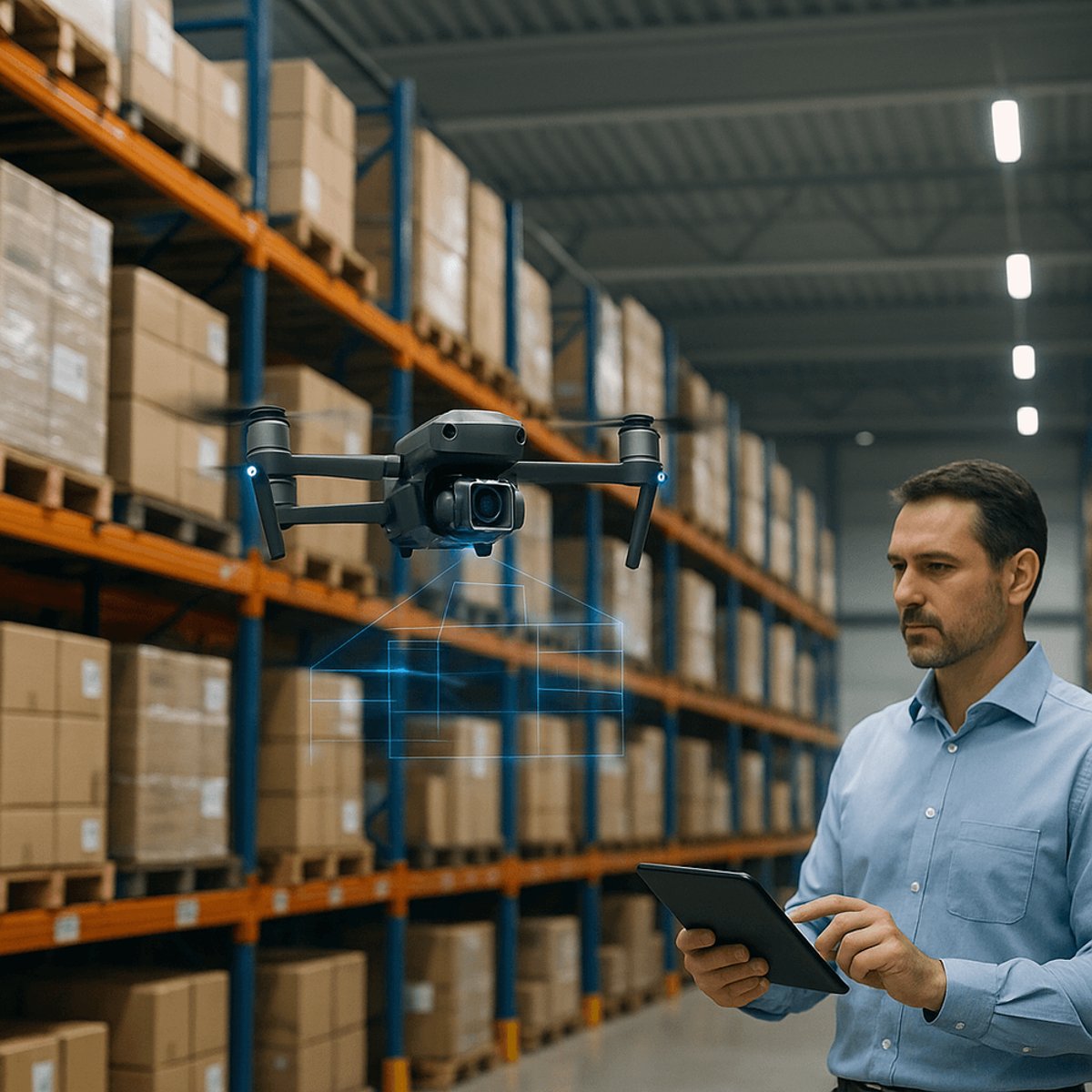
Gather AI just closed a $40 million Series B led by Smith Point Capital, the VC firm founded by former Salesforce co-CEO Keith Block. The Pittsburgh-based startup isn't building typical warehouse drones - its AI-powered cameras and flying robots actively seek out specific inventory data, predict stockouts, and flag safety issues before they happen. With this round, the company has raised $74 million total and is betting that "curious" robots represent the future of warehouse automation.
Gather AI just scored a major vote of confidence from Silicon Valley's logistics elite. The warehouse robotics startup closed a $40 million Series B led by Smith Point Capital, the firm founded by Keith Block after his stint as co-CEO of Salesforce. The deal marks Block's biggest bet yet on the convergence of AI and physical automation.
The connection happened fast. Gather's team met Smith Point at a logistics conference a year ago, and "it took Keith and his team five minutes to get what we're doing," co-founder and CEO Sankalp Arora told TechCrunch. That instant chemistry isn't surprising - Block sits on the board of trustees at Carnegie Mellon University, where Gather's four founders met as PhD students building one of the first autonomous helicopters.
What makes Gather AI different from the pack of warehouse automation startups flooding the market? Its drones don't just scan randomly. They hunt. The company's AI platform turns off-the-shelf cameras mounted on forklifts and commercial drones into what Arora calls "curious" robots that actively seek out specific data points. Barcodes, lot codes, expiration dates, case counts, damages, occupancy rates - the system tracks everything warehouse managers need to know, logging findings directly into existing warehouse management systems.
"My PhD work focused on how to make different kinds of flying robots curious," Arora explained to TechCrunch. "So they're curious about boxes and bar codes and workflows." That academic foundation translates into real-world value: the drones predict inventory shortages, spot misplaced stock, and flag workflow patterns that could create safety hazards. They even operate in frozen storage and other environments where human workers struggle.
Here's where it gets technically interesting. Gather AI built its core technology years before ChatGPT made large language models the default approach to AI. Instead of neural networks that might hallucinate phantom inventory, the startup relies on classical Bayesian techniques combined with targeted neural networks. "They're not end-to-end neural networks," Arora said. "They are classical Bayesian techniques, combined with neural networks."
That old-school approach sidesteps the hallucination problems plaguing LLM-based systems. Bayesian AI uses probability-based methods to interpret visual data, learning from prior knowledge to make decisions about what to investigate next. The robots literally "get curious" - gathering information (hence the company name) and deciding their next move based on what they've discovered. No guessing, no making up data that doesn't exist.
But don't mistake old-school math for old-school thinking. Gather AI is actually riding the bleeding edge of what researchers call "embodied AI" - robots that interact with the physical world rather than just processing text or images on screens. The startup won the 2025 Nebius Robotics award for Vision AI and Streaming Video Analytics in December, beating out competitors chasing the same physical-world AI opportunity.
The customer list suggests enterprise buyers are ready for this approach. Kwik Trip, Axon, GEODIS, and NFI Industries are already deploying Gather's drones across their warehouse operations. The startup now employs about 60 people, according to Arora, and has raised $74 million total since launching in 2017. Other investors in this round include returning backers Bain Capital Ventures, XRC Ventures, and Hillman Investments.
Block's involvement signals something bigger than just another robotics investment. As enterprises rush to deploy AI, the gap between digital intelligence and physical operations remains massive. Warehouse automation represents one of the clearest paths to bridging that divide - and one where the technology actually works today, not in some hypothetical future.
The timing couldn't be better for Gather AI. Supply chain disruptions over the past few years exposed how little visibility most companies have into their own warehouse operations. Manual inventory checks are slow, expensive, and error-prone. Ground-based robots can't reach high shelves. Fixed cameras miss too much. Drones that fly random patterns waste time and battery life. A system that actively hunts for the data that matters? That's the kind of practical AI application that gets former Salesforce executives writing checks.
What happens when you combine Carnegie Mellon robotics expertise, battle-tested Bayesian AI, and Keith Block's enterprise software playbook? We're about to find out. The $40 million gives Gather AI runway to expand beyond its current customer base and prove that curious robots can crack the warehouse automation market where so many others have stumbled.
Gather AI's $40 million Series B validates a contrarian bet: that classical AI techniques combined with physical robotics can solve warehouse operations better than the latest LLMs. With Keith Block's enterprise credibility and a technology that actually works in freezers and on factory floors today, the startup is positioning itself as the bridge between digital intelligence and physical logistics. As embodied AI moves from research labs to real warehouses, Gather's curious drones might just represent the pragmatic path forward - one barcode and expiration date at a time.