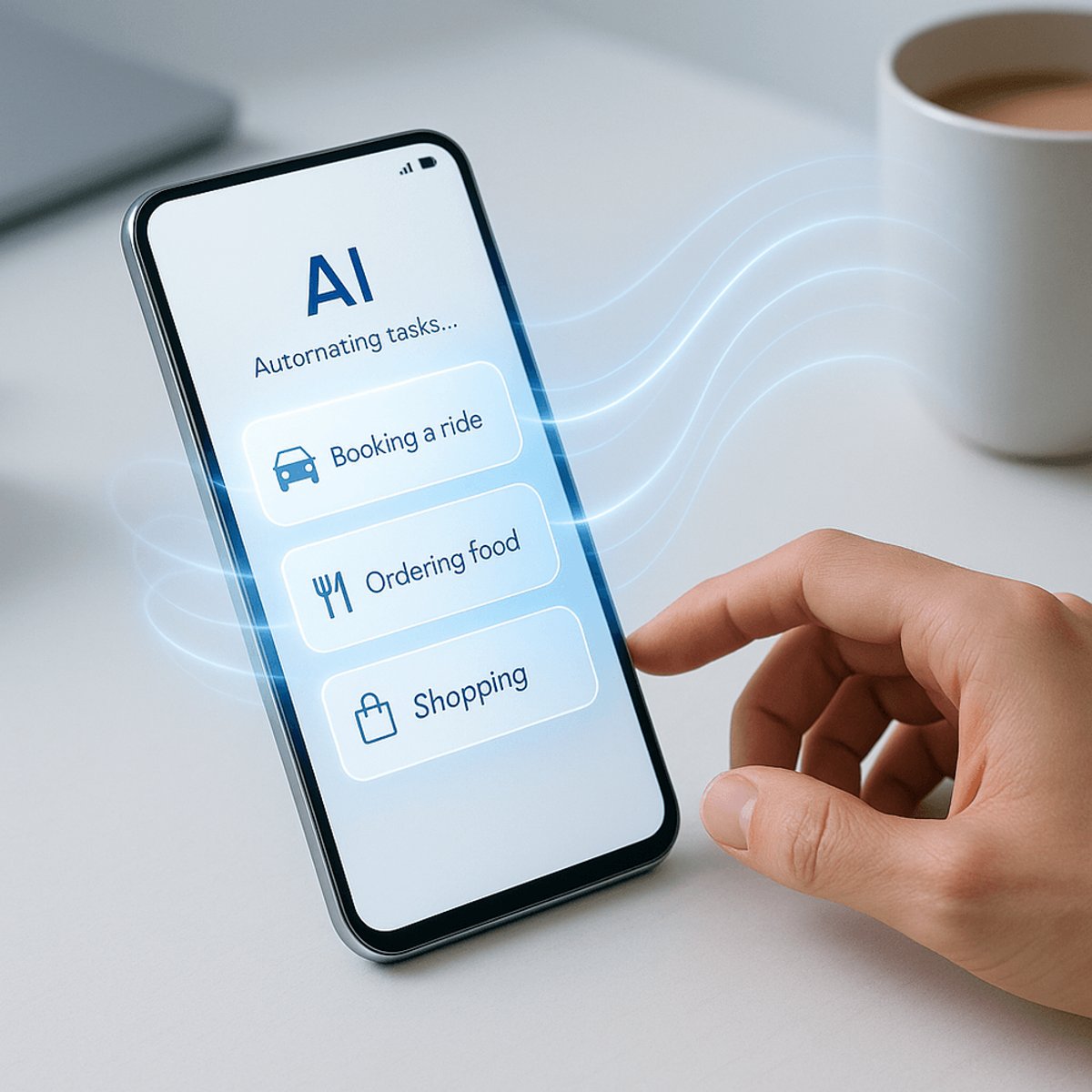
Google's Gemini just crossed a crucial threshold - it's no longer just answering questions, it's taking action. Starting with the Samsung Galaxy S26, the AI assistant can now book rides on Uber, order meals through DoorDash, and automate tasks across popular mobile apps without you lifting a finger. In an exclusive demo shared with Wired, Google showed off what might be the most practical implementation of agentic AI yet - one that actually completes real-world errands instead of just chatting about them.
Google just turned Gemini from a chatbot into a digital assistant that actually does things. The company's latest update brings task automation to Samsung Galaxy S26 devices, letting users tell Gemini to book a ride or order dinner - and watch it happen automatically.
According to a live demonstration obtained by Wired, the feature works exactly like you'd hope. Say "order me a burrito from my usual spot" and Gemini opens DoorDash, navigates to your favorite restaurant, adds items to your cart, and processes the order. Tell it to "get me home" and it pulls up Uber, confirms your destination, and requests a ride.
This isn't Google's first attempt at app automation - Android has long had accessibility features and shortcuts - but it's the first time the company's flagship AI has been able to understand natural language requests and translate them into complex, multi-step actions across third-party apps. The system works by giving Gemini visual access to your screen and the ability to interact with app interfaces the same way humans do, tapping buttons and filling forms in real-time.
The timing matters. Apple has been telegraphing similar capabilities for Siri through its App Intents framework, which lets developers expose specific actions to voice control. OpenAI has been teasing AI agents that can browse the web and complete tasks. Google's move with Samsung puts working technology in consumers' hands first, potentially establishing Gemini as the default agentic AI before competitors catch up.
The exclusive launch on Samsung's flagship creates an interesting dynamic. While Google owns Android, it's leaning on its hardware partner to showcase premium AI features - a strategy that could either boost Galaxy sales or frustrate Pixel loyalists wondering why Google's own phones aren't leading the charge. Sources familiar with the partnership suggest the phased rollout is intentional, using Samsung's massive distribution to beta test the feature at scale before expanding to the broader Android ecosystem.
There's a privacy calculation here that Google hasn't fully detailed. For Gemini to automate tasks, it needs screen access, app permissions, and potentially stored credentials or payment information. The company says actions happen on-device where possible and require user confirmation for sensitive operations like payments, but the exact security model remains unclear. Users will need to grant Gemini extensive permissions, essentially giving the AI the keys to their digital life.
The feature set at launch is deliberately limited. Wired's demo focused on Uber and DoorDash, but Google hasn't revealed which other apps are supported or how developers can integrate. The company is likely moving cautiously, expanding capabilities as it ensures reliability. An AI assistant that confidently books the wrong flight or orders 47 tacos instead of one could sour users on the entire category.
Competitors are watching closely. Microsoft's Copilot has similar ambitions but remains mostly confined to Office apps. Amazon's Alexa has been able to order from Amazon for years but never cracked third-party app control. The difference is Gemini's multimodal foundation - it can see, understand context, and adapt to different app interfaces without requiring custom integrations for every service.
Developers might view this with mixed feelings. On one hand, Gemini automation could drive engagement by making apps more accessible. On the other, it abstracts away branded experiences, potentially reducing the value of investing in polished UIs if users never see them. Apps become commoditized services accessed through an AI layer rather than destinations users visit directly.
The broader implication is what this means for the app economy. If AI assistants handle routine tasks - ordering food, booking rides, scheduling appointments - users spend less time in apps, see fewer ads, and develop weaker brand loyalty. That shift could reshape mobile business models, forcing apps to compete on price and reliability rather than engagement and retention.
Google hasn't announced pricing for Gemini's automation features, though similar premium AI capabilities from competitors typically require subscriptions. Whether this comes bundled with Google One, requires Gemini Advanced, or ships free on Samsung devices will determine how quickly users adopt agentic AI versus sticking with manual app interactions.
The Galaxy S26 launch serves as a proof of concept for where mobile AI is heading - not smarter search or better photo editing, but digital assistants that actually complete your to-do list. If it works reliably, this becomes the baseline expectation for flagship phones in 2026. If it's buggy or limited, it risks setting back the AI agent category before it truly launches.
Google's Gemini task automation represents more than a new feature - it's a fundamental shift in how we'll interact with our phones. Instead of juggling apps, we'll delegate errands to AI assistants that handle the boring stuff while we focus on what matters. But the real test isn't the technology demo, it's whether Gemini can execute reliably enough that users trust it with their daily routines. The Galaxy S26 becomes the testing ground for agentic AI's mainstream moment, and everyone from Apple to OpenAI is watching to see if Google can pull it off. If this works, we just saw the future of mobile computing. If it doesn't, it'll be another overpromised AI feature that fades into settings menus no one opens.