Google just launched AISOMA, an AI-powered choreography tool that analyzes your dance moves and generates new sequences based on Sir Wayne McGregor's 25-year archive. The innovative collaboration transforms four million archived poses into a creative catalyst that anyone can use to explore original choreography rooted in McGregor's distinctive movement language.
Google is reshaping creative expression with AISOMA, an AI-powered choreography tool that transforms legendary choreographer Sir Wayne McGregor's movement archive into an interactive dance partner. The breakthrough collaboration between Google Arts & Culture Lab and the internationally acclaimed director represents a significant leap in AI's creative applications.
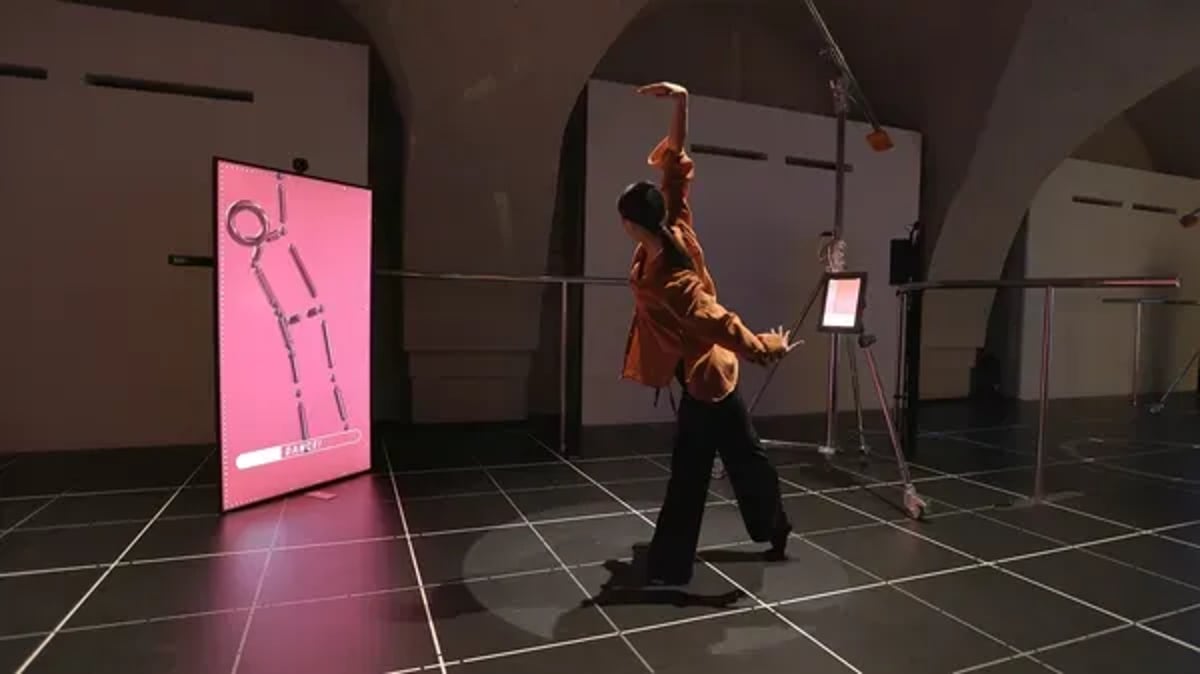
The tool works by analyzing a user's short dance performance through their device camera, then extending those movements with original choreographic phrases drawn from McGregor's distinctive vocabulary. "AISOMA is a Google AI-powered choreography tool that acts as a creative catalyst by generating new, original dance rooted in my choreographic language," McGregor explains in the official announcement.
Behind the scenes, AISOMA processes nearly four million poses extracted from hundreds of videos spanning McGregor's two-decade career. The system represents a major technical advancement from its 2019 predecessor, moving from 2D analysis to full three-dimensional pose extraction using TensorFlow 2 and MediaPipe pose technology.
"Working with Google Arts & Culture Lab, we developed a bespoke model using TensorFlow 2 and MediaPipe pose. This allowed us to move beyond 2D analysis we had in the first version of the tool and extract the poses of a human body in a three dimensional space," McGregor detailed in his blog post. The upgrade enables the AI to map what he calls "the intricate, architectural grammar of a body in motion."
The collaboration began in 2019 when McGregor approached Google about creating "a more active dialogue with my 25-year body of work." His studio had already evolved into what he describes as a laboratory for movement experimentation, making AI integration a natural next step. Initially used privately for choreographic development, AISOMA helped McGregor "expand, challenge, and interrogate existing movement sequences."
Amit Sood, Director of Google Arts & Culture, emphasized the project's broader significance: "It's a privilege to continue our collaboration with internationally acclaimed choreographer, Sir Wayne McGregor who is renowned for trailblazing innovations in performance. AISOMA uses AI to bring Wayne's seminal and transformative body of work through a new lens, giving everyone an invitation to play, explore, and push the boundaries of their own creativity."
The public launch coincides with McGregor's major exhibition "Wayne McGregor: Infinite Bodies" at Somerset House, running from October 30, 2025 through February 22, 2026. Visitors can experience AISOMA both online at goo.gle/AISOMA and in person at the London venue.
This development positions Google at the forefront of AI's creative applications, following recent investments in artistic collaboration tools. The technology demonstrates how machine learning can preserve and extend artistic legacies while democratizing access to professional-level creative guidance.
McGregor frames the tool as fundamentally collaborative rather than replacement technology. "AISOMA isn't the final answer; it's a starting point. It's an invitation for you to become an active participant in the choreographic and creative process," he notes. The distinction reflects broader conversations about AI's role in creative industries - as augmentation rather than automation.
The timing aligns with increased interest in AI-powered creative tools across entertainment industries. While companies like Meta and OpenAI focus on text and image generation, Google's dance application showcases AI's potential in physical movement analysis and generation.
AISOMA represents more than a technological novelty - it's a glimpse into how AI can preserve and extend artistic heritage while making professional creative tools accessible to everyone. McGregor's vision of dance as "an act of play, a physical language in a constant state of evolution" now includes machine learning as a collaborative partner. As the tool launches publicly, it sets a precedent for how tech giants can meaningfully support arts while advancing AI capabilities in unexpected domains.