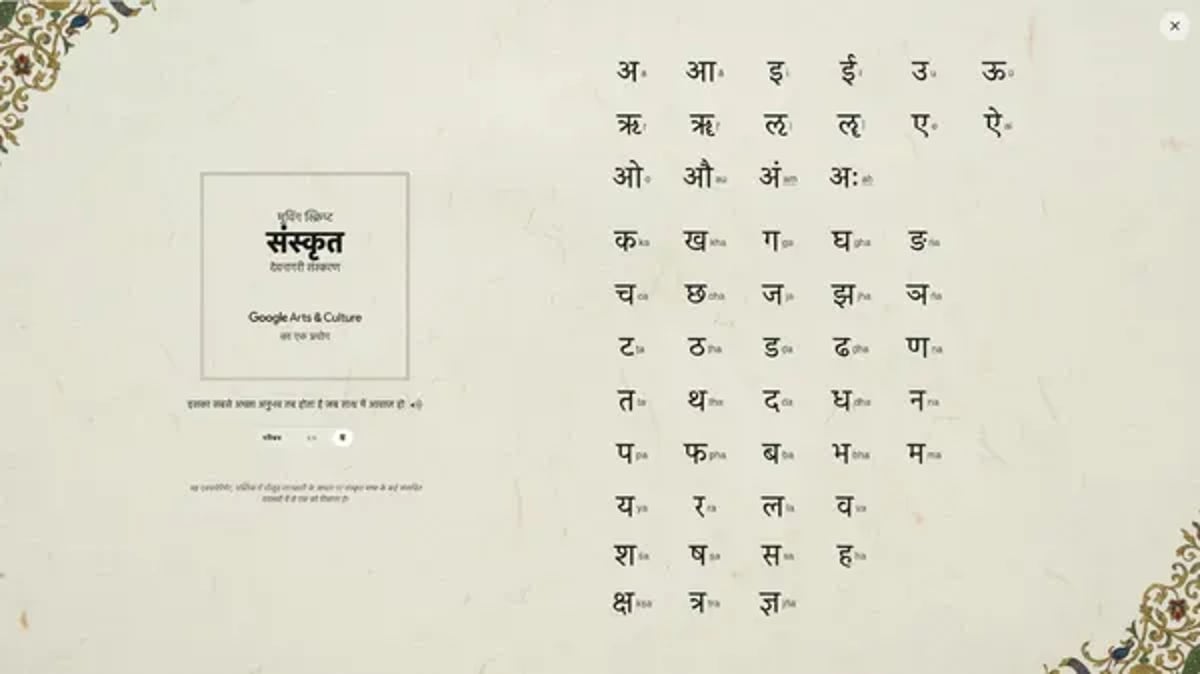
Google is bringing artificial intelligence to India's ancient heritage. Just ahead of the India AI Summit, the company's Arts & Culture division unveiled three new AI-powered experiences designed to make Indian cultural history interactive and accessible. The launch signals Google's push to demonstrate practical AI applications beyond chatbots and productivity tools, targeting one of the world's fastest-growing tech markets with culturally relevant features that bridge cutting-edge technology with centuries-old traditions.
Google is making its latest AI bet on culture, not commerce. The tech giant's Arts & Culture platform just dropped three interactive experiences that use artificial intelligence to explore India's rich heritage, and the timing isn't coincidental. With the India AI Summit kicking off, Google's sending a clear message: AI doesn't just optimize ad spend or write emails - it can preserve and democratize access to cultural treasures.
Amit Sood, Senior Director at Google Arts & Culture, announced the launch in a company blog post, though details about the specific experiences remain limited. What's clear is that these tools represent a different flavor of AI deployment than what we typically see from Big Tech - less about productivity gains, more about cultural engagement.
The move comes as India cements its position as a critical battleground for AI companies. The country's digital population is exploding, its government is actively promoting AI adoption, and local startups are racing to build culturally relevant AI applications. Google has been particularly aggressive in this market, from expanding its India research labs to launching Hindi-language AI models.
But this isn't just about market share. Google Arts & Culture has quietly become one of the company's most interesting AI laboratories. The platform has previously used machine learning to digitize museum collections, match your selfie to famous artworks, and even reconstruct destroyed historical sites. Applying these capabilities to India's diverse cultural landscape - spanning thousands of years, dozens of languages, and countless artistic traditions - creates a compelling use case for AI that goes beyond business metrics.
The India AI Summit context matters too. As countries worldwide grapple with AI regulation and deployment strategies, India is positioning itself as both a major AI consumer market and a potential AI powerhouse. Prime Minister Modi's administration has backed initiatives to make India a "global AI hub," and tech companies are taking note. Google's cultural heritage play could help smooth regulatory relationships while building goodwill in a market where data localization and digital sovereignty are hot-button issues.
The Arts & Culture angle also gives Google a softer entry point for AI adoption in a market where concerns about job displacement and Western tech dominance run high. By framing AI as a tool for cultural preservation and education rather than disruption, the company sidesteps some of the thornier debates around AI's societal impact.
What remains unclear is how deeply these experiences integrate Google's latest AI models. Are we talking about simple computer vision applications, or is Gemini powering more sophisticated interactions? The limited details from the announcement leave room for speculation about whether this represents genuinely novel AI applications or a repackaging of existing technologies with an India-specific skin.
Competitors aren't sitting idle. Microsoft has poured resources into India through its AI for Accessibility initiatives, while Meta has focused on making AI tools work across India's linguistic diversity. The cultural heritage angle gives Google differentiation, but execution will determine whether these experiences become genuine engagement drivers or fade into the background like countless other experimental features.
For India's cultural institutions, the collaboration potential is significant. Museums and heritage sites struggling with digitization could leverage Google's AI infrastructure to make collections accessible to millions who'll never visit in person. That's not just a nice-to-have - in a country where infrastructure limitations restrict physical access to many historical sites, digital preservation takes on added urgency.
Google's AI heritage launch is a calculated play in India's booming tech ecosystem, but it's also something more interesting - a test case for whether AI can create genuine cultural value beyond productivity metrics. If these experiences stick, they could provide a blueprint for how tech companies deploy AI in emerging markets: localized, culturally grounded, and focused on preservation rather than disruption. The India AI Summit will bring the usual parade of enterprise AI announcements and productivity promises, but Google's betting that culture might be the more compelling story. Whether that gamble pays off depends on execution details we haven't seen yet, but the strategic direction is clear: AI that respects heritage while enabling access could be the key to winning hearts and minds in markets where Silicon Valley's reputation is decidedly mixed.