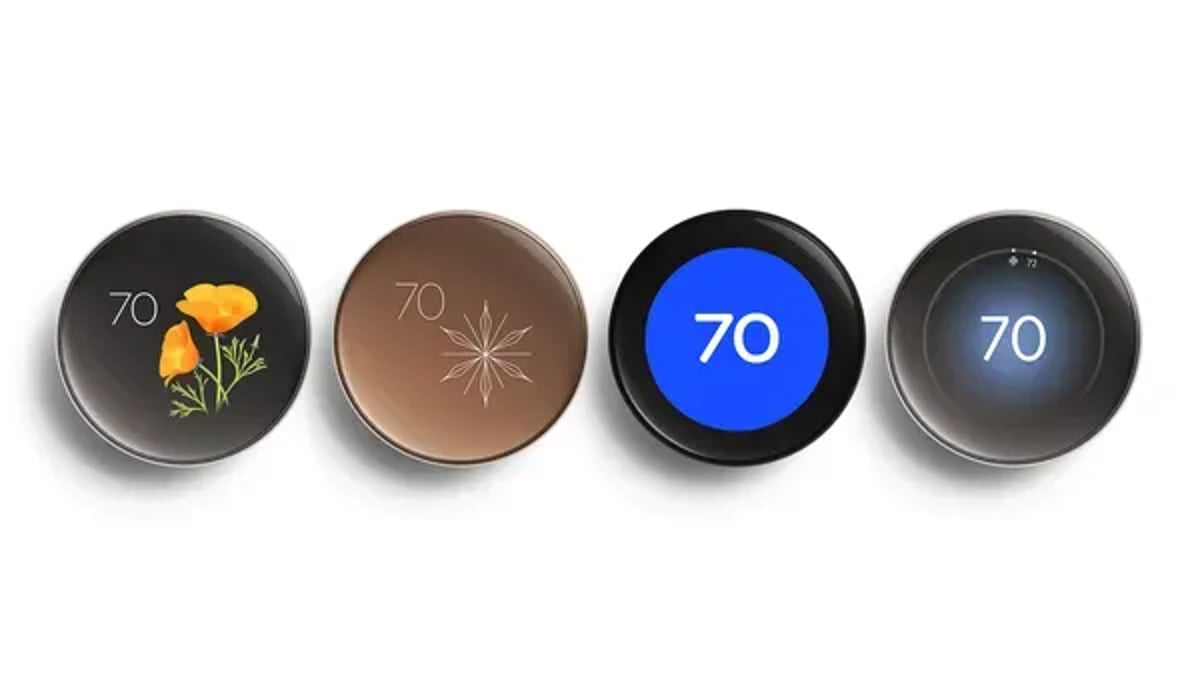
Google just dropped four new Farsight faces for its Nest Learning Thermostat (4th Gen), turning smart home devices into personalized art pieces. The rollout includes a collaboration with animator Mathilde Loubes, whose seasonal designs transform the thermostat's borderless display into a living canvas that updates monthly with animated flowers and fruits.
Google is betting that smart home devices need to be more than functional - they need to be beautiful. The company's latest software update for its Nest Learning Thermostat (4th Gen) brings four new Farsight faces that transform the device from a utilitarian gadget into what the company calls "a piece of art."
The standout addition comes from French animator Mathilde Loubes, whose work on animated films caught Google's attention. Her seasonal face feature delivers 12 unique illustrations that automatically cycle through the year, showing animated flowers blooming in spring and fruits ripening in fall. It's the kind of thoughtful design detail that signals how seriously Google is taking the aesthetic integration of smart home tech.
"We're rolling out four new Farsight faces for your Nest Learning Thermostat (4th Gen), for custom looks that blend beautifully into your home," Google's Interaction Designer Maggie Banks announced in the official blog post.
The other three faces show Google's range of design thinking. There's a classic Nest face that pays homage to the original thermostat that kicked off the smart home revolution, a minimalist option for homes favoring clean lines, and a new temperature controller face designed for quick adjustments at a glance.
This update builds on Google's existing Farsight face library, which already included digital and analog clock displays plus current weather information. But the artistic collaboration marks a shift in how Google is positioning its smart home products - less as tech accessories and more as integrated home design elements.
The timing isn't coincidental. As smart home adoption accelerates, companies are discovering that functionality alone isn't enough to win living room real estate. Apple has long emphasized design in its approach to home products, while Amazon has focused on voice integration and ecosystem breadth.
Google's artistic approach with the Nest thermostat suggests the company is carving out its own niche - smart home devices that adapt to personal taste and seasonal rhythms. The Loubes collaboration, with its monthly updating artwork, turns a temperature control device into something that evolves with the calendar.
For homeowners who've invested in the 4th generation Nest Learning Thermostat, the faces are available now through the device's settings menu. The update represents Google's broader strategy of keeping existing hardware fresh through software enhancements rather than pushing constant hardware upgrades.
The smart home market continues to mature beyond early adopters, and companies are realizing that design integration matters as much as technical capability. Google's artistic thermostat faces might seem like a small update, but they signal a larger shift toward making smart home technology feel less intrusive and more intentionally integrated into daily life.
Google's artistic thermostat update reflects how smart home competition is evolving beyond technical specs into design and personalization. While the faces might seem like a minor cosmetic update, they represent Google's strategy to make smart home devices feel more like intentional design choices than tech accessories. As the smart home market matures, expect more companies to focus on how their devices integrate aesthetically into homes, not just functionally into ecosystems.