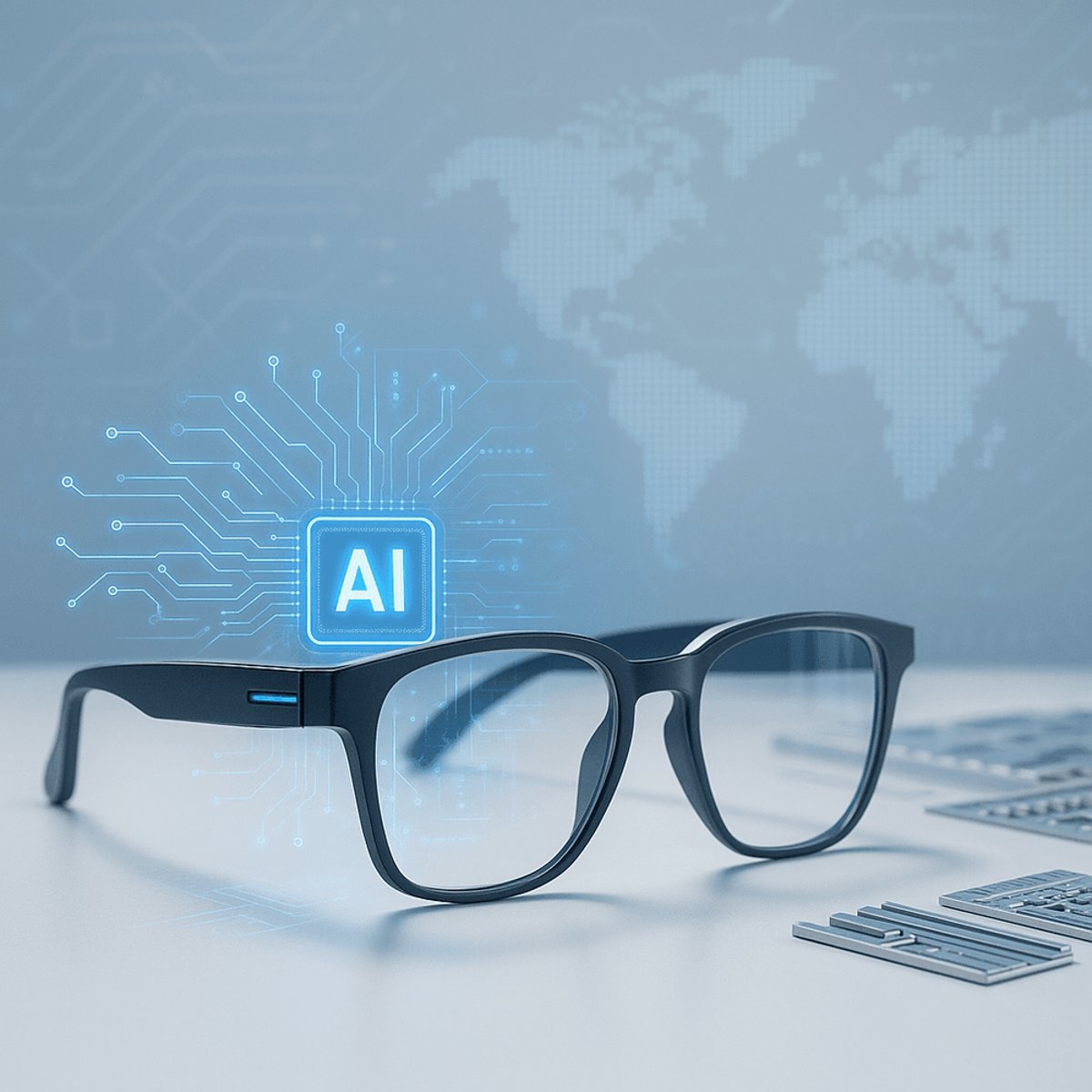
China's AI wearables market is exploding with over 70 companies now competing directly with Meta's smart glasses, leveraging the country's manufacturing prowess to flood global markets with everything from practical workplace gadgets to bizarre translation contraptions that promise to turn parents into "foreigners."
Meta's smart glasses success just triggered a gold rush in China, and the numbers tell the whole story. Since Meta introduced its Ray-Ban collaboration in 2023 and sold millions of units, over 70 Chinese companies have jumped into the smart glasses space with competing products now sold worldwide. Companies like Inmo and Rokid are already shipping globally, while tech giants Xiaomi and Alibaba keep their AI-embedded eyewear focused on the domestic market for now. The speed of this market response reflects what Dr. Kai-Fu Lee, CEO of 01.AI and chairman of Sinovation Ventures, calls China's fundamental manufacturing advantage. "Today, the competition is on the software, the models, the agents, the applications," Lee told CNBC. "But soon it will move to devices." This shift is already happening beyond just smart glasses. Alibaba's DingTalk workplace platform released a credit card-sized AI device this year that can record, transcribe, and analyze speech from 26 feet away - basically turning any boardroom into a smart meeting space. The device competes directly with products like the Plaud Note available in the U.S. market. But China's AI device experimentation goes way beyond the practical. Chinese startup Le Le Gaoshang Education Technology created what might be the strangest AI wearable yet: a $420 neck-worn translation device that includes a mouth covering to mute the user's voice. The contraption, embedded with Tencent and iFlyTek AI, is marketed to Chinese parents with limited English as a way to become a "laowai" (foreigner) when teaching English to their children. It's exactly the kind of niche, specialized hardware that shows how quickly Chinese manufacturers can iterate on AI concepts. The hardware proliferation creates a data collection advantage that software-focused competitors can't match. "When you still hear people outside of China talking about what the future of the AI device might be, the market is full of AI devices here already," tech consultant Tom van Dillen of Greenkern said from his Beijing office, according to CNBC's reporting. "This creates this feedback loop again to make the AI even better." Having dozens of hardware touchpoints means Chinese AI companies are gathering usage data across multiple form factors while their U.S. counterparts are still debating what the next breakthrough device might look like. Every neck-worn translator and workplace recording device becomes another data stream feeding back into algorithmic improvements. But hardware advantages don't guarantee victory in the broader AI race. Privacy concerns could limit global appeal of Chinese AI devices, and software capabilities still matter more than manufacturing prowess for many applications. Lee himself acknowledges the challenge: "You really have to be that Apple iPhone to reap the most of the reward," referencing Steve Jobs' transformative consumer product. The race to create the "iPhone of AI" is just getting started, and China's manufacturing base gives it clear advantages in hardware iteration and cost efficiency. While American companies debate AI safety and regulatory frameworks, Chinese manufacturers are shipping products and gathering real-world usage data. "I think the China advantage for building the Apple iPhone for the AI age is that the capabilities are there - engineers and entrepreneurs, and so on," Lee told CNBC. "But it will still be a race." The question isn't whether China can manufacture AI devices faster and cheaper than competitors - that's already proven. The real test is whether rapid hardware iteration can compensate for any gaps in underlying AI capabilities, and whether global consumers will embrace Chinese-made AI wearables despite privacy concerns and geopolitical tensions.
China's hardware manufacturing advantage is reshaping the AI wearables landscape faster than anyone anticipated. While debates rage about AI safety and regulation in the West, Chinese companies are shipping products, gathering data, and iterating rapidly across dozens of form factors. The real test isn't whether they can out-manufacture competitors - that's already happening. It's whether this hardware-first approach can create the breakthrough consumer AI device that defines the next computing era, and whether global markets will embrace it despite growing geopolitical tensions.