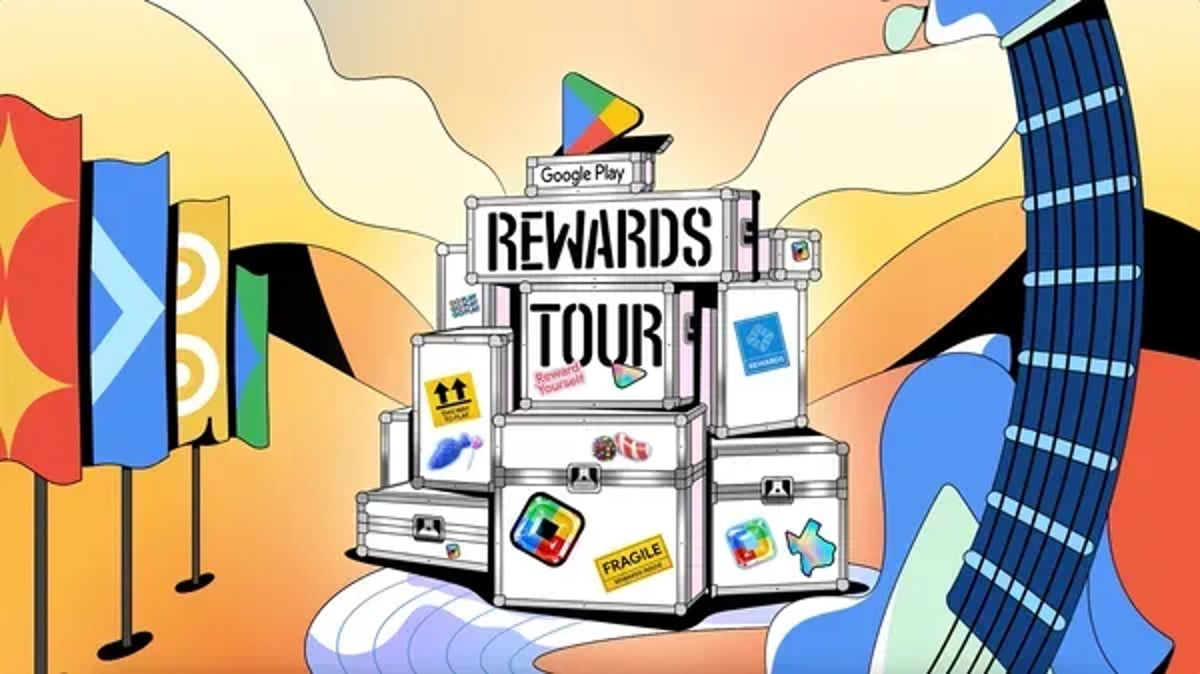
Google just rolled out its most ambitious Play Points campaign yet, transforming Austin City Limits Music Festival into a live rewards playground. The Google Play Rewards Tour combines digital perks with on-ground experiences, featuring a 20-foot interactive tower and exclusive artist merchandise that could reshape how tech companies engage with music culture.
Google is betting big on experiential marketing with its latest Play Points campaign that's turning Austin City Limits into a tech-powered treasure hunt. The Google Play Rewards Tour represents the company's most sophisticated attempt yet to bridge digital rewards with real-world festival culture.
The campaign launches today with Gold+ Play Points members gaining access to digital road cases that unlock surprise rewards on the platform. But the real innovation happens on festival grounds, where Google has constructed a 20-foot tower of road cases that functions as an interactive gaming experience. Festival-goers can participate in custom roadie-inspired challenges, with a competitive "Showstopper mode" running hourly where eight players compete head-to-head for premium rewards.
According to Aurash Mahbod, VP and General Manager of Games on Google Play, who announced the initiative in a company blog post, "We're bringing members closer to the music they love through The Google Play Rewards Tour, an interactive experience during Austin City Limits Music Festival both online and on the ground."
The rewards themselves signal Google's push into premium lifestyle partnerships. The company has collaborated with designer Nik Bentel on limited-edition items including a custom Road Case Bag and spinning slipmat. Festival-exclusive merchandise from performing artists MARINA and Role Model will also be available through the platform - a notable departure from Google's typical digital-only reward structure.
Google is simultaneously launching what it calls an "exclusive Candy Crush lineup" featuring collectible shoe charms and three new Candy Crush Saga booster bundles, tying into the game's upcoming Music Season. The integration demonstrates how the company is leveraging its gaming portfolio to create cross-promotional opportunities within the rewards ecosystem.
Silver+ Play Points members receive additional perks including prioritized entry to the physical experience and exclusive on-ground collectibles. They also get priority access to artist meet-and-greets at the Google Store at Domain North Side in Austin, extending the campaign beyond the festival grounds into Google's retail presence.
The timing coincides with the return of Diamond Valley, Google Play's treasure hunt mini-game, which launches October 15. The game previously attracted significant engagement among Play Points members, and its revival suggests Google sees strong user appetite for gamified reward experiences.
This campaign represents Google's most ambitious attempt to compete with Apple's ecosystem loyalty programs through experiential marketing. While Apple focuses on hardware integration and services bundling, Google is betting on cultural relevance and real-world experiences to drive Play Store engagement.
The Austin City Limits partnership follows Google's broader strategy of inserting itself into cultural moments where its target demographics naturally gather. By creating exclusive experiences that can't be replicated digitally, Google is addressing a key weakness in its ecosystem - the lack of physical touchpoints that create emotional brand connections.
For the music industry, this represents a new model for artist merchandise distribution and fan engagement. Rather than traditional merch tables, artists like MARINA and Role Model are experimenting with tech-platform exclusive drops that could influence how musicians monetize their brands at festivals.
The success of this campaign could influence how other tech giants approach experiential marketing at cultural events, potentially leading to more sophisticated integrations between digital platforms and live entertainment experiences.
Google's Austin City Limits gambit represents more than just a marketing stunt - it's a strategic test of whether experiential rewards can drive lasting platform loyalty. If successful, we'll likely see this model expand to other major festivals and cultural events, potentially reshaping how tech companies compete for user engagement beyond traditional app store incentives. The real measure won't be festival attendance, but whether these experiences translate into sustained Play Store activity and membership growth.