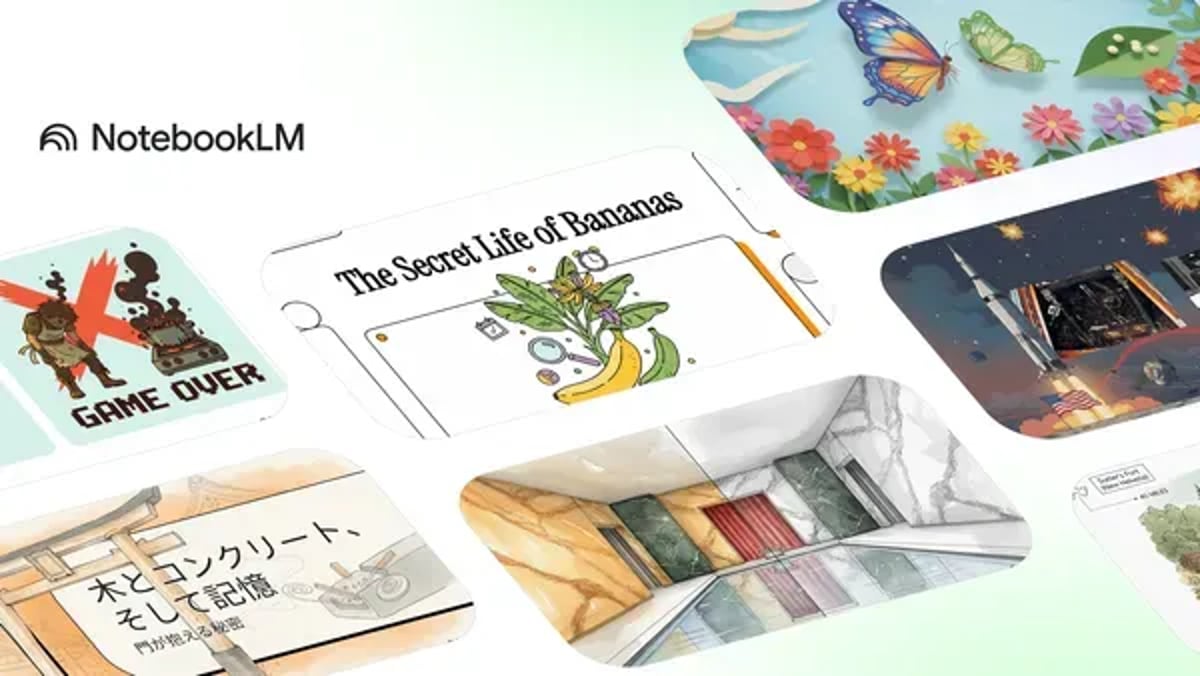
Google just transformed its NotebookLM AI tool from text-heavy to visually stunning. The company rolled out Nano Banana, Gemini's image generation model, to create contextual illustrations for Video Overviews, while introducing a new "Brief" format for quick document summaries. This marks a significant step in making AI-powered research tools more engaging and accessible.
Google is betting big on visual learning, and its latest NotebookLM update proves why. The company just unleashed Nano Banana, Gemini's image generation model, to transform how users digest complex documents through AI-powered video summaries.
The upgrade tackles a core problem with AI research tools - they're often as dense as the documents they're trying to simplify. Eugene Lo, a software engineer on the NotebookLM team, announced the changes in a Google blog post, emphasizing how "dense documents can be challenging" and promising the process now becomes "better - and more fun, too."
Nano Banana generates what Google calls "helpful, contextual, and beautiful illustrations" based on uploaded sources. Users can now choose from six artistic styles: Watercolor, Papercraft, Anime, Whiteboard, Retro Print, and Heritage. Each style aims to make Video Overviews more memorable and engaging than traditional text summaries.
The visual upgrade comes alongside a strategic format split. NotebookLM now offers two video types: the comprehensive "Explainer" format for deep dives, and a new "Brief" format for quick insights. This addresses different user scenarios - from students needing detailed analysis to professionals wanting rapid document overviews.
Google's timing feels deliberate. As competitors like OpenAI and Microsoft push multimodal AI capabilities, Google is doubling down on making AI tools more visually intuitive. The company's previous NotebookLM updates focused on audio summaries, but this visual pivot signals where AI productivity tools are heading.
The technical implementation leverages Google's Gemini ecosystem, positioning Nano Banana as more than just an image generator. It's contextually aware, analyzing document content to create relevant illustrations rather than generic stock imagery. This contextual intelligence could give Google an edge over simpler AI art generators.
Customization options extend beyond visual styles. Users can provide specific instructions like "Focus only on the cost analysis sections of the business plan" or "Convert these recipes into an easy-to-follow video focusing on prep time and cooking steps." This level of control transforms NotebookLM from a passive summarizer into an active content creation partner.
The rollout strategy shows Google's confidence in the feature. Pro users get access this week, with broader availability following in "upcoming weeks." This staged approach lets Google gather feedback from power users before full deployment.
For the broader AI landscape, this represents a shift toward multimodal experiences. While text-based AI dominated 2023 and early 2024, companies are now racing to integrate visual, audio, and interactive elements. Google's approach with NotebookLM suggests the winning formula combines multiple content formats rather than focusing on a single modality.
The implications extend beyond productivity tools. Educational technology, corporate training, and content creation industries are watching how users respond to AI-generated visual summaries. If successful, expect similar visual enhancements across Google's Workspace suite and beyond.
Google's NotebookLM upgrade represents more than just prettier videos - it's a strategic move toward multimodal AI experiences that could reshape how we interact with complex information. By combining Gemini's image generation capabilities with flexible formatting options, Google is positioning NotebookLM as a comprehensive research companion rather than just another AI summarizer. The success of Nano Banana's contextual illustrations will likely influence how other tech giants approach visual AI integration across their productivity suites.