Google just sent shockwaves through the gaming industry. The tech giant's unveiling of Project Genie - an AI tool that generates playable game worlds from text prompts - triggered a massive selloff in gaming stocks Friday, with Unity cratering 24%, Roblox dropping 13%, and Take-Two Interactive falling 8%. The market's reaction signals deep anxiety about AI's potential to disrupt traditional game development, coming at a time when the industry is already reeling from mass layoffs and existential questions about the future of creative work.
Google just delivered what might be the gaming industry's worst nightmare, and Wall Street noticed immediately. Shares of Unity, the game development platform used by millions of creators, plummeted 24% on Friday to close at $29.10. Roblox, the user-generated gaming platform, dropped 13% to $65.76. Even Take-Two Interactive, the Grand Theft Auto publisher, fell nearly 8% to $220.30, according to Reuters.
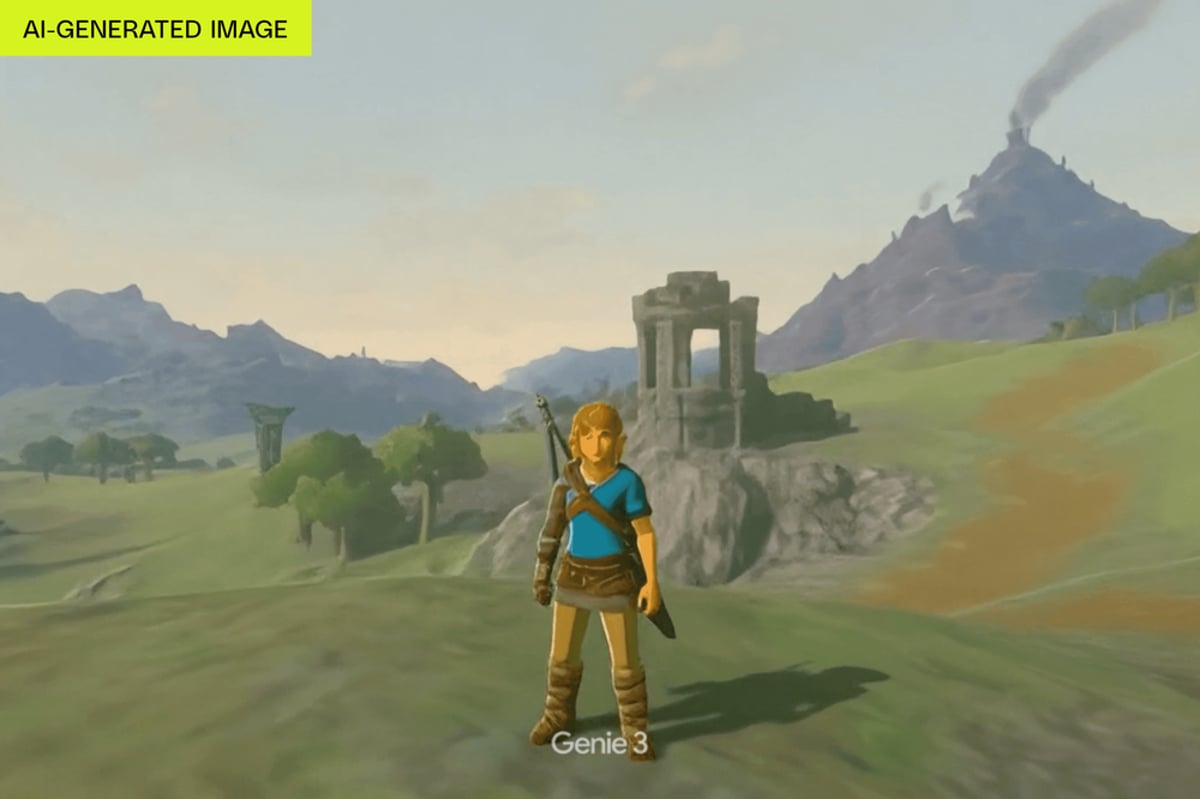
The carnage came just one day after Google unveiled Project Genie, an AI-powered tool that lets anyone type a text prompt and watch as it generates a playable game world in real-time. Behind the scenes, it's running on Genie 3, the latest iteration of Google DeepMind's world model technology.
The timing couldn't be worse for an industry already in crisis mode. Gaming companies have been hemorrhaging jobs for months, with Amazon shutting down studios, Netflix closing Boss Fight Entertainment, and Microsoft cutting Xbox positions. Now comes an AI tool that promises to automate the very work developers do - concept building, prototyping, testing.
Google DeepMind's Diego Rivas told The Verge that Genie 3 was "trained primarily on publicly available data from the web." Translation: the model learned by watching videos of existing games. A whitepaper from Google DeepMind researchers on the original Genie model reveals it was trained on "a large dataset of over 200,000 hours of publicly available Internet gaming videos."
That's where things get dicey. The AI industry is already facing a reckoning over training data, with artists and creators alleging their work was stolen to train models without permission or compensation. Game developers, who've watched AI tools seemingly rip off their carefully crafted worlds, aren't buying the pitch.
And the output? It's not exactly mind-blowing. The Verge's hands-on with Project Genie revealed experiences that vaguely resembled Super Mario and The Legend of Zelda but had "none of the fun or playability of the originals." The tool only generates 60-second experiences. No sound. No scores. No objectives. Just basic interactive environments that can glitch out - like racetracks randomly turning into grass.
You can't even export what you make into real game engines like Unreal or Unity. When you're done, you download a video or generate something new. That's it.
But investors aren't worried about Project Genie's current limitations. They're spooked by where this is heading. The executive class is already spelling out the endgame. xAI CEO Elon Musk promised on X "Real-time, high-quality shows and video games at scale, customized to the individual, next year." Epic Games CEO Tim Sweeney chimed in Friday that "We'll see constant leapfrogging between engine centric AI and world model centric AI until they come together for maximum effect."
Meta CEO Mark Zuckerberg spent significant time on this week's earnings call talking about how AI will make games "more immersive and interactive." The comments came just weeks after Meta shut down multiple VR game studios, including Twisted Pixel, Sanzaru, and Armature. The message is clear: why employ human developers when AI can do it cheaper?
For Unity, the stock crash is particularly brutal. The company's entire business model depends on developers using its platform to build games. If AI can generate game worlds without traditional development tools, what's Unity's value proposition? Roblox faces similar existential questions - its platform thrives on user-generated content, but what happens when AI can generate that content instantly?
A recent GDC survey shows game developers are deeply skeptical of generative AI. They've seen the AI slop flooding the internet and they're not interested in being replaced by tools trained on their own work. But skepticism won't stop the technology from advancing or executives from implementing it.
The market's reaction Friday suggests investors believe this disruption is coming faster than anyone anticipated. Whether Project Genie in its current form poses an immediate threat is almost beside the point. Google just showed that AI-generated game worlds are possible, and the race is on.
Friday's market bloodbath isn't just about one AI tool - it's about the gaming industry's recognition that the ground is shifting beneath it. While Project Genie in its current form is more proof-of-concept than product, the technology's trajectory is unmistakable. With tech titans from Musk to Zuckerberg betting billions on AI-generated content, and game developers already facing unprecedented layoffs, the question isn't whether AI will reshape game development but how quickly it happens. For investors holding Unity, Roblox, or Take-Two stock, Friday was a wake-up call that traditional game development platforms might not be as essential in an AI-first future. The challenge now is figuring out who adapts fast enough to survive.