Google just launched Search Live across the U.S., bringing real-time AI conversations to mobile search. The feature combines voice interaction with camera feed sharing, letting users have back-and-forth conversations about what they're seeing. No Labs opt-in required - it's rolling out now in the Google app for Android and iOS.
Google just made search conversations as natural as talking to a friend. The company's new Search Live feature officially launched today in English across the U.S., marking a significant shift from text-based queries to real-time voice interactions powered by AI.
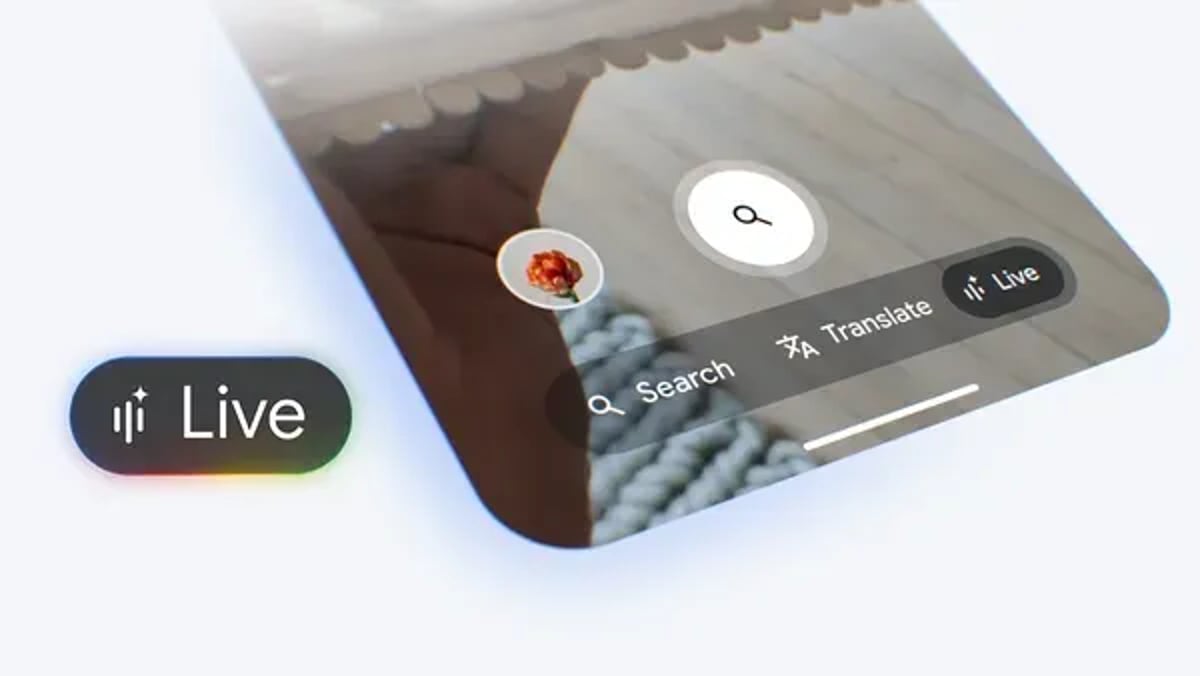
The feature integrates with Google's AI Mode and allows users to share their phone's camera feed during conversations. According to Liza Ma, Director of Product Management at Google Search, users can now "have an interactive voice conversation and share your phone's camera feed" while getting responses in real time with helpful web links for deeper exploration.
Getting started is straightforward - users simply open the Google app and tap the new Live icon under the search bar. The integration with Google Lens makes it even more seamless, with camera sharing enabled by default when users select the Live option from Lens.
This launch represents Google's most aggressive move yet into conversational AI search, directly challenging OpenAI's ChatGPT and other voice-first AI platforms. The timing isn't coincidental - Google has been racing to maintain its search dominance as users increasingly turn to AI chatbots for quick answers and conversational help.
The practical applications span everything from travel assistance to technical troubleshooting. Users can point their camera at electronics and ask "which cable goes where" without typing model numbers or specifications. For educational purposes, parents can use Search Live as an "AI-powered learning partner" during science experiments, with the system explaining chemical reactions as they happen.
What sets Search Live apart from existing voice assistants is its visual understanding combined with Google's vast web index. Unlike Siri or Alexa, which rely primarily on structured data, Search Live can interpret visual context and connect users to relevant web resources in real time.
The feature also signals Google's strategy to keep users within its ecosystem rather than losing them to emerging AI platforms. By combining search, visual recognition, and conversational AI, Google creates a more sticky user experience that's harder for competitors to replicate.
Industry analysts see this as Google's response to the "search disruption" narrative that has dominated tech discussions since ChatGPT's launch. While traditional search remains dominant, younger users increasingly prefer conversational interfaces for complex queries and multi-step problems.
The rollout comes without the usual Labs opt-in requirement, suggesting Google feels confident in the feature's stability and user experience. This broad availability could accelerate adoption compared to previous experimental AI features that required technical users to navigate beta programs.
For developers and SEO professionals, Search Live represents another shift toward optimizing for conversational queries rather than keyword-based searches. The feature's ability to surface web links during voice conversations means websites still play a crucial role in the user journey, even as the interface becomes more conversational.
Google's Search Live launch marks a pivotal moment in search evolution, blending conversational AI with visual understanding in ways that feel genuinely useful rather than gimmicky. The feature's broad rollout without beta restrictions suggests Google is ready to compete head-on with conversational AI platforms while maintaining its web search advantages. For users, it means getting help has never been more natural - just point, ask, and get answers that understand both what you're saying and what you're seeing.