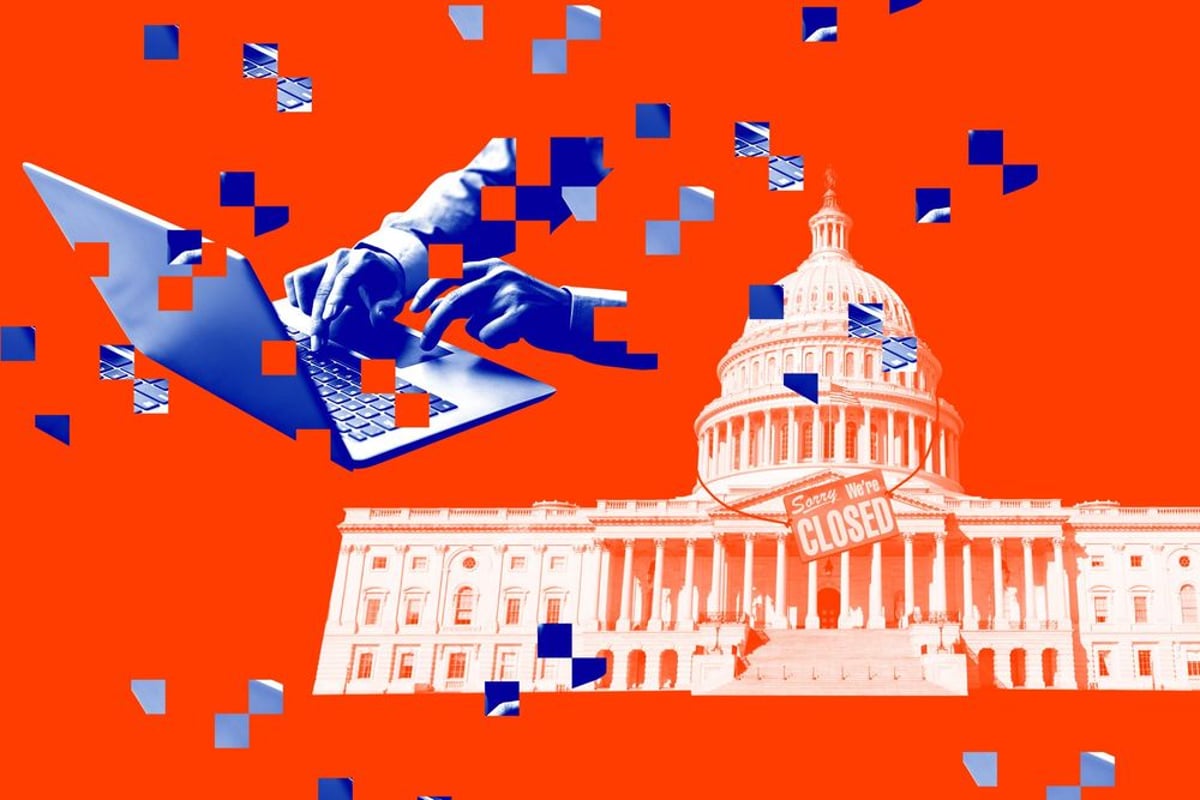
The three-week federal shutdown is decimating what's left of the government's tech workforce, forcing skilled technologists to abandon critical systems that millions of Americans depend on. With 750,000 workers furloughed and threats they may never receive back pay, the brain drain could cripple government technology infrastructure for years to come.
The federal government's tech talent is hemorrhaging at the worst possible time. Just as the Trump administration and DOGE have already slashed the federal workforce throughout 2025, the three-week shutdown is delivering what could be the final blow to government technology operations that touch every American's life.
Kin Lane, an API expert who worked on the Free Application for Federal Student Aid system in 2013, knows exactly what's at stake. FAFSA processes millions of college applications annually, handling sensitive financial data and IRS integration that determines whether students can afford higher education. "That process working or not working, the privacy, the security... just equipping the next generation year after year," Lane told The Verge. "That kind of bureaucratic machine is super important and super critical."
But Lane's own government service was cut short by the 2013 shutdown. Living paycheck to paycheck in DC, he couldn't survive without pay and had to abandon his Presidential Innovation Fellowship. "When the shutdown happened, everybody was kind of partying. I was freaked out," he recalls. "I had an Airbnb. I was like two weeks away from being homeless."
Now history is repeating itself on a much larger scale. The current shutdown has furloughed up to 750,000 federal workers, and the Trump administration has reportedly been hatching a plan to withhold the back pay these workers would typically receive. For tech workers who already face an 85% pay cut compared to private sector roles, the message is clear: find another job.
"It definitely contributes to the perception - and the reality - that the government is just a pretty shitty employer," says Mikey Dickerson, who served as the first administrator of the US Digital Service under Barack Obama. The USDS was later repurposed into DOGE, effectively gutting the program designed to modernize government technology.
The timing couldn't be worse. Private contractors working with federal agencies report that "half of people are gone and you can't reach anybody." One contractor, granted anonymity to discuss their work, warns about critical systems failing: "I'm worried as hell about IRS. How are they going to be able to do taxes this coming year with a fraction of the staff?"
The ripple effects extend far beyond government operations. Last year's FAFSA system problems delayed financial aid offers for millions of students, creating uncertainty about college affordability that could determine entire life trajectories. Air traffic controllers worried about mortgage payments while managing aircraft safety. Veterans unable to access healthcare claims and prescription refills through modern digital portals.
What makes this particularly devastating is that government tech work has always required personal sacrifice for public good. Dickerson recalls trying to recruit technologists to USDS: "The 85 percent pay cut is not attractive. The pre-employment drug testing and background check is not attractive. I am not going to be able to replicate the Google work environment." His pitch relied entirely on civic duty and working with "people trying to serve the public in some altruistic sense."
That altruistic appeal rings hollow when workers can't pay rent. Former USDS officials have formed an informal group offering personal loans to help government technologists bridge the financial gap. They're providing two to three months of net take-home pay, essentially betting their own money that these workers matter enough to save.
It's a self-fulfilling prophecy of dysfunction. "If you don't have enough people to do the work, nothing's getting done," the anonymous contractor explains. "And then they can be like, 'Look, the government doesn't get anything done.'" Trump has explicitly stated he'll use the shutdown to gut "Democrat programs" and warned that shuttered services "are never going to come back in many cases."
The long-term damage extends beyond individual hardship. Government technologists gain unique insights into systems that private companies later build around - from education technology startups to fintech companies processing government data. Lane notes that this experience often changes worldviews: "I just saw government isn't just this evil market force trying to ruin people's lives. It's actually the one thing that's in between you and market forces, especially when you're a person of color."
But those learning opportunities disappear when the talent flees. Dickerson continues advocating for a resurrected USDS, recognizing that "in five years or 10 years there will exist a US president, an administration that wants the government to be competent at doing anything at all, then there's going to be an even bigger hole to dig out of."
The question is whether anyone will be left to dig.
The government shutdown isn't just a political standoff - it's systematically dismantling the technological infrastructure Americans depend on daily. From college financial aid to tax processing to veterans' healthcare, critical systems are losing the skilled workers needed to keep them running. While former officials scramble to personally loan money to displaced technologists, the broader message is unmistakable: public service technology careers are unsustainable. The brain drain happening now will take years to reverse, assuming there's ever political will to rebuild what's being destroyed.