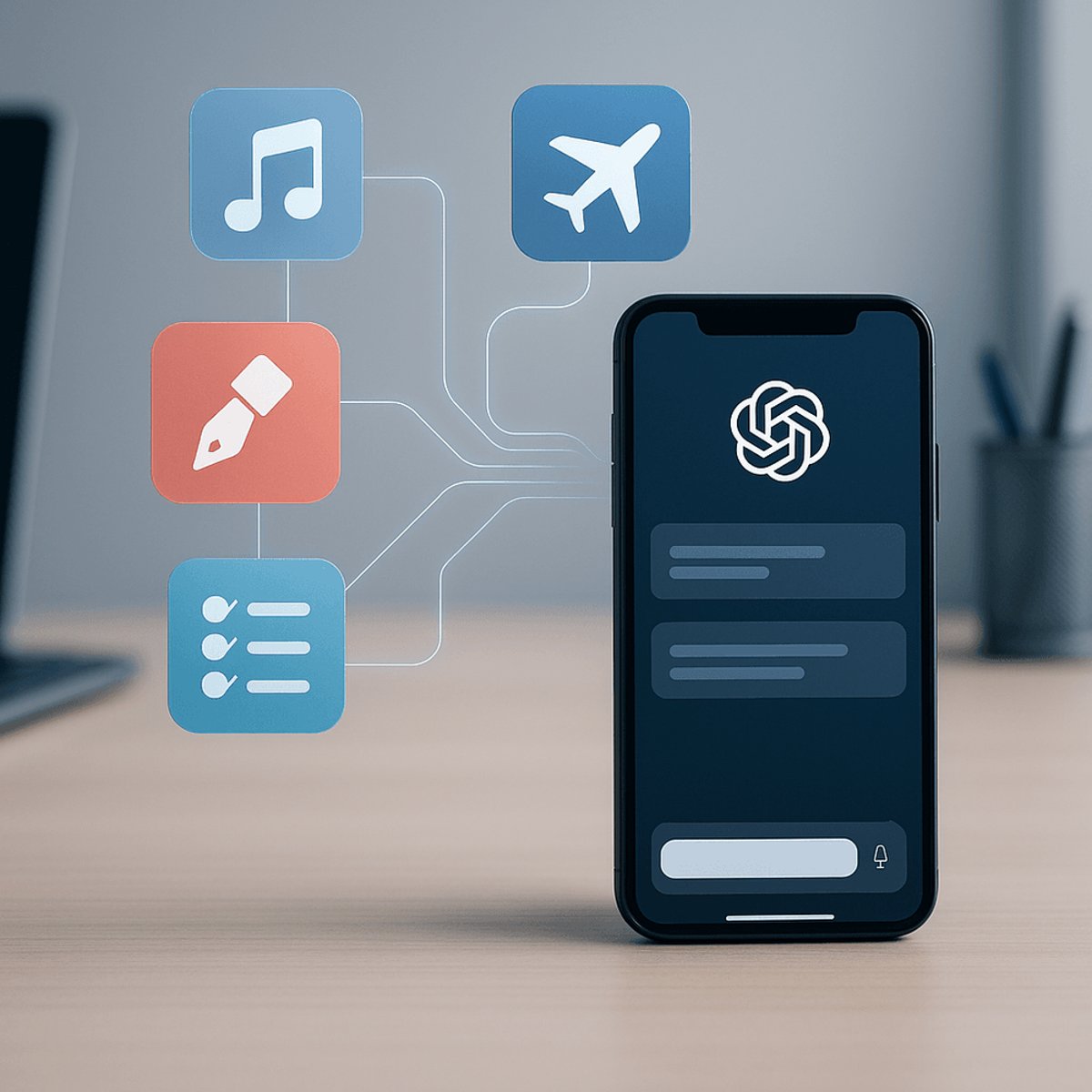
OpenAI just turned ChatGPT into a Swiss Army knife for productivity. The company's new app integrations let you connect accounts from Spotify, Canva, Figma, and others directly to the AI chatbot, transforming it from a text generator into a personal assistant that can create playlists, design graphics, and book travel without leaving the conversation.
OpenAI just dropped what might be the most practical AI feature we've seen all year. The company's new app integrations in ChatGPT transform the chatbot from a conversation partner into a genuine productivity powerhouse, letting users control their favorite apps through simple text commands.
The rollout includes heavy hitters like Spotify, Canva, Figma, Expedia, and Booking.com, with more coming soon. But this isn't just about convenience - it's about OpenAI positioning ChatGPT as the central hub for digital workflows.
Getting started is surprisingly straightforward. Users simply type the app name at the beginning of their prompt, and ChatGPT guides them through the connection process. Want to set up multiple integrations at once? The Settings menu's new Apps and Connectors section lets you browse and connect everything in one place.
The Spotify integration showcases the feature's potential best. Users can ask ChatGPT to "create a playlist for my morning workout" or "find new indie rock artists similar to Arctic Monkeys," and the AI will tap into their listening history to deliver personalized results that appear directly in their Spotify app. It can even add and remove tracks from existing playlists.
Canva's integration tackles the creative workflow bottleneck that plagues marketers and small business owners. Instead of staring at a blank template, users can request "a 16:9 slide deck about Q4 roadmap with blue color scheme" or "an Instagram story for a coffee shop grand opening." While AI-generated designs aren't perfect - expect occasional spelling errors and distorted images - they provide a solid starting point that users can refine in Canva's full editor.
For product teams, the Figma connection turns brainstorming sessions into actionable diagrams. Users can upload files and ask ChatGPT to generate product roadmaps complete with milestones and deadlines, or convert abstract concepts into flow charts and wireframes. This bridges the gap between idea and execution that often stalls creative processes.
The travel integrations with Expedia and Booking.com address one of online travel's biggest pain points: the overwhelming number of options. Instead of filtering through hundreds of hotels, users can specify "4-star hotels near public transport with breakfast included for under $150/night" and get curated results. The AI understands context better than traditional search filters, making trip planning feel more like a conversation with a knowledgeable travel agent.
But there's a privacy trade-off that users need to understand. Connecting these apps means sharing data with OpenAI - your Spotify listening history, Canva designs, travel preferences, and more. This data sharing enables the personalization that makes these integrations useful, but it also raises questions about data control and third-party access.
The current lineup represents just the beginning. OpenAI has announced partnerships with DoorDash, OpenTable, Target, Uber, and Walmart launching later this year, signaling ambitions to become the primary interface for digital services. This strategy mirrors how smartphones became the gateway to app ecosystems, but with AI as the unifying layer.
Geography limits the rollout for now - only U.S. and Canada users can access these integrations, leaving European and UK users waiting. This reflects ongoing regulatory complexities around AI and data sharing that could impact OpenAI's global expansion plans.
The feature works through OpenAI's Model Context Protocol, which lets ChatGPT communicate with external services while maintaining security boundaries. This technical foundation suggests more sophisticated integrations are possible as the technology matures.
ChatGPT's app integrations represent a fundamental shift in how we interact with digital services. By centralizing control through natural language, OpenAI is betting that users will trade some privacy for convenience and efficiency. The early implementations show promise, but the real test will come as more complex integrations launch and users discover which workflows truly benefit from AI mediation. For now, the feature offers a compelling glimpse of a future where AI assistants handle the tedious parts of digital life.