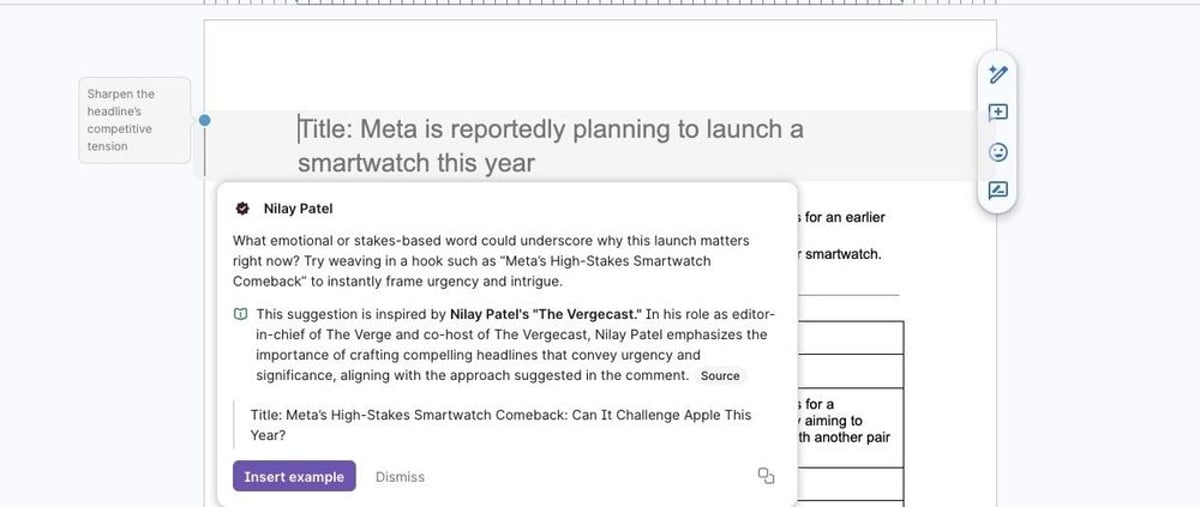
Grammarly is doubling down on a controversial AI feature that uses real authors' names without permission. The company's "Expert Review" tool, which impersonates journalists and famous writers to add credibility to AI-generated suggestions, sparked immediate backlash after The Verge and Wired exposed it last week. Instead of walking back the feature, Grammarly's response offers an opt-out - forcing authors to actively remove themselves from a system they never consented to join.
Grammarly just told the world it plans to keep using your name and identity to sell its AI features - unless you specifically ask them to stop. The writing assistant platform, valued at over $13 billion in its last funding round, responded to mounting criticism this week not with an apology, but with what amounts to a grudging concession: affected authors can now request to be removed from its "Expert Review" system.
The feature turns real writers into AI personas. When Grammarly users draft documents, the tool offers feedback supposedly "in the style of" named journalists and authors - people who never agreed to train the AI, never licensed their names, and never received compensation. The Verge discovered its own staff had been turned into virtual editors, with reporter Sean Hollister and Editor-in-Chief Nilay Patel finding their names attached to AI-generated writing advice they didn't create.
Wired broke the story wider last Wednesday, revealing the system impersonated authors far beyond tech journalism - including deceased writers who obviously couldn't consent. The publication showed how Grammarly's AI claimed to offer feedback "like" these established voices, borrowing their credibility to make generic suggestions feel authoritative.
Grammarly's response reveals how AI companies are rewriting the rules around identity rights. Traditional media required explicit permission to use someone's name for commercial purposes. But in the AI era, companies like Grammarly apparently believe they can grab first and ask questions later - or in this case, not ask questions at all, just offer an exit door for those who complain loudly enough.
The opt-out approach shifts the burden entirely onto individuals. Instead of Grammarly seeking consent before using someone's professional identity, affected authors must now discover they've been impersonated, figure out how to contact the company, and request removal. It's the digital equivalent of someone opening a business in your name and then telling you that you're welcome to file paperwork to make them stop.
This isn't just about hurt feelings or professional courtesy. The "Expert Review" feature commercializes personal brands that writers spent years building. When Grammarly slaps Nilay Patel's name on AI-generated feedback, it trades on his reputation at The Verge without compensating him or giving him editorial control. If the AI gives bad advice, his name still appears next to it.
The controversy comes as AI companies face increasing legal pressure over their use of copyrighted material and personal likenesses. OpenAI settled with Scarlett Johansson after allegedly using a voice similar to hers, while multiple lawsuits from authors and artists challenge whether AI training constitutes fair use. Grammarly's refusal to back down suggests the company believes name usage falls into a legal gray area.
But legal and ethical don't always align. Even if courts eventually rule that AI companies can freely use public figures' identities for training purposes, the question remains whether they should. Grammarly built its reputation on helping writers find their own voice - now it's appropriating other people's voices without asking.
The writing tool industry has gotten increasingly competitive as AI features proliferate. Microsoft bundles AI writing assistance into Office 365, Google offers similar features in Workspace, and startups like Jasper and Copy.ai target specific niches. Grammarly likely saw "Expert Review" as a differentiator, but the execution has created a public relations crisis that overshadows any technical innovation.
For now, affected authors face a choice between spending time fighting for removal or letting their names continue appearing in Grammarly's system. That's not really a choice at all - it's Grammarly forcing unpaid labor onto the same people whose identities it's already exploiting. The company could have launched this feature with an opt-in model, reaching out to writers and offering partnerships. Instead, it grabbed first and is now daring people to object.
The silence from Grammarly's leadership speaks volumes. No public apology, no acknowledgment that maybe launching a feature that impersonates people without permission was ethically questionable. Just a quiet opt-out form and hope the controversy blows over. But as more authors discover their names attached to AI feedback they didn't write, that calculation might prove costly.
Grammarly's stance reveals a broader pattern in AI development - companies building features around people's identities and then offering opt-outs instead of seeking permission upfront. As AI capabilities expand, this approach sets a troubling precedent where the default assumption is that anything publicly available becomes fair game for commercial AI features. The real test isn't whether Grammarly can legally get away with this, but whether users and affected authors will accept a future where their professional identities become raw material for someone else's product without their consent.