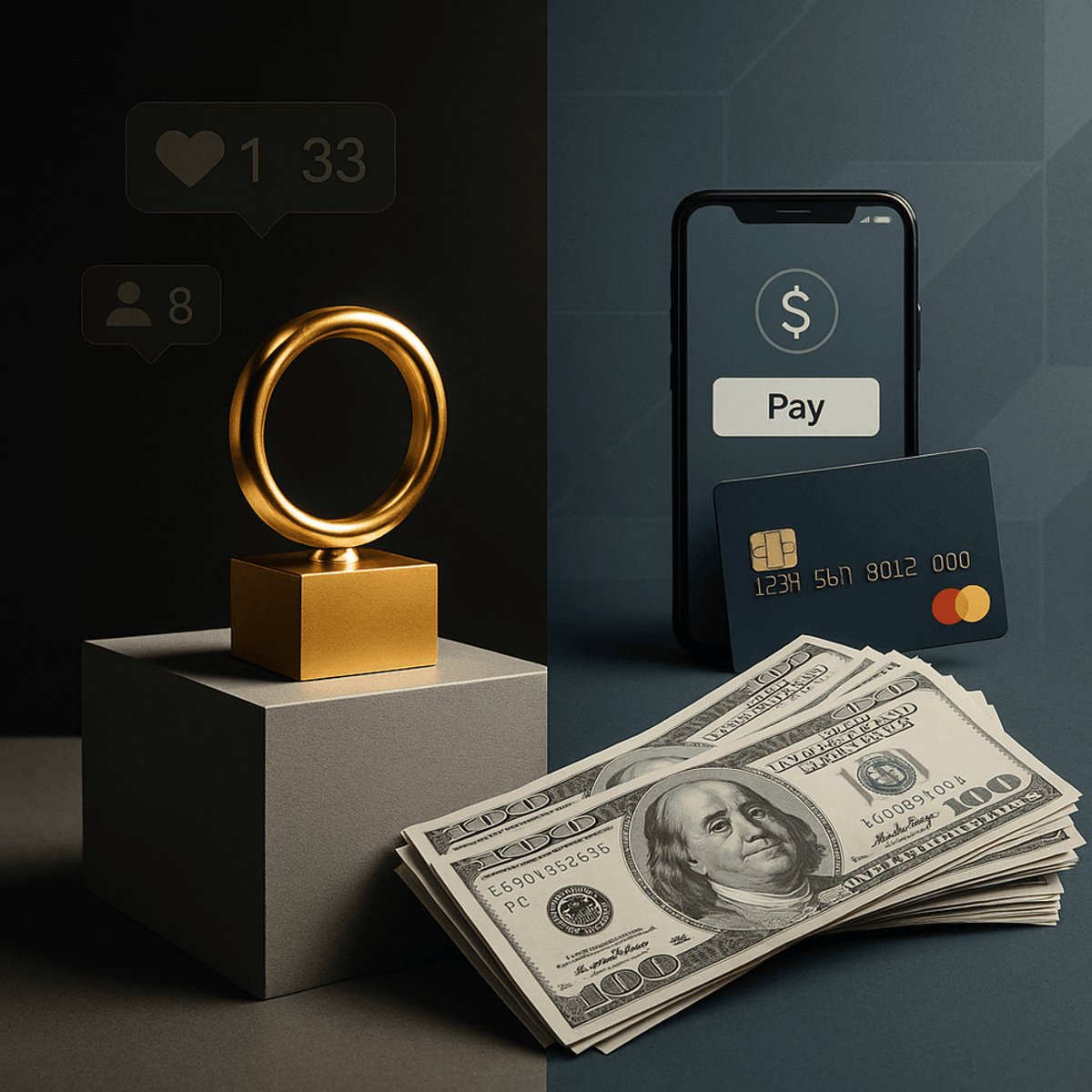
Instagram just announced it's giving 25 creators actual gold rings instead of money - a move that perfectly captures the harsh new reality of the creator economy. While Meta ended its lucrative Reels Play bonus program in 2023, the company now offers symbolic recognition through jewelry and profile badges, raising questions about why one of the world's richest companies won't pay creators directly.
Instagram just dropped the ultimate mixed signal to creators everywhere. The Meta-owned platform announced Monday it's launching a new "Rings" award program that will hand out literal gold rings to 25 creators - complete with matching profile badges and customization features. But there's a catch that's got the creator community buzzing: zero dollars attached.
The timing couldn't be more loaded with irony. This announcement comes as creators are still reeling from Meta's decision to axe its Reels Play bonus program back in 2023, which had been a financial lifeline for thousands of content makers. "As stupid as it sounds, in this economy it was a blessing for my household to have the extra money coming in," one Reddit user wrote after Meta pulled the plug on direct payments.
The new awards will be judged by a panel that reads like a who's who of creative industries: Instagram chief Adam Mosseri, filmmaker Spike Lee, designer Marc Jacobs, and tech reviewer Marques Brownlee. Brownlee, who's also serving as a judge, told CNBC he's focused on "creators whose work showed the most effort and risk-taking, not simply those with the biggest followings."
"It's more about a special visibility and sort of incentive for people to work towards a really cool elevated recognition," Brownlee explained, though his comments highlight the disconnect between recognition and compensation that's become Instagram's new normal.
The creator economy landscape has shifted dramatically since Meta's bonus program ended. Brand deals - traditionally the bread and butter for influencers - plummeted 52% in 2024 according to a Kajabi survey. Meanwhile, competitors like YouTube are flexing their creator payouts, having distributed over $100 billion to creators over the past four years.
This disparity has created an awkward situation where Instagram, despite being owned by a company worth over $800 billion, is offering jewelry while rivals write checks. TikTok and YouTube both maintain active creator revenue-sharing programs, making Instagram's symbolic approach stand out for all the wrong reasons.
The gold rings come with some digital perks - winners can customize their profile backdrop colors and change their "like" button appearance. But these features feel hollow when creators are struggling to monetize their content on the platform. Mosseri hinted in June 2024 that the company was considering changes to creator compensation, but no concrete plans have materialized.
Even more telling, CNBC previously reported that Meta was paying creators in January to promote Instagram on competing platforms like TikTok and Snapchat. Those deals have since ended, according to an Instagram spokesperson, suggesting the company's strategy around creator payments remains in flux.
The broader context paints a picture of a creator economy under pressure. While platforms battle for content and engagement, the financial pipeline to creators has been steadily constricting. Instagram's rings program feels like a particularly stark example of this trend - offering prestige instead of paychecks in an increasingly challenging economic environment.
Brownlee's take on the program reveals both optimism and realism about the current state of creator rewards. "This could be looked at as an incentive to make more Instagram stuff, or really just an incentive to make the best possible thing you can and hopefully get recognized for it," he said. "No matter where you're doing it, it feels good to know that it resonates with people, this is inspiring people, or this is impressing people."
The 25 rings represent something bigger than jewelry - they're a symbol of how platform economics have evolved. What was once a direct financial relationship between platforms and creators has morphed into something more complex, where recognition and visibility are increasingly positioned as adequate compensation for creative labor.
Instagram's gold rings program crystallizes the current tension in the creator economy - platforms want engaging content but are increasingly reluctant to pay for it directly. While symbolic recognition has its place, the stark contrast with YouTube's $100 billion payout record suggests creators may need to diversify their platform strategies. The real test will be whether recognition alone can sustain the creator ecosystem that Instagram depends on, or if the company will eventually need to return to direct financial incentives to compete for top talent.