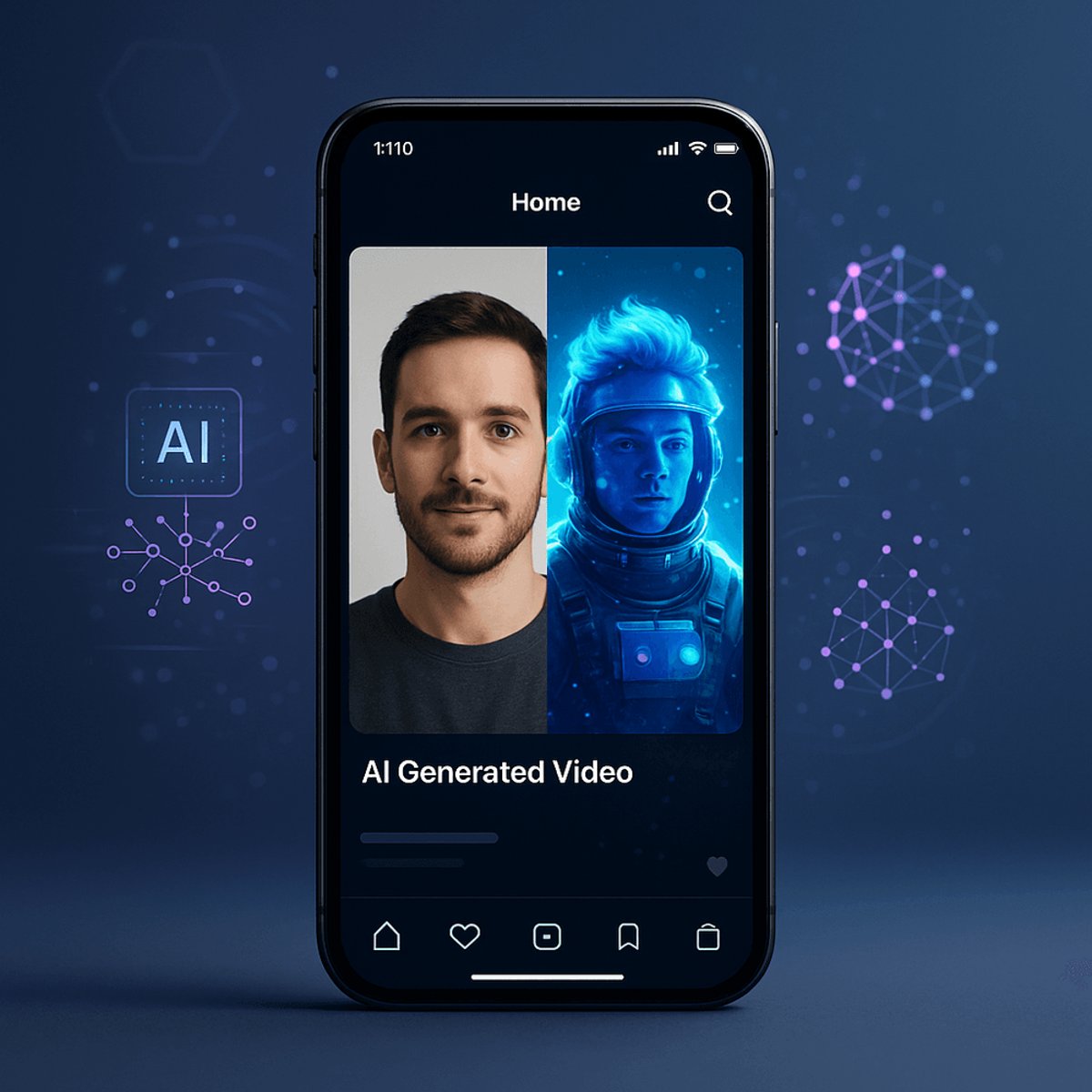
OpenAI just dropped a social media bombshell that could reshape how we think about user-generated content. The company's new standalone app transforms anyone into an AI avatar using its Sora 2 video generation model, essentially creating TikTok for AI-generated videos. What makes this particularly intriguing is that unlike Meta's recent AI video flop, this app puts you and your friends at the center of the experience.
OpenAI just launched something that feels like the future arrived ahead of schedule. After WIRED broke the story earlier this week about the company preparing a social video app, the platform went live within 24 hours. It's essentially TikTok, but every single video is generated by AI.
The mechanics are surprisingly simple yet unnerving. Open the app and it immediately pushes you to create rather than just scroll. Hit the plus button and you're asked to verify your identity by filming yourself reading numbers on screen. This process creates a digital avatar of your face, body, and voice that the app can then manipulate into any scenario you can prompt.
"There is a real novelty to watching you and your friends in AI generated invented scenarios," WIRED's Zoë Schiffer told the Uncanny Valley podcast. "You can make you and all your friends like mermaids swimming in the sea. And there's something funny and interesting about it."
What's fascinating is how OpenAI learned from Meta's recent AI video app failure. That platform became a "complete ghost town," according to Schiffer, partly because it didn't center users in the experience. By contrast, OpenAI's app makes you the star of every video you create, tapping into social media's core narcissistic appeal.
The early user base tells its own story. The feed is dominated by OpenAI employees, with CEO Sam Altman appearing in "like every other video." It's a classic chicken-and-egg problem - the app needs content to attract users, but needs users to create authentic content.
Guardrails exist, but they're selectively enforced. The platform blocks attempts to create nude content or explicitly romantic scenarios. You can't add someone else to your videos without their permission, and users can set their avatars to private. Copyright protection appears inconsistent - the app blocks Taylor Swift and Darth Vader content but allows Pikachu videos to slip through.
"I wonder if they base it on who they think is going to be most litigious," WIRED's Manisha Krishnan observed during the podcast discussion.
The timing couldn't be more strategic. While TikTok has actively leaned away from AI-generated content, OpenAI is betting that AI entertainment represents the future of social media. Multiple AI firms are exploring this space, but OpenAI's approach of centering personal avatars could be the unlock the industry has been searching for.
Early users are already testing the platform's limits. Some have attempted to create promotional videos for cryptocurrency using AI avatars, while others push against content filters. This will likely force OpenAI into a constant game of whack-a-mole as new loopholes emerge.
The app raises profound questions about authenticity in social media. Traditional platforms built their ecosystems around genuine personality and authentic content creation. This represents a radical departure - social media where no one is actually themselves, yet everyone is hyperreal.
"It's basically TikTok, except everything you're looking at is generated by AI," Schiffer explained. The implications extend beyond entertainment into areas of identity, trust, and what constitutes genuine human connection in digital spaces.
Whether this experiment succeeds depends largely on sustainable user engagement. The novelty of watching AI versions of yourself perform impossible scenarios is undeniable, but social platforms ultimately survive on authentic community building and repeat usage patterns.
OpenAI's Sora 2 social app represents either the next evolution of social media or a fascinating dead end. By centering AI avatars of real users, the company has found a potentially addictive formula that competitors like Meta couldn't crack. But the platform's early reliance on employee content and inconsistent content moderation suggest significant growing pains ahead. Whether users will embrace a social media experience built entirely on AI-generated content over authentic human interaction remains the million-dollar question that could determine the future of digital social platforms.