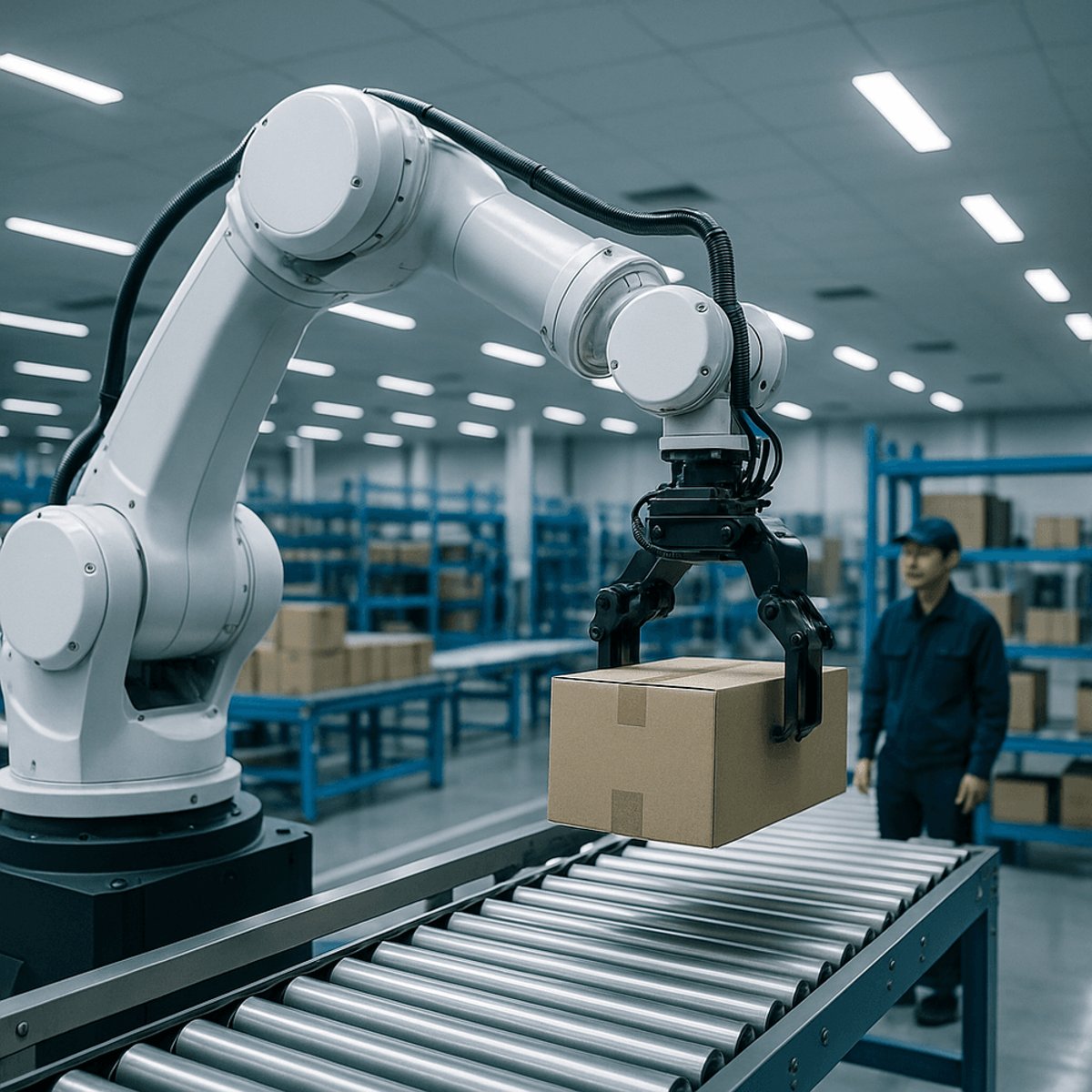
Japan isn't waiting for physical AI to get perfect-it's putting robots to work right now. Facing one of the world's most severe labor shortages, the country is accelerating deployment of physical AI systems from experimental pilots into actual warehouses, factories, and service roles. With backing from Salesforce Ventures, Woven Capital, and Global Brain, Japanese startups are proving that robots don't need to replace workers-they just need to fill the jobs nobody wants.
Japan's demographic time bomb is doing what years of robotics research couldn't-forcing physical AI out of the lab and into the real world. With a rapidly aging population and birth rates hitting historic lows, the country faces a worker shortage so acute that businesses are deploying robots not because they're cutting-edge, but because there's literally nobody else to do the job.
The shift is attracting serious enterprise money. Salesforce Ventures is betting on Japanese physical AI startups, joined by Woven Capital, Toyota's venture arm, and local heavyweight Global Brain. These aren't speculative moonshot investments-they're backing companies deploying robots into warehouses, manufacturing lines, and service positions today.
What makes Japan's approach different is the absence of worker displacement anxiety that's stalling automation in Western markets. When you can't find humans to fill shifts, robots become collaborators rather than competitors. A warehouse manager in Osaka doesn't worry about replacing staff with autonomous systems-she worries about keeping the facility running with half the workers she needs.
This pragmatic necessity is creating a real-world testing ground that Silicon Valley can only simulate. Japanese robotics companies are learning what works when physical AI meets messy human environments-unpredictable warehouse layouts, variable product packaging, and the constant adaptation required in actual operations. The feedback loop is accelerating development faster than any research lab could manage.
The enterprise implications stretch far beyond Japan's borders. Companies watching these deployments are seeing proof points that physical AI can handle tasks previously thought too complex or variable for automation. Every successful implementation in Tokyo or Nagoya becomes a case study for manufacturers and logistics operators in other aging economies-Germany, South Korea, and eventually the United States.
Woven Capital's involvement signals that Toyota sees this as more than a Japanese phenomenon. The automaker's venture arm is positioning to understand how physical AI will reshape manufacturing globally, using Japan's necessity-driven adoption as an early indicator of what's coming everywhere else. When labor gets scarce or expensive enough, the robots that worked in Yokohama suddenly become viable in Ohio.
The startups emerging from this environment aren't building general-purpose humanoid robots-they're solving specific, unglamorous problems. Robots that move boxes endlessly in fulfillment centers. Systems that handle repetitive assembly tasks on third shifts nobody wants to work. Autonomous cleaning machines that operate when buildings are empty. It's not the sci-fi future of robot butlers, but it's the economically viable present of physical AI doing jobs humans increasingly refuse.
What Japan is proving is that physical AI doesn't need to match human versatility to be useful-it just needs to be reliable enough to fill gaps that would otherwise stay empty. That lower bar for deployment is creating momentum that could accelerate the technology faster than pursuit of perfect humanoid robots ever would. Real-world use is teaching these systems faster than any amount of simulation.
The regulatory environment helps. Japan's government isn't throwing up barriers to physical AI deployment-it's actively encouraging solutions to the labor crisis. While Western regulators debate liability frameworks and safety standards, Japanese companies are iterating in production environments, learning what actually matters versus what sounds important in policy papers.
For investors, the thesis is straightforward-Japan's demographic decline is irreversible, making physical AI adoption inevitable rather than speculative. The startups succeeding here are building solutions that every aging economy will eventually need. It's not about whether physical AI goes mainstream, but whether you're backing the companies learning how to deploy it while competitors are still running pilots.
Japan's labor crisis is accidentally creating the world's largest physical AI testing ground-and the lessons being learned in Osaka warehouses and Tokyo factories are going to reshape how every aging economy thinks about automation. This isn't about robots replacing workers anymore. It's about robots becoming the only option when workers simply aren't there. For investors watching Salesforce Ventures and Woven Capital pour money into these startups, the message is clear: physical AI is moving from research curiosity to operational necessity faster than anyone predicted. The question isn't whether your industry will deploy these systems-it's whether you'll learn from Japan's real-world experiments or repeat all their mistakes yourself.