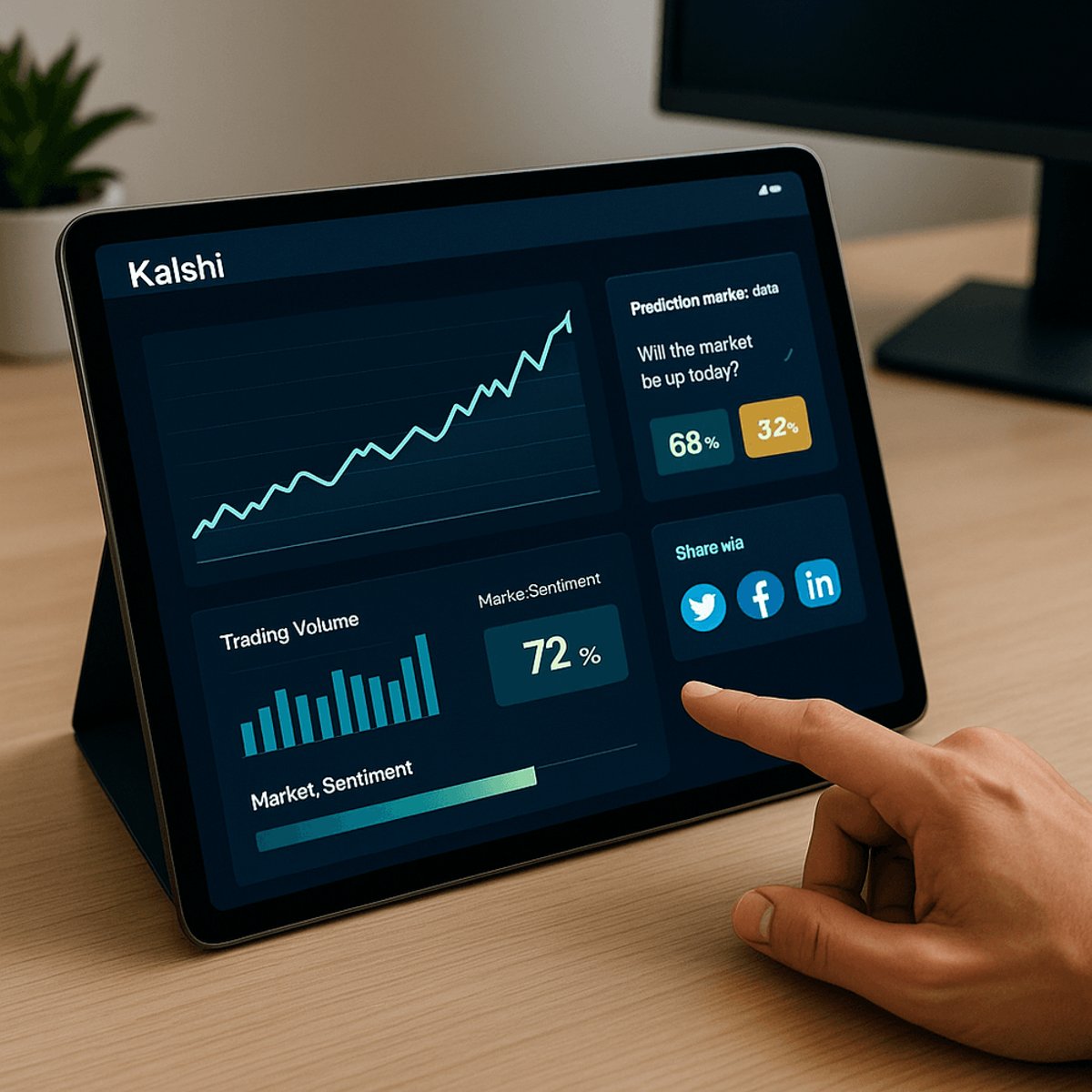
Prediction market platform Kalshi is making a quiet but strategic bet on Meta's Threads, rolling out a new feature that lets users share live market charts directly to the social platform. The integration, which automatically embeds Kalshi's prediction market data into Threads posts, signals growing developer confidence in Meta's Twitter alternative as it competes for mindshare in the social media landscape. For Kalshi, it's a calculated move to amplify its market predictions beyond its own platform.
Kalshi, the regulated prediction market platform that lets users bet on everything from election outcomes to economic indicators, just added a notable integration that speaks volumes about the evolving social media pecking order. The company now offers a native share button that automatically embeds live prediction market charts directly into Threads posts, making it dead simple for users to broadcast market sentiment to Meta's fast-growing Twitter alternative.
The feature works exactly as you'd expect - click share on any Kalshi market, select Threads, and the relevant chart embedding showing real-time odds appears in your draft post. It's a straightforward implementation, but the strategic implications run deeper than the technical execution.
What makes this noteworthy isn't the complexity of the integration, but rather Kalshi's decision to prioritize Threads at all. In the fragmented social media landscape, where developers must choose which platforms warrant engineering resources, Kalshi is placing a bet that Threads has staying power. That's particularly interesting given the platform's rocky start - Threads launched with explosive growth in 2023, only to see engagement crater before finding its footing over the past year.
For Meta, these kinds of third-party integrations represent crucial validation. While the company has poured resources into building out Threads' feature set and luring users from X, getting developers to build native integrations signals genuine platform momentum. It's the difference between having users and having an ecosystem.
The timing aligns with Threads' reported push past 200 million monthly active users, a milestone that puts it in legitimate contention as a Twitter successor, even if it still trails X's scale. More importantly, Threads has been actively courting the kind of real-time news and information sharing that makes prediction markets relevant - exactly the use case Kalshi needs to amplify its reach.
From Kalshi's perspective, the integration solves a distribution challenge inherent to prediction markets. The platform's value increases as more people see and participate in its markets, creating network effects that improve price discovery and liquidity. By making it frictionless to share market charts on Threads, Kalshi essentially turns its users into a distributed marketing engine, broadcasting market sentiment to audiences who might never visit Kalshi directly.
The feature also plays into a broader trend of prediction markets moving from niche curiosity to mainstream conversation starter. Kalshi, which gained regulatory approval from the CFTC to operate as a designated contract market, has positioned itself as the legitimate, regulated alternative to crypto-based prediction platforms. Making its charts more shareable on mainstream social platforms reinforces that positioning - these aren't shadowy betting markets, they're data points worthy of serious discussion.
It's worth noting what's absent from this announcement - there's no mention of similar integrations for X, Instagram, or other major platforms. That selective rollout suggests Kalshi sees Threads' audience as particularly aligned with its core user base, skewing toward news-focused, politically engaged users who might find prediction market data compelling.
The integration also arrives as prediction markets face increased scrutiny and interest following election cycles where platforms like Kalshi, Polymarket, and PredictIt have claimed superior forecasting accuracy compared to traditional polls. Making market data more visible and shareable could help normalize prediction markets as a legitimate information source, assuming the charts that get shared actually prove accurate.
For now, the feature represents a relatively low-risk experiment for both companies. Kalshi gets potentially wider distribution for its market data, while Meta gains another data-rich content type that could keep users engaged on Threads. Whether users actually embrace sharing prediction market charts remains to be seen - the feature's success will depend on whether Kalshi's markets capture genuinely interesting questions that people want to discuss and debate.
Kalshi's Threads integration is a small feature launch with potentially big implications. It signals that Meta's Twitter alternative has reached a level of maturity where serious platforms see value in native integration, while giving Kalshi a new channel to push prediction market data into mainstream conversation. The real test comes next - whether users actually share these charts, and whether that sharing drives meaningful engagement back to Kalshi's platform. In the meantime, it's one more data point suggesting Threads is building the kind of developer ecosystem that separates lasting platforms from flash-in-the-pan social experiments.