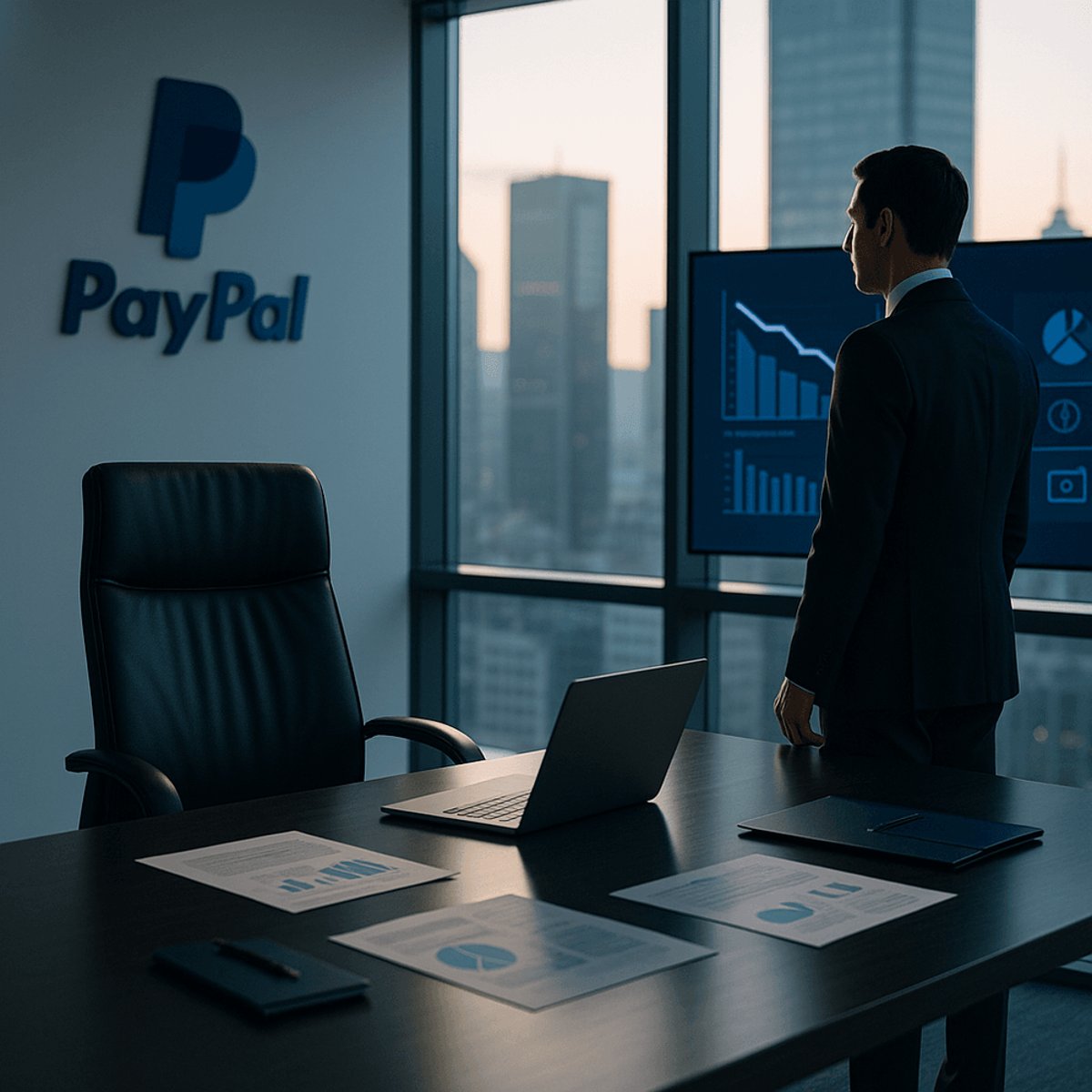
PayPal just executed one of fintech's fastest CEO turnarounds. The payments giant ousted Alex Chriss after barely 16 months on the job, naming HP's Enrique Lores as his replacement following a brutal earnings miss that sent shares plummeting 17.9% in premarket trading Tuesday. The board didn't mince words - Chriss's execution "was not in line with expectations" as the company missed Q4 revenue targets and shocked Wall Street with a forecast calling for profit declines instead of growth.
PayPal just hit the eject button on its CEO strategy. The company announced Tuesday it's replacing Alex Chriss with HP CEO Enrique Lores after a disastrous earnings report that laid bare the fintech giant's struggles to keep pace with a rapidly evolving payments landscape.
The timing tells you everything. Chriss joined PayPal in September 2023 from Intuit, brought in to revitalize a company that had lost its mojo as newer players like Stripe and Block ate into its market share. Sixteen months later, he's out. CFO and COO Jamie Miller takes over as interim CEO until Lores officially starts March 1.
PayPal's board didn't sugarcoat the decision. In its official announcement, the company stated the leadership change came because its "pace of change and execution was not in line with the Board's expectations" given broader market trends. That's corporate-speak for: we're falling behind and needed to act fast.
The catalyst? PayPal reported fourth-quarter revenue and profit that missed analyst expectations, with consumer spending dipping amid what the company characterized as a cost-of-living crisis and softening labor market. But the real shocker came in the forward guidance - PayPal forecast a decline in full-year profit when Wall Street had broadly expected growth. Investors fled, sending shares down nearly 18% before markets even opened.
Lores brings a different pedigree to the role. He spent over six years running HP, navigating the hardware giant through supply chain chaos and the shift to hybrid work. He's also been chair of PayPal's board since July 2024, giving him an insider's view of the company's challenges. In a statement, Lores acknowledged the existential pressures facing PayPal: "The payments industry is changing faster than ever, driven by new technologies, evolving regulations, an increasingly competitive landscape, and the rapid acceleration of AI that is reshaping commerce daily."
That AI reference isn't throwaway corporate jargon. Payments is being rebuilt from the ground up by machine learning - from fraud detection to personalized checkout experiences to embedded finance. PayPal pioneered digital payments two decades ago but now finds itself playing catch-up as younger companies build AI-native platforms from scratch.
The competitive pressure is intense. Stripe continues to dominate developer mindshare and is expanding into consumer payments. Apple Pay and Google Pay control the mobile wallet space. Buy-now-pay-later upstarts like Klarna and Affirm have carved out their own niches. Even traditional banks are launching instant payment rails that threaten PayPal's transaction fees.
This marks PayPal's third CEO in three years - Dan Schulman departed in 2023 after a decade-long run that saw the company spin out from eBay and grow into a $70 billion market cap giant. Chriss was supposed to be the product visionary who could reinvigorate innovation. Instead, his brief tenure will be remembered for missed targets and a stock that's lost roughly 60% of its value from 2021 peaks.
Lores inherits a company at a crossroads. PayPal still processes hundreds of billions in payment volume annually and counts nearly 400 million active accounts. But growth has stalled, margins are compressing, and the strategic path forward remains unclear. Does PayPal double down on its core merchant services? Pivot harder into crypto and Web3? Build its own AI-powered checkout experiences?
The new CEO signaled accountability will be paramount. Beyond product innovation, Lores said PayPal "will hold itself accountable for delivering quarterly accounts" - a clear shot at the execution failures that cost Chriss his job.
Wall Street will be watching closely. Fintech stocks have been under pressure as rising interest rates squeezed valuations and forced a reckoning on profitability. PayPal's struggles mirror broader challenges across the sector - companies that thrived during the pandemic e-commerce boom now face tougher comps and changing consumer behavior.
The leadership change also raises questions about board oversight. Lores was already chairman when PayPal hired Chriss and presumably signed off on the strategic direction that just failed. Now he's being asked to fix problems he had visibility into for months. Some investors may question whether an HP lifer has the fintech chops to turn around a payments company.
But Lores does bring operational discipline and experience managing through tech industry transitions. HP faced its own existential questions about relevance in the cloud era, and Lores managed to stabilize the business and return cash to shareholders. PayPal needs similar blocking and tackling - cut costs, focus the product roadmap, and rebuild credibility with investors who've watched the stock crater.
The clock's already ticking. Lores officially starts March 1, giving him just weeks to assess the business before first-quarter earnings. Expect swift moves - new executives, restructuring announcements, maybe even asset sales or acquisitions to fill capability gaps. PayPal can't afford another 16-month experiment.
PayPal's abrupt CEO swap underscores how unforgiving today's fintech landscape has become. The company that basically invented digital payments now finds itself struggling to adapt as AI, embedded finance, and nimbler competitors reshape the industry. Lores gets a chance to stabilize the ship, but he's inheriting a business under intense pressure with investors who've lost patience. The next few quarters will determine whether PayPal can reclaim its innovative edge or continues its slide into legacy status. For an industry moving at AI speed, 16 months was apparently long enough to know Chriss wasn't the answer. Whether Lores is remains the multi-billion dollar question.