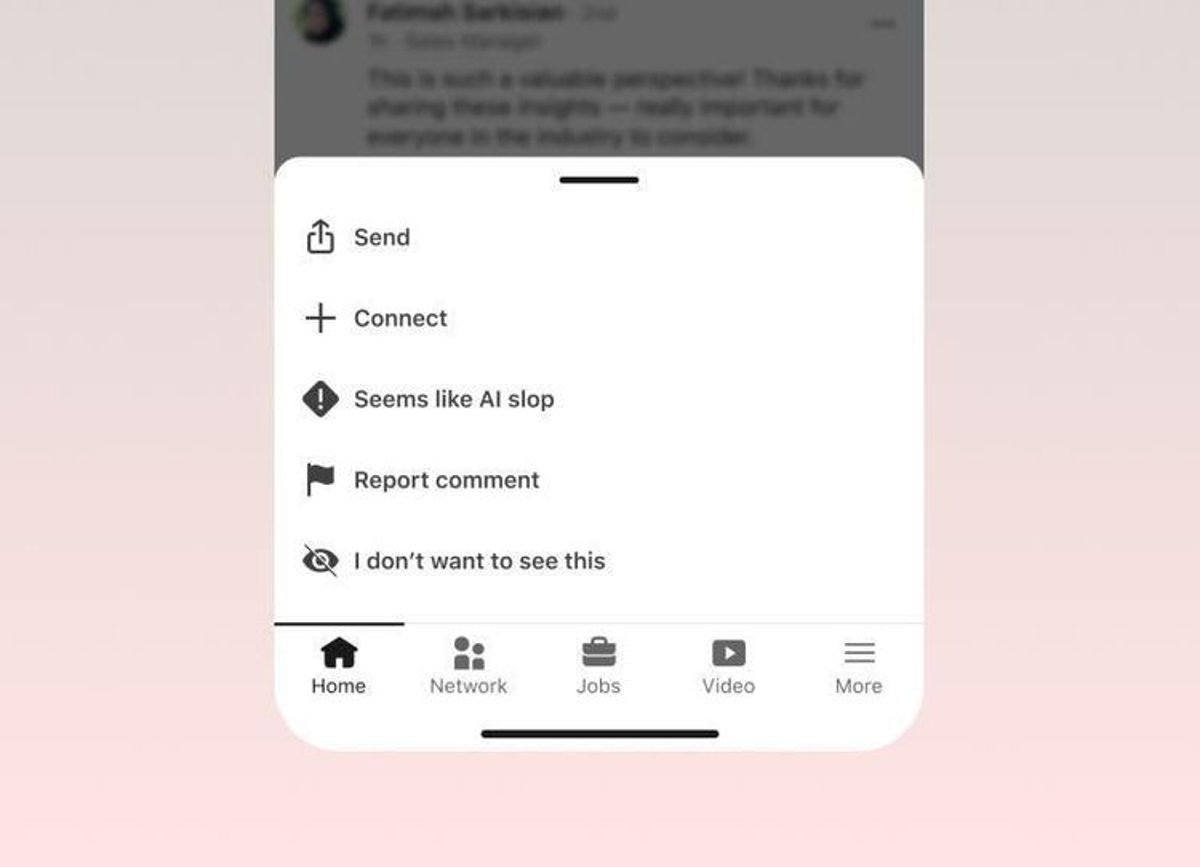
The backlash against AI-generated content just got real numbers. LinkedIn revealed Thursday that over one million users have clicked its controversial "Seems like AI slop" button since launch three weeks ago, marking one of the most aggressive moves yet by a major platform to combat synthetic content. The feature, quietly rolled out July 30th by Microsoft's professional network, comes as the platform grapples with a flood of AI-generated posts that now make up an estimated 41% of long-form content.
LinkedIn is fighting back against the AI content tsunami washing over its feed, and users are joining the battle in massive numbers. The Microsoft-owned platform's chief product officer Hari Srinivasan dropped a telling stat Thursday: more than a million people have already hit the "Seems like AI slop" button since it appeared in post menus three weeks ago.
The feature emerged from the three-dot menu on posts starting July 30th, giving users a direct way to flag content they suspect was churned out by ChatGPT or similar tools. It's a remarkably blunt approach for a platform that's simultaneously trying to sell its own AI assistant features to premium subscribers.
But LinkedIn had little choice. The numbers told a damning story. AI detection startup Pangram Labs ran the numbers in early July and found that 41% of long-form LinkedIn posts were flagged as fully AI-generated, according to research reported by 404 Media. That's not posts with AI assistance - that's content entirely written by machines, from generic motivational posts to fake career advice.
The AI slop problem on LinkedIn became impossible to ignore. Users complained about feeds clogged with suspiciously similar stories about overcoming adversity, generic business wisdom, and recycled thought leadership that read like it came from the same algorithm. The platform's credibility as a professional network was taking hits.
LinkedIn's response went beyond just the reporting button. The company told The Verge it deployed "new and improved" AI classifiers to automatically identify synthetic content. More tellingly, it killed off features that were essentially encouraging the AI spam - though the company hasn't detailed exactly which tools got the axe.
The million-click milestone in just three weeks shows two things: users can spot AI-generated content when they see it, and they're fed up enough to do something about it. That's a participation rate that would make most content moderation features jealous.
But here's where it gets complicated. LinkedIn itself has been pushing AI writing tools to users, including features that help draft posts and comments. The platform launched its AI assistant for premium subscribers, promising to help with everything from connection messages to article summaries. Now it's asking those same users to police AI content.
This puts LinkedIn in an awkward spot that's becoming familiar across the tech industry. Companies want the engagement and content volume that AI tools can generate, but they're discovering that too much synthetic content destroys the authentic interactions that made their platforms valuable in the first place.
The professional network has unique stakes in this fight. Unlike entertainment platforms where AI slop might just be annoying, LinkedIn's whole value proposition rests on authentic professional connections and legitimate expertise. If recruiters can't trust that a person actually wrote their own experience descriptions, or if genuine industry insights get drowned out by bot-generated platitudes, the platform loses its core purpose.
Other platforms are watching this experiment closely. Meta hasn't introduced similar user-flagging tools for AI content on Facebook or Instagram. X (formerly Twitter) has largely ignored the issue despite its own AI spam problems. LinkedIn's willingness to let users directly report AI content - and publicize the numbers - represents a different approach.
The broader question is whether detection and flagging can keep pace with generation. AI writing tools are getting better fast, and the obvious tells that users spot today might disappear in the next model update. LinkedIn's million flags might represent the easy catches - the generic motivational posts and obviously recycled content. The harder challenge comes when AI-generated professional content becomes indistinguishable from human writing.
For now, the message from LinkedIn's user base is clear: they notice AI slop, they don't like it, and they're willing to click a button about it a million times in three weeks. Whether that's enough to turn the tide remains to be seen.
LinkedIn's million-click milestone in three weeks reveals a platform caught between its AI ambitions and user demands for authentic content. The company's dual role - both enabling AI writing tools and fighting AI spam - reflects the broader tension facing every major platform in 2026. As AI generation improves, the detection arms race will only intensify. For now, LinkedIn is betting that user reports combined with automated classifiers can maintain content quality, but the real test comes when AI-generated professional content becomes truly indistinguishable from human expertise. The platform's willingness to publicize these numbers suggests it knows the stakes: lose the authenticity war, and you lose what makes a professional network valuable in the first place.