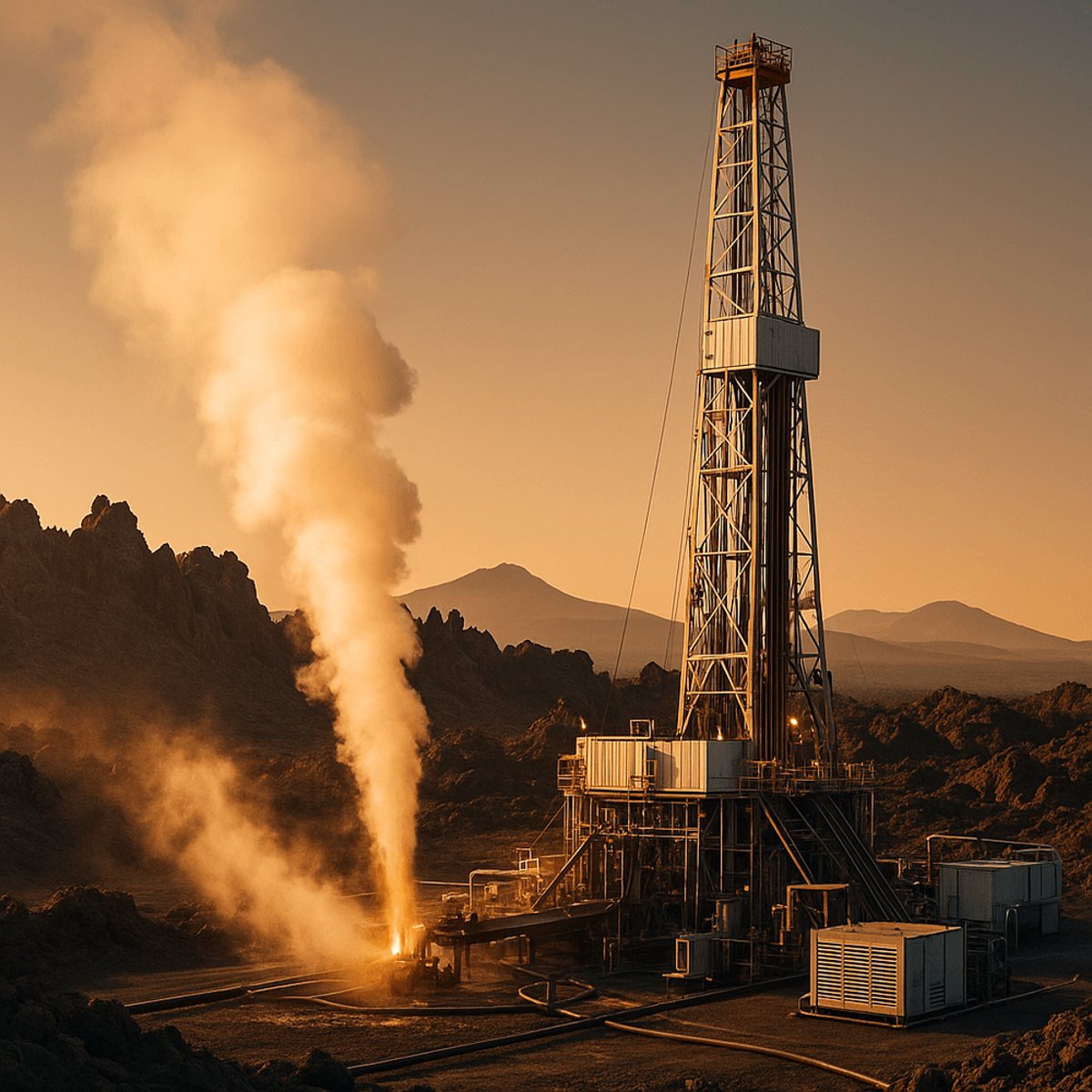
Mazama Energy just drilled the world's hottest geothermal well, hitting 629°F in Oregon's superhot rocks. The Khosla Ventures-backed startup claims this single site could generate 5 gigawatts - enough to power millions of homes around the clock. With data centers desperately seeking 24/7 clean energy, this breakthrough could reshape how tech giants power their AI operations.
Mazama Energy just rewrote the geothermal playbook. The startup announced it drilled a borehole in Oregon that reached a blistering 629°F (331°C), setting a new world record for geothermal wells and potentially unlocking massive amounts of clean energy.
The milestone got its biggest spotlight when Khosla Ventures founder Vinod Khosla took the stage at TechCrunch Disrupt today. "This one site can produce 5 gigawatts of energy," Khosla told the audience, barely containing his excitement about what he called a breakthrough moment for the industry.
But Khosla wasn't done. He painted an even bigger picture: "It's not tens of megawatts, as usual with geothermal wells. You can do gigawatt scale, and frankly, do 100 gigawatts or more - more than AI is projected to use near term, just from super hot geothermal."
The timing couldn't be better. As data centers strain power grids from coast to coast, tech giants are scrambling for reliable clean energy that doesn't depend on weather. Traditional geothermal has been around for decades, but it's been limited to areas with natural hot springs or volcanic activity. Mazama's approach changes that equation entirely.
The company isn't stopping at 629°F either. They're planning to drill even deeper, targeting rocks heated to 750°F (400°C). At those temperatures, each borehole could generate at least 25 megawatts - roughly two to three times what competitors achieve today.
This enhanced geothermal technology works by drilling much deeper than traditional plants, accessing the Earth's consistent heat regardless of surface conditions. Unlike solar panels that go dark at night or wind turbines that stop when the air stills, these wells tap into heat that's been building for millions of years.
The efficiency gains are staggering. "At 450° Celsius, you get 10 times the power per well than you get at 200°," Khosla explained. "Guess what? You also get dramatically lower cost, cost competitive - without worrying about carbon emissions - to natural gas."
Google has already spotted the opportunity, inking deals for geothermal power to feed its data centers. The search giant isn't alone - as AI training demands explode, every major tech company needs massive amounts of reliable electricity that won't hurt their carbon commitments.
The numbers tell the story of geothermal's untapped potential. Wells drilled across Nevada's Great Basin region alone could supply 10% of current U.S. electricity demand, according to the U.S. Geological Survey. Mazama's superhot approach could unlock even more.
Water efficiency adds another advantage. The company claims it can use 75% less water than current geothermal systems by tapping into much hotter rock. When you inject water into 629°F wells, it turns to steam with far less liquid needed.
This isn't just about one Oregon well. Mazama's breakthrough suggests superhot rock formations across the western U.S. could become energy goldmines. The race is now on to see which geothermal startup can scale this technology fastest and capture the biggest slice of the data center power market.
Mazama Energy's record-breaking geothermal well represents more than just a technical achievement - it's a potential game-changer for how we power the digital economy. With data centers consuming ever more electricity for AI operations and tech giants committed to carbon neutrality, superhot geothermal offers something rare: massive scale, 24/7 reliability, and zero emissions. The question isn't whether this technology will reshape energy markets, but how quickly Mazama and its competitors can drill their way to gigawatt-scale deployment.