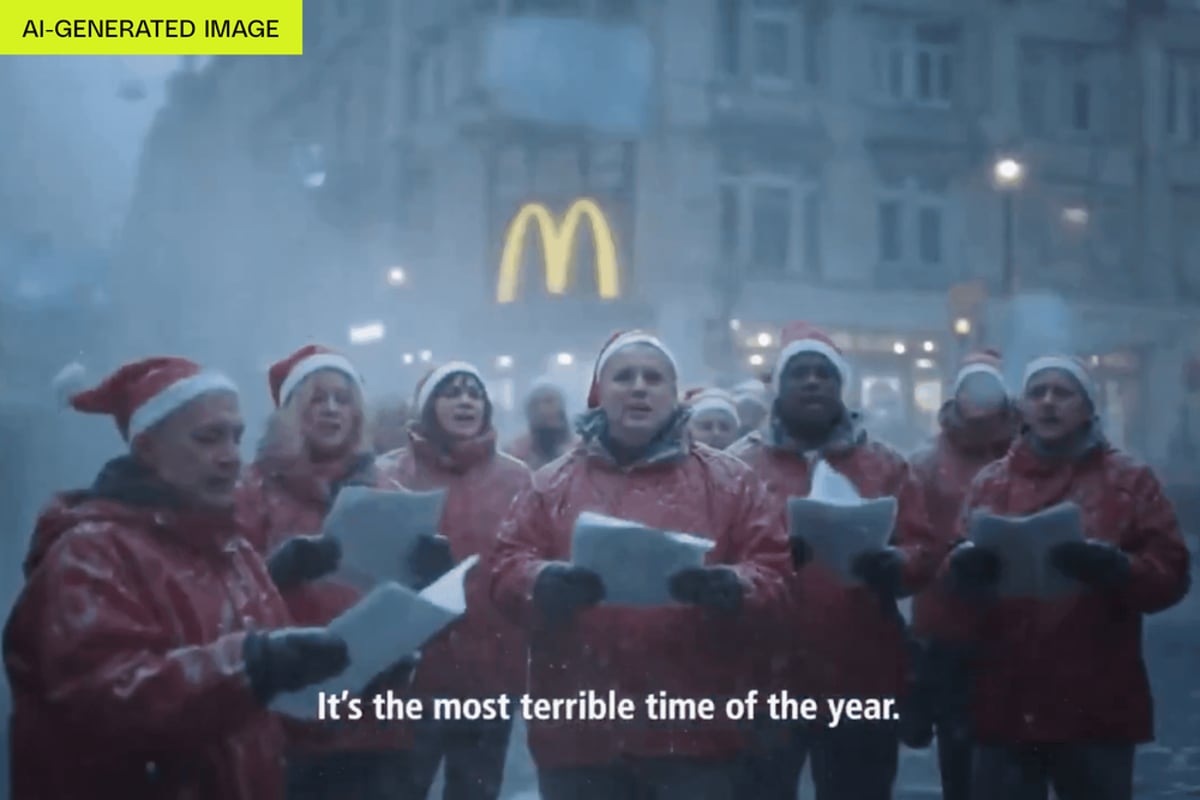
McDonald's just learned that AI and Christmas don't mix. The fast food giant pulled its AI-generated holiday commercial from YouTube after widespread backlash over the ad's depressing message about Christmas being "the most terrible time of the year." The controversy highlights growing consumer resistance to AI-generated marketing content.
McDonald's thought it could sleigh the holiday advertising game with AI. Instead, the company's Christmas commercial crashed harder than an AI-generated person falling through digital ice.
The now-deleted ad for McDonald's Netherlands featured AI-generated people stumbling through a series of holiday disasters - from family dinner meltdowns to caroling catastrophes. Set to a parody song calling the holiday season "the most terrible time of the year," the commercial's punchline encouraged viewers to "hide out in McDonald's until January's here."
That message didn't land well with audiences. After being delisted from YouTube, the ad lives on through social media reposts where comments range from criticism of the AI execution to outright disgust at the anti-Christmas sentiment.
The technical execution proved just as problematic as the messaging. Unlike Coca-Cola's recent AI holiday ad that stuck to animated polar bears, McDonald's attempted AI-generated humans - with predictably uncanny results. One particularly jarring shot shows a person ice skating whose limbs turn "jelly-like" mid-fall, according to The Verge's reporting.
The Gardening.club, the AI division of production studio The Sweetshop, defended their work in a LinkedIn post revealing the ad took "seven intense weeks" to create. They admitted "the man-hours poured into this film were more than a traditional production."
That admission exposes a key flaw in the AI advertising rush. Sweetshop CEO Melanie Bridge told Instagram followers the project required "ten people, five weeks, full-time" plus "an honestly ridiculous amount of coaxing to get the models to behave and to honor the creative brief shot by shot."
If AI commercials take longer to produce than traditional filming while delivering inferior results, what's the point? The McDonald's debacle suggests brands are rushing into AI marketing without considering whether the technology actually serves their goals.
The timing couldn't be worse for AI advertising advocates. Coca-Cola faced similar criticism for its AI holiday commercial just weeks earlier. Both campaigns highlight how AI-generated content can feel hollow during emotionally charged seasons like Christmas, when authenticity matters most.
Consumer sentiment appears to be hardening against AI marketing. Social media responses to both the McDonald's and Coca-Cola ads show audiences can spot AI generation immediately - and they don't like it. The technology that was supposed to revolutionize advertising is instead becoming a liability for brand perception.
For McDonald's, the failed experiment represents more than just a marketing misstep. The company built its brand on comfort food and family moments, making an anti-Christmas message particularly tone-deaf. Telling customers to "hide out" from holiday gatherings contradicts decades of positioning McDonald's as a place where families come together.
The broader advertising industry should take note. While AI tools continue improving, consumer acceptance isn't keeping pace with technological capabilities. Brands investing heavily in AI-generated content may be solving the wrong problem - creating cheaper ads that audiences actively reject.
McDonald's AI Christmas commercial disaster reveals a growing disconnect between brand ambitions and consumer preferences. While companies race to adopt AI marketing tools, audiences are becoming increasingly skeptical of artificial content - especially during emotionally significant periods like the holidays. The lesson for marketers is clear: technology should enhance authentic brand messaging, not replace it with hollow substitutes that alienate the very customers they're trying to reach.