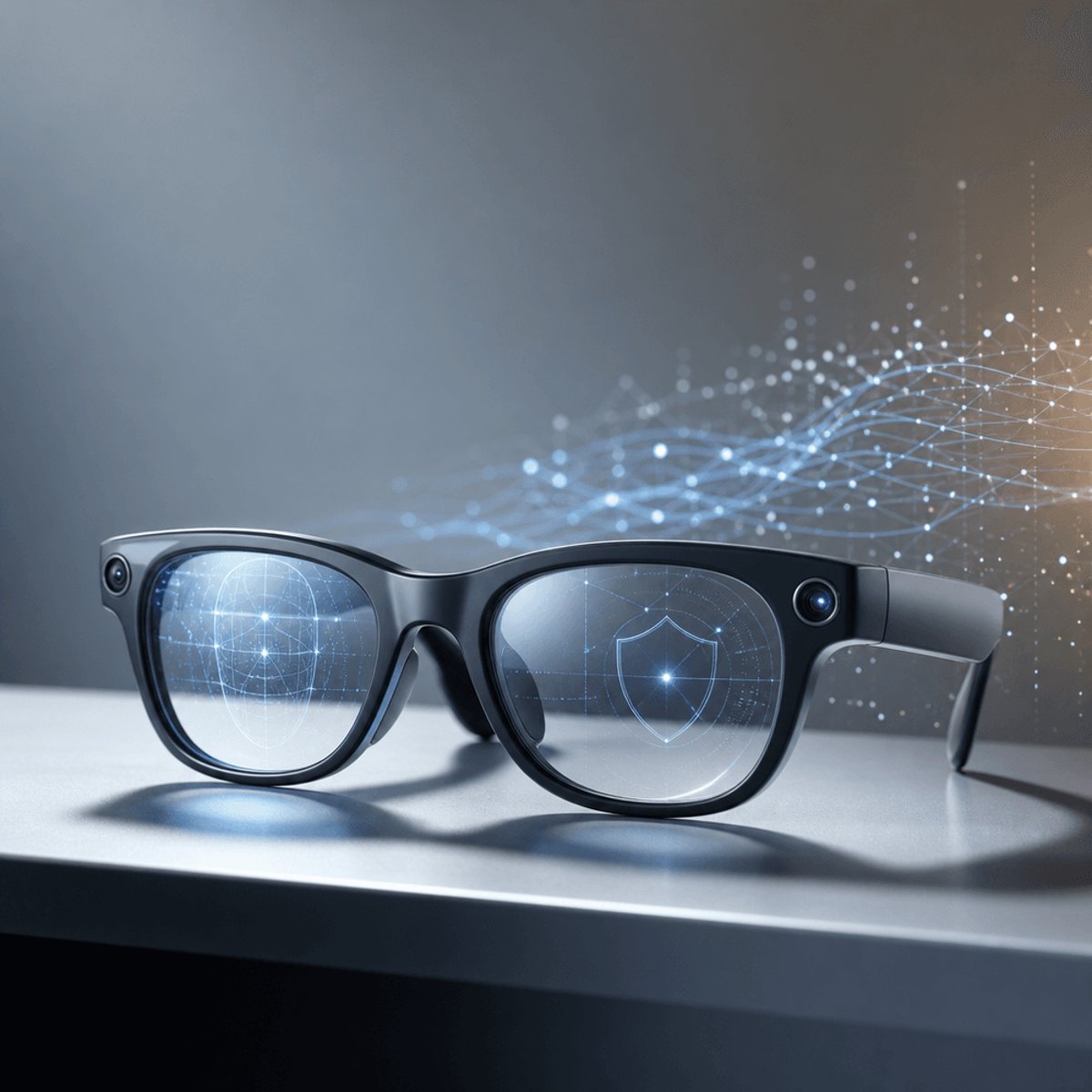
Meta has quietly scrubbed facial recognition code from its smart glasses companion app following a WIRED investigation that exposed the feature's existence. The code, discovered in Meta AI—the app that powers the company's Ray-Ban smart glasses—vanished in the latest update, but Meta refuses to say whether it was experimental, accidental, or planned for future deployment. The move raises fresh questions about what AI capabilities tech giants are building into wearable devices that can record people without obvious consent indicators.
Meta just got caught with its hand in the biometric cookie jar—and the company's silence is almost as revealing as the code itself.
Investigative reporters at WIRED discovered facial recognition capabilities embedded in Meta AI, the companion app that controls Meta's Ray-Ban smart glasses. The code suggested Meta was either testing or preparing to deploy face-matching technology that could identify people captured through the glasses' cameras. Within days of WIRED's inquiry, that code disappeared from the app entirely.
Meta's response? Radio silence on the specifics. The company won't confirm whether the feature was an abandoned experiment, an accidental inclusion, or a planned capability that got exposed too early. That opacity is triggering alarm bells among privacy advocates who've long warned about the dangers of normalizing always-on recording devices.
The timing couldn't be more awkward for Meta. The company has spent years rebuilding trust after the Cambridge Analytica scandal and has repeatedly promised transparency around its AI development. CEO Mark Zuckerberg has positioned Meta's smart glasses as a privacy-conscious alternative to more intrusive wearables, emphasizing that a recording light alerts bystanders when the camera is active.
But facial recognition changes the equation entirely. While recording someone in public might be legal, automatically identifying and cataloging faces crosses into surveillance territory that makes even tech-friendly regulators nervous. The EU's AI Act specifically classifies real-time biometric identification in public spaces as high-risk, requiring strict safeguards.
Ray-Ban Meta smart glasses have sold surprisingly well since their 2023 launch, with analysts estimating over 700,000 units shipped. The glasses look nearly identical to regular Ray-Bans, making them far less conspicuous than earlier attempts like Google Glass. That mainstream appeal is precisely what worries privacy researchers—the more normalized these devices become, the harder it is to know when you're being recorded.
The facial recognition code discovery fits a troubling pattern. Tech companies routinely build capabilities into products before announcing them publicly, testing features with select users or keeping them dormant until the regulatory climate shifts. Apple faced similar scrutiny when researchers found references to blood glucose monitoring in Apple Watch code years before any official announcement.
Meta's smart glasses already pack considerable AI horsepower. The current version can identify objects, translate text in real-time, and answer questions about what the wearer is seeing. Adding facial recognition would transform them from an AI assistant into a walking surveillance system capable of identifying strangers on the street and potentially pulling up their social media profiles.
That capability isn't theoretical—students at Harvard recently demonstrated exactly this scenario using Meta's glasses and publicly available facial recognition tools. Their project, which they declined to release publicly, could identify strangers and instantly surface their personal information. Meta's own face-matching code would make such applications trivially easy for bad actors.
The company shut down its Facebook facial recognition system in 2021, deleting face-scan data for over a billion users amid regulatory pressure and a $650 million privacy settlement. Meta claimed at the time it was stepping back from the technology due to "societal concerns." Finding similar code in a wearable product just five years later suggests those concerns might have been more about timing than principle.
Privacy researchers who examined WIRED's findings noted the code appeared functional, not vestigial. It included specific API calls and data structures consistent with active development rather than leftover fragments from abandoned features. That suggests Meta was either actively testing facial recognition or had concrete plans to deploy it.
The removal raises as many questions as the original discovery. Did Meta pull the code because it wasn't ready for public scrutiny, or because the company realized the privacy implications were untenable? Will it return in a future update with better safeguards, or has Meta genuinely abandoned the capability?
Competitors are watching closely. Google notably excluded facial recognition from Google Glass after overwhelming privacy backlash helped sink the product in 2015. Apple has been similarly cautious with its Vision Pro headset, avoiding any hint of biometric identification beyond the wearer's own authentication. If Meta successfully deploys facial recognition in wearables, it could open the floodgates—or trigger a regulatory crackdown that affects the entire industry.
The incident also highlights the cat-and-mouse game between investigative reporters and tech companies. WIRED's reporters used code analysis and reverse engineering to surface capabilities Meta never publicly acknowledged. As AI systems grow more complex and opaque, this kind of technical journalism becomes crucial for accountability.
Meta's broader AI strategy depends heavily on real-world data collection. The company's large language models need massive training sets, and wearable devices offer an unprecedented window into daily life. Facial recognition would add another dimension to that data collection—not just what people see, but who they interact with, creating social graphs far richer than anything possible through social media alone.
Meta's silent deletion of facial recognition code from its smart glasses app reveals the precarious balance tech companies walk between innovation and privacy. The company built the capability, got caught, and removed it—all without explanation. Whether this represents a genuine course correction or merely a tactical retreat remains unclear. What's certain is that as AI-powered wearables become commonplace, the line between helpful assistant and surveillance device will keep shifting. The real test isn't what features companies remove when exposed, but what safeguards they build before deployment. Right now, we're learning about Meta's AI capabilities through code analysis rather than transparency—and that's exactly the problem.