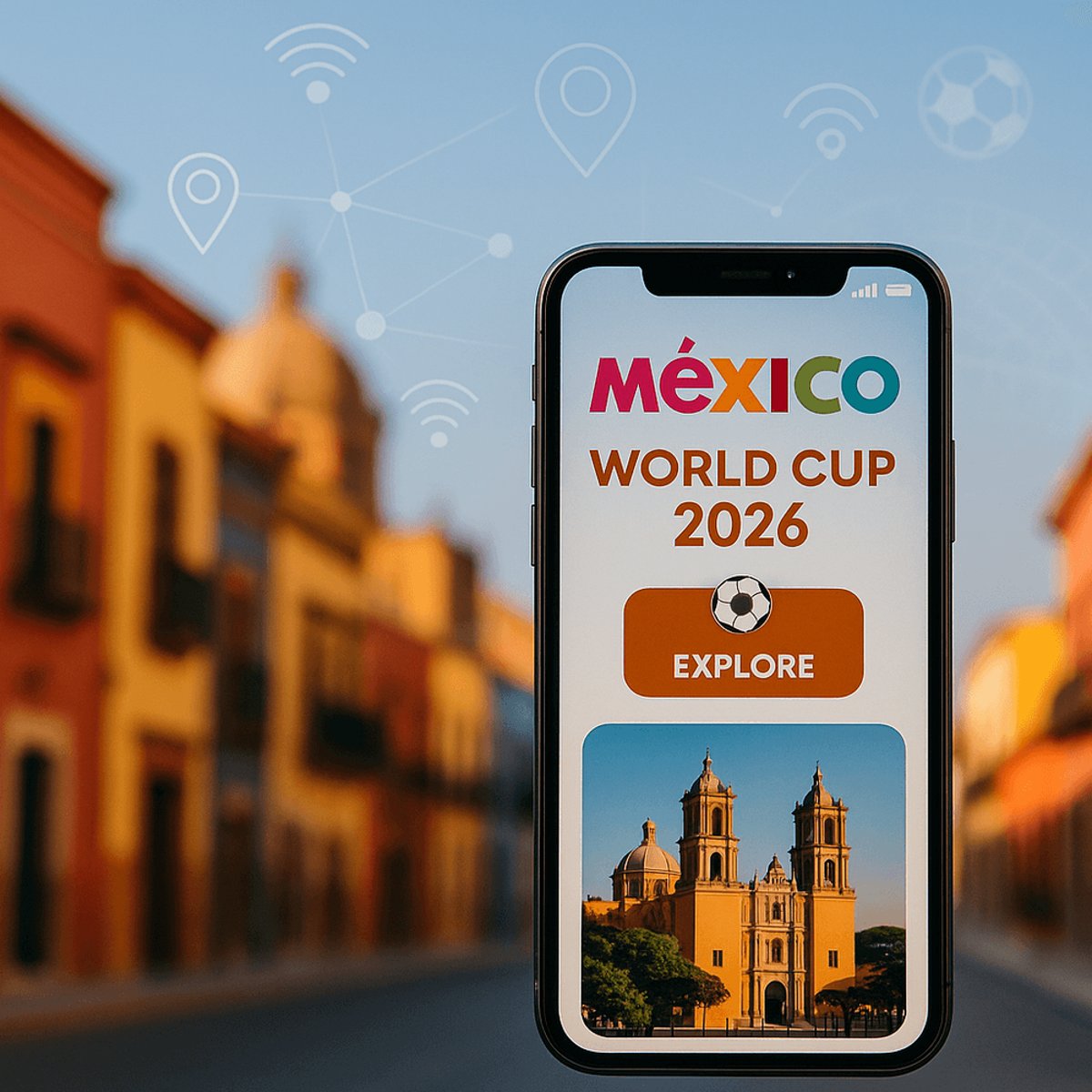
Mexico is rolling out digital tools to handle the expected 5.5 million visitors for the 2026 FIFA World Cup. The government just unveiled plans for a bilingual tourism app called "Conoce México" and an official ticket resale platform developed in partnership with FIFA. These platforms represent Mexico's bid to modernize its tourism infrastructure while preventing ticket scalping through legitimate digital channels.
Mexico just dropped its digital playbook for hosting the 2026 FIFA World Cup, and it's banking on apps to manage what could be the largest tourism surge in the country's history. President Claudia Sheinbaum announced the "Mexico 2026 Social World Cup" project last week, centering on two key digital platforms that aim to transform how millions of visitors experience the tournament.
The centerpiece is "Conoce México" (Get to Know Mexico), a bilingual tourism app developed jointly by Mexico's Agency for Digital Transformation and Telecommunications and the Ministry of Tourism. The platform promises an "intuitive and accessible interface" that goes beyond basic match information to include cultural events, gastronomic recommendations, and ecotourism options across host cities.
But the real innovation lies in the app's interactive tourist atlas, which maps over 260 fan routes, points of interest, and thematic roads. This isn't just a digital brochure - it's positioning itself as the central nervous system for tourist navigation during the tournament. The app will deliver real-time match results, stadium details, transportation information, and connectivity guides, all designed for the 5.5 million domestic and international visitors Mexico expects to receive.
The timing is critical. This World Cup marks the first time in over 90 years that three countries will co-host, with 48 teams playing 104 matches across Mexico, the United States, and Canada. That's 16 more teams than previous tournaments and represents a massive logistical challenge that traditional tourism infrastructure simply can't handle.
Parallel to the tourism push, FIFA and Mexico's Federal Consumer Protection Agency (Profeco) are developing what they're calling a "ticket relocation system" - essentially an official resale marketplace. Iván Escalante, who heads Profeco, announced the platform will operate in Spanish and display prices in Mexican pesos, complying with national legislation while providing a legitimate alternative to informal ticket scalping.
"This platform will allow fans who are no longer going to use their tickets to make them available to someone else at fair prices," Escalante explained, though he didn't reveal technical details or launch timelines. The system represents a significant shift toward regulated digital marketplaces for major sporting events, potentially setting a precedent for future tournaments.
The broader digital strategy includes a price comparison platform called "Who's Who in the World Cup," where fans can research and compare costs for products and services. It's part of Profeco's four-pronged approach that includes monitoring misleading advertising and establishing assistance modules in airports, stations, and stadiums.
What makes this particularly interesting from a tech perspective is how Mexico is using the World Cup as a forcing function to modernize its digital tourism infrastructure. The country is essentially building scalable platforms that will outlast the tournament itself, creating lasting digital assets for future tourism campaigns.
The competition pressure is real. The United States announced its own initiative giving tourist visa processing priority to fans with tickets, highlighting how host countries are leveraging technology and policy to capture tourism revenue.
Both Mexican platforms are expected to launch in the coming months, with the World Cup scheduled for June and July 2026. The success of these digital tools could influence how future mega-events approach visitor management and set new standards for government-led tourism technology initiatives.
Mexico's approach represents more than just event planning - it's a test case for how emerging markets can use major sporting events to leapfrog traditional tourism infrastructure through digital-first solutions.
Mexico's digital World Cup strategy shows how major sporting events can catalyze technology infrastructure development in emerging markets. While the immediate focus is managing 5.5 million visitors over six weeks, the real value lies in the lasting digital tourism assets these platforms will create. Success here could establish a playbook for how future host countries approach large-scale event management through technology-first solutions.