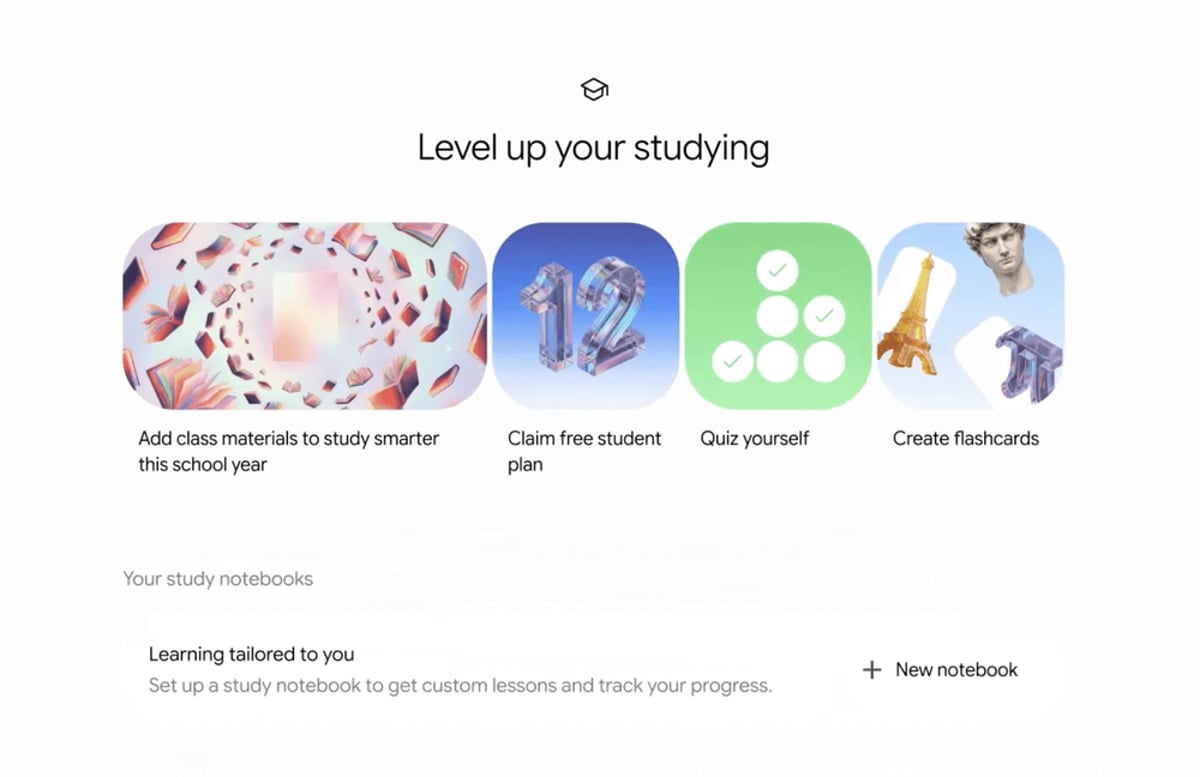
Google is making a major play for the education market with a new dedicated student hub inside Gemini. Timed for back-to-school season, the feature transforms Google's AI into a comprehensive study companion - complete with AI-generated flashcards, practice quizzes, and smart calendar integration that can automatically add test dates from your syllabus. The move puts Google in direct competition with education startups like Quizlet and Notion, while deepening Gemini's integration across Google's ecosystem.
Google just dropped a surprise weapon in the AI education wars. The company's rolling out a dedicated student hub inside Gemini that could upend how millions of students tackle homework, and it's arriving right as backpacks hit doorsteps nationwide.
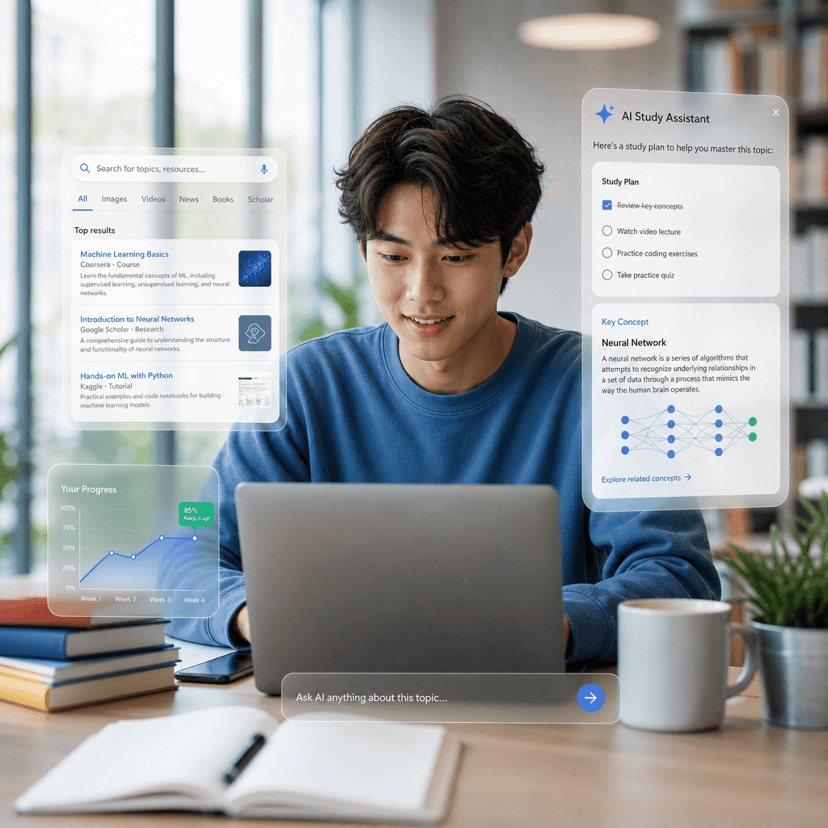
The new student hub isn't just another AI chat interface - it's a complete study ecosystem. Students can dump research into organized study notebooks, generate AI-powered flashcards on the fly, and take practice quizzes that adapt to their knowledge gaps. But here's where it gets interesting: the enhanced study notebooks now understand graphs and images, not just text. Feed Gemini a chart from your economics textbook, and it can break down the data points and quiz you on trends.
The calendar integration might be the killer feature though. Upload your syllabus, and Gemini automatically extracts test dates and assignment deadlines, then syncs them straight to Google Calendar. It's the kind of practical automation that could actually change student behavior, especially for college freshmen drowning in syllabi during week one.
Google's also bringing Deep Research - previously a desktop-only power feature - into Gemini Live. According to The Verge's report, students can now ask Gemini to compile complex research reports while they're on the move, then talk through the findings conversationally. If the research is taking a while, you can lock your phone and Gemini keeps working in the background, notifying you when it's done.
The timing here isn't accidental. Google's been steadily building out Gemini's education capabilities since earlier this year, when it brought Gemini into classrooms for K-12 students. That move sparked debate about AI in education, but Google's doubling down with tools that go far beyond simple homework help.
This puts Google on a collision course with education tech darlings like Quizlet, which built a business around digital flashcards, and Notion, which has captured the student productivity market. But Google's advantage is integration - these features live inside an AI assistant that already connects to Gmail, Drive, and Calendar. For students already living in Google's ecosystem, it's a seamless addition rather than another app to download.
The education market represents a massive opportunity for AI companies. Students are early adopters, they're comfortable with AI tools, and they have genuine use cases that go beyond novelty. OpenAI saw this with ChatGPT's explosive growth on college campuses, which forced universities to scramble and write new academic integrity policies.
What makes Google's approach different is the packaging. Rather than students hacking together AI study tools from general-purpose chatbots, Google's building purpose-specific features with guardrails. The study notebook format encourages organized research collection rather than one-off queries. The quiz generation creates active recall practice instead of passive reading.
There's still the elephant in the room about AI doing too much of the thinking for students. Critics argue these tools could atrophy critical research and synthesis skills. But Google seems to be betting that AI can enhance learning rather than replace it - the flashcards and quizzes still require students to engage with and internalize material.
The Deep Research integration into Gemini Live is particularly aggressive. Being able to generate comprehensive research reports through voice commands, then discuss findings conversationally, fundamentally changes what's possible on a mobile device. It's research assistant capabilities that would've required a desktop setup just months ago.
For competitors, this is a warning shot. Google's not content to let education AI remain a fragmented market of startups and hacks. The company's leveraging its massive AI infrastructure and existing user base to build an integrated study platform that could become as essential as Google Docs became for collaborative writing.
Google's student hub launch signals that AI in education is moving from experimental to essential infrastructure. By packaging research tools, study aids, and calendar integration into one seamless experience, Google's betting it can capture students before they build habits around competing tools. The real test will be whether these features actually improve learning outcomes or just automate away the struggle that builds deeper understanding. Either way, education tech startups just got a wake-up call - the tech giants are coming for their lunch money, and they're bringing enterprise-scale AI to the fight.