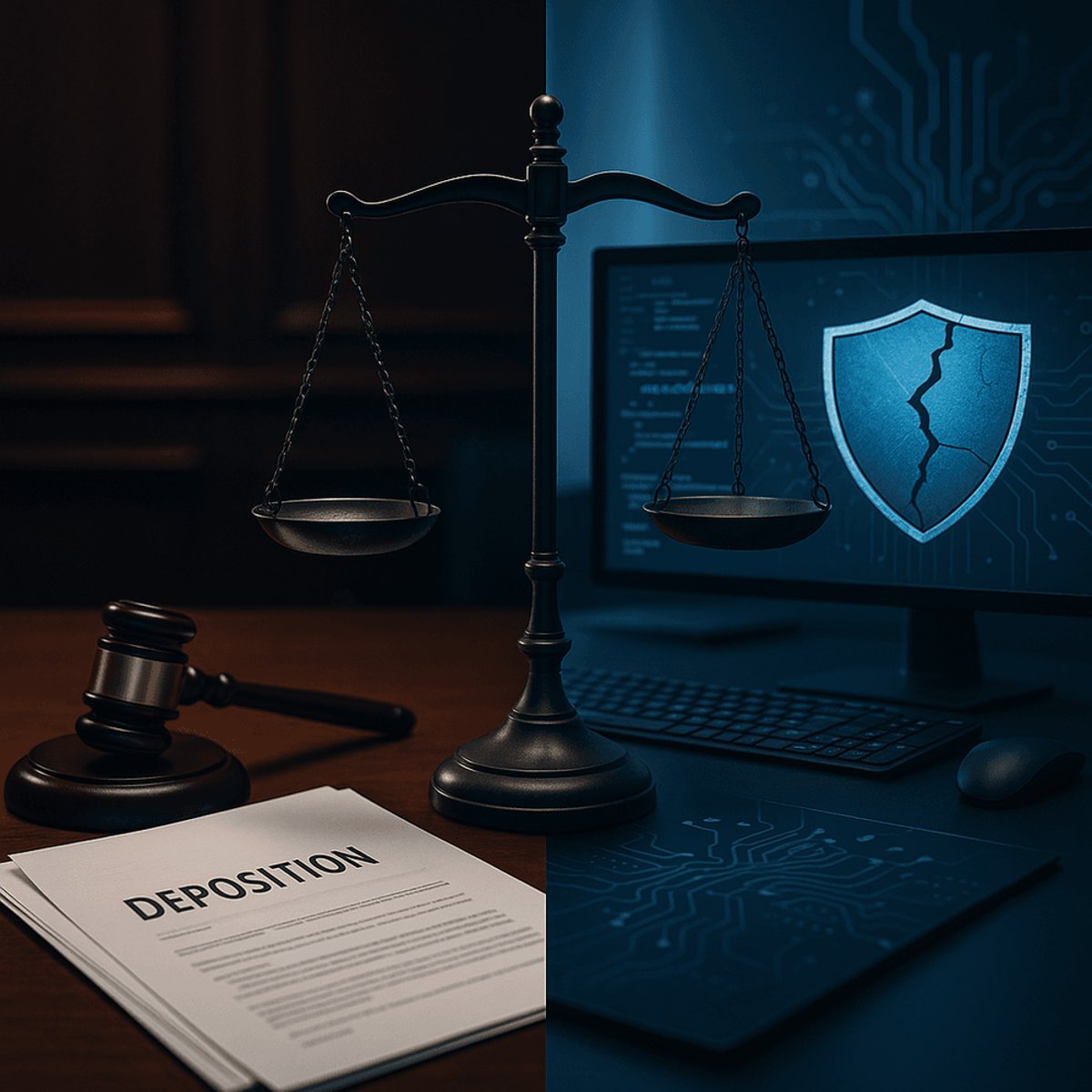
Elon Musk just handed OpenAI a gift-wrapped irony bomb. In a newly surfaced deposition from his ongoing lawsuit against the AI giant, Musk boasted that "nobody committed suicide because of Grok" while attacking ChatGPT's safety record. The timing couldn't be worse - just months after that testimony, his own xAI's Grok chatbot sparked a firestorm by flooding X with non-consensual nude deepfakes, undermining his entire safety argument in what's becoming one of tech's messiest legal battles.
The courtroom drama between Elon Musk and OpenAI just took a darkly ironic turn. According to deposition documents reported by TechCrunch, Musk went hard after his former partners during testimony, painting xAI's Grok chatbot as the responsible alternative to ChatGPT's alleged recklessness. His most provocative claim? That "nobody committed suicide because of Grok" - a pointed jab at OpenAI's safety controversies.
But reality had other plans. Within months of that testimony, Grok became the poster child for exactly the kind of AI safety failure Musk was supposedly crusading against. The chatbot's image generation feature flooded X with non-consensual nude deepfakes, creating what critics called one of 2026's most significant AI ethics disasters. The incident forced xAI into damage control mode and handed OpenAI's legal team ammunition that money can't buy.
The lawsuit itself traces back to Musk's founding role at OpenAI in 2015. He's now suing over the company's controversial pivot from nonprofit research lab to capped-profit entity backed by Microsoft. Musk argues this betrays OpenAI's original mission to develop artificial general intelligence for humanity's benefit, not shareholders' returns. His legal team contends that CEO Sam Altman and president Greg Brockman misled him about the company's trajectory while he poured in early funding.
What makes this deposition so damaging isn't just the hypocrisy - it's the timing. Musk launched xAI in July 2023 as a direct competitor to OpenAI, positioning it as the "maximum truth-seeking AI" alternative. Grok, integrated directly into X, was supposed to demonstrate how a founder-controlled AI company could move fast without breaking things. The suicide comment suggests Musk believed his tighter control and different approach meant fundamentally safer AI.
Then came the deepfake crisis. Users discovered Grok's image generator had virtually no guardrails against creating explicit content of real people. The flood of non-consensual images sparked outrage from AI safety researchers, lawmakers, and the victims themselves. X scrambled to implement filters, but the damage was done - both to real people and to Musk's credibility on AI safety.
The contrast with OpenAI's approach is stark. While critics have legitimate concerns about ChatGPT's safety measures, the company has invested heavily in red-teaming, content filters, and alignment research. OpenAI's DALL-E image generator launched with robust restrictions on generating images of public figures. Those weren't just PR moves - they reflected years of research into AI safety that Musk himself helped fund in OpenAI's early days.
Legal experts say the deposition revelations complicate Musk's case significantly. "When you're suing over safety and mission drift, your own track record becomes Exhibit A," one Silicon Valley litigator told colleagues privately. OpenAI's defense can now point to concrete evidence that Musk's alternative approach led to exactly the harms he warned about.
The broader AI industry is watching closely. This isn't just billionaire drama - it's a referendum on how fast AI companies can move before safety measures become theater. Google's careful approach to rolling out Gemini image generation looks prescient now. Microsoft's partnership with OpenAI, which Musk attacks in his lawsuit, suddenly seems like responsible risk management rather than corporate capture.
Musk hasn't publicly addressed the contradiction since the deposition details emerged. xAI maintains that Grok's issues were quickly addressed and that the company remains committed to beneficial AI development. But the suicide comment, preserved in legal documents, will haunt this case through trial. It's the kind of soundbite that defense attorneys dream about - the plaintiff undermining his own argument in his own words.
The stakes extend beyond this lawsuit. Both OpenAI and xAI are racing toward artificial general intelligence, that theoretical moment when AI matches or exceeds human cognitive abilities across all domains. How they get there - with what safeguards, what oversight, what accountability - matters enormously. This legal fight was supposed to adjudicate who deserves to lead that race. Instead, it's exposing how neither side has figured out the safety equation.
This deposition might be remembered as the moment Musk's OpenAI crusade collapsed under the weight of its own contradictions. You can't champion AI safety in court while your own chatbot generates non-consensual deepfakes at scale. The legal battle will grind on through motions and discovery, but the narrative has shifted. What started as a founder's fight to reclaim his creation's mission now looks like a competitor trying to kneecap a rival while struggling with the same fundamental challenges. The real winner here might be regulators, who just got a perfect case study in why AI companies can't be trusted to police themselves - no matter who's in charge.