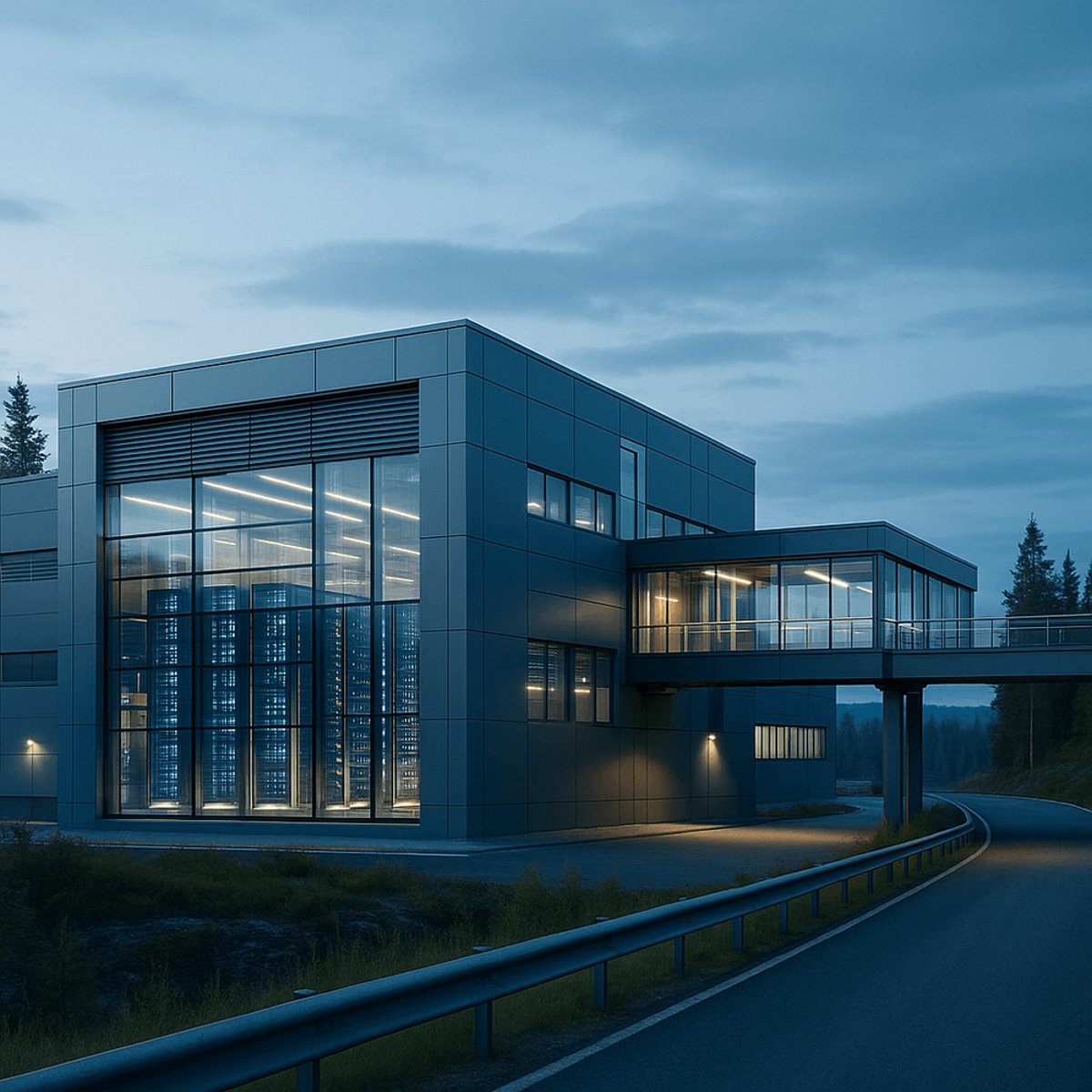
Europe's AI infrastructure gap just got a little narrower. Nebius, the cloud computing spinoff from Russia's Yandex, announced plans to construct one of the continent's largest AI data centers in Finland, marking a critical milestone as European firms scramble to build the compute capacity needed to compete with American tech giants. The move signals Europe's determination to reduce its dependence on US cloud providers while racing to capture a slice of the booming AI market.
Nebius just threw down a major bet on Europe's AI future. The cloud infrastructure company announced plans to build one of the continent's largest AI-focused data centers in Finland, diving headfirst into a market where European players have struggled to gain traction against American hyperscalers.
The timing couldn't be more urgent. Europe is racing to create the infrastructure needed to power the AI boom, but it's starting from way behind. While Amazon, Microsoft, and Google have spent years building massive GPU clusters across the US, European companies are still scrambling to secure the compute power necessary to train cutting-edge AI models. The infrastructure gap has become a strategic liability, forcing European AI startups to rely on American cloud providers or face crushing disadvantages in model development.
Nebius emerged from Yandex's international operations after the Russian tech giant restructured following geopolitical pressures. Now operating independently, the company is positioning itself as Europe's answer to the hyperscaler dominance that's left the continent dependent on foreign infrastructure for its most critical technology needs. The Finland facility represents a bold move to capture market share while European regulators debate AI governance and data sovereignty.
Finland's appeal for data center construction isn't accidental. The Nordic country offers abundant renewable energy, naturally cool temperatures that reduce cooling costs, and a stable political environment - critical factors when you're building infrastructure meant to last decades. Microsoft and Google have already established significant data center footprints in the region, validating the location's advantages for large-scale computing operations.
But building data centers is just part of the equation. The real constraint is GPUs, and that's where Europe's challenges multiply. Nvidia controls roughly 95% of the AI chip market, and its latest H100 and H200 GPUs remain in desperately short supply globally. European cloud providers face the same allocation battles as their American counterparts, competing for limited chip supply while trying to offer competitive pricing to customers.
The competitive landscape shows just how steep Nebius's climb will be. Amazon Web Services commands approximately 32% of Europe's cloud infrastructure market, followed by Microsoft Azure at 23% and Google Cloud at 11%. European providers including OVHcloud and Deutsche Telekom's T-Systems split the remaining share, but none have achieved the scale necessary to compete on AI workloads at hyperscaler pricing.
European startups are watching closely. Companies like Mistral AI and Aleph Alpha have raised hundreds of millions to build European alternatives to OpenAI and Anthropic, but they need local infrastructure partners who can deliver the compute capacity required for frontier model development. Nebius's buildout could provide a lifeline for European AI ambitions, assuming it can scale fast enough and secure sufficient GPU allocation.
The project also carries geopolitical weight. European policymakers have grown increasingly concerned about the continent's technological dependence on American companies, particularly as AI becomes central to economic competitiveness and national security. The EU's push for digital sovereignty has translated into billions in subsidies for semiconductor manufacturing and cloud infrastructure, creating favorable conditions for projects like Nebius's Finland facility.
What remains unclear is the facility's specific scale, timeline, and GPU allocation. Without those details, it's hard to assess whether this represents a genuine challenge to hyperscaler dominance or simply another regional data center that'll struggle to compete on price and performance. The AI infrastructure market moves fast, and European players have consistently struggled to keep pace with the capital deployment and technical execution of their American rivals.
Nebius's Finland AI factory represents Europe's latest attempt to close an infrastructure gap that's become a strategic vulnerability. Whether it succeeds depends on execution details we don't yet have - GPU allocation commitments, construction timelines, and pricing strategies that can compete with hyperscalers who've spent decades optimizing their operations. For European AI startups desperate for local compute alternatives, this announcement offers hope. But hope doesn't train large language models. Europe needs Nebius and others like it to deliver infrastructure at scale, and soon, or the continent risks becoming a permanent technology importer in the AI era.