The AI infrastructure gold rush just got a whole lot hotter. Firmus, an Asia-focused AI datacenter provider backed by Nvidia, has raised $1.35 billion in just six months, hitting a $5.5 billion valuation that signals massive investor appetite for enterprise AI infrastructure. The lightning-fast capital accumulation comes as tech giants scramble to secure compute capacity across Asia-Pacific, where datacenter availability has become the primary bottleneck for AI deployment.
Firmus just pulled off one of the fastest capital raises in datacenter history, and it's not hard to see why investors are racing to get in. The company raised $1.35 billion in six months, catapulting to a $5.5 billion valuation with strategic backing from Nvidia, the chipmaker that's become the de facto kingmaker in AI infrastructure.
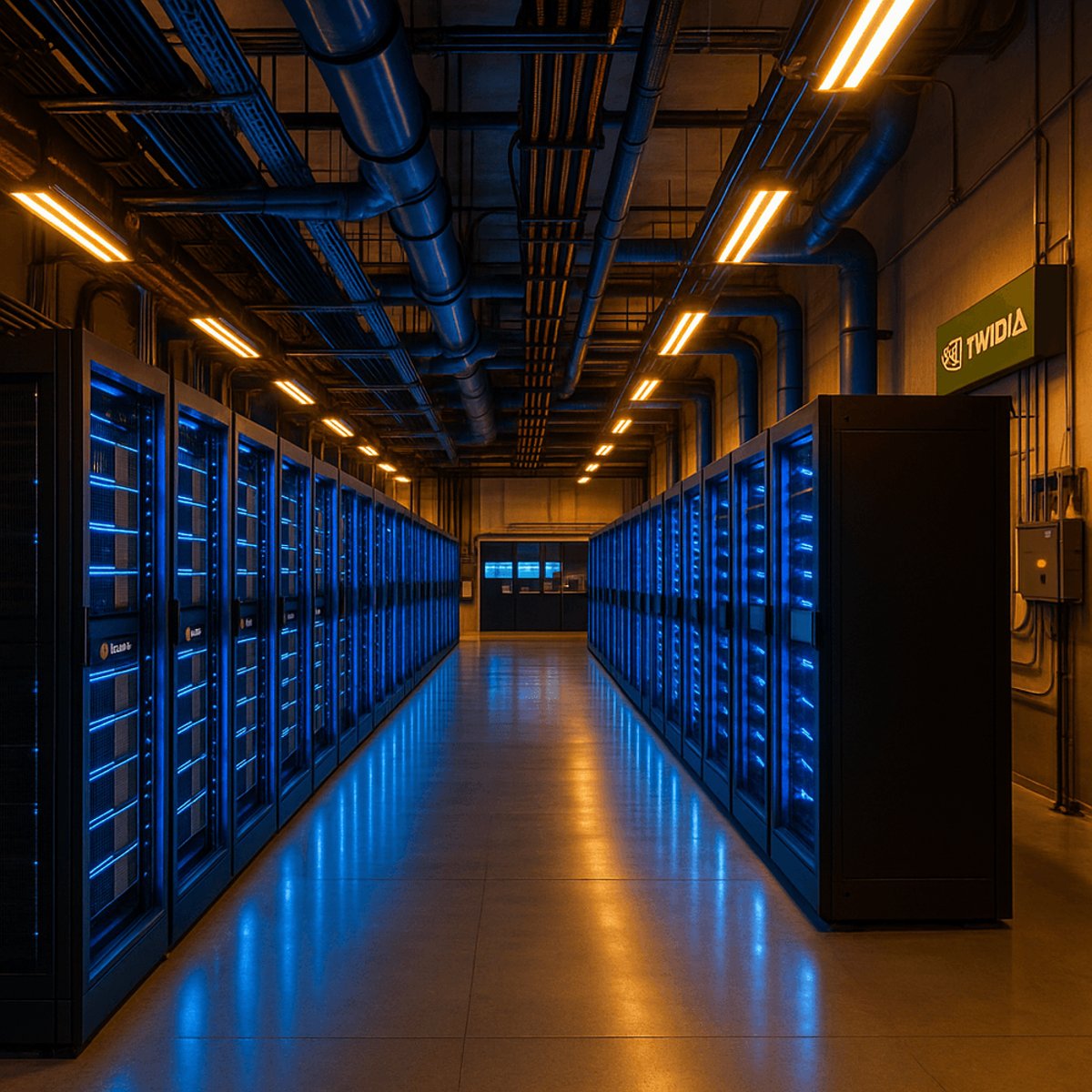
The timing tells you everything. As enterprise AI deployments explode across Asia-Pacific, datacenter capacity has become the critical chokepoint. Companies aren't just looking for rack space anymore - they need purpose-built facilities designed to handle the massive power and cooling requirements of GPU clusters running large language models and training workloads. Firmus is positioning itself as the answer to that problem, and investors are betting billions that they're right.
Nvidia's involvement goes beyond just writing checks. The chipmaker has been selectively backing datacenter providers who can demonstrate they understand the specific infrastructure needs of AI workloads. It's a strategic play that ensures Nvidia's chips have somewhere to actually run, while giving the company influence over the buildout of AI infrastructure across one of the world's fastest-growing tech markets.
The $5.5 billion valuation might sound aggressive for a datacenter company, but the math starts making sense when you look at the AI infrastructure shortage. Traditional datacenter operators built for cloud computing and enterprise IT workloads. AI changes everything - a single GPU rack can draw 10 times the power of traditional servers, requiring completely different electrical and cooling infrastructure. Retrofitting existing facilities is expensive and slow. Building new ones from scratch, like Firmus is doing, suddenly looks like the smarter bet.
What makes this particularly interesting is the Asia-Pacific focus. While North America and Europe have seen aggressive datacenter expansion from hyperscalers like Microsoft, Google, and Amazon, Asia has lagged behind despite explosive demand. Local regulations, land availability, and power constraints have created a supply-demand imbalance that's only getting worse as AI adoption accelerates.
The six-month fundraising timeline is remarkable in itself. Raising $1.35 billion isn't something that happens casually - it suggests Firmus had investors lined up and ready to commit before the formal fundraising process even began. That level of investor enthusiasm typically indicates either exceptional traction or a market opportunity so obvious that everyone wants in before the window closes. In this case, it's probably both.
Industry analysts have been warning about the AI infrastructure gap for months. Training frontier AI models requires thousands of GPUs running in parallel for weeks or months. Even inference workloads for deployed models can strain traditional datacenter capacity when you're serving millions of users. Firmus is betting that purpose-built AI datacenters will command premium pricing and occupancy rates that justify the massive capital investment required to build them.
The strategic implications extend beyond just Firmus and its investors. Nvidia's backing sends a signal to the broader market about where the company sees AI infrastructure heading. If the chip giant is willing to put its weight behind regional datacenter specialists rather than just relying on hyperscalers, it suggests they see value in a more distributed infrastructure model for AI workloads.
What remains to be seen is execution. Datacenter construction is notoriously complex, involving everything from power grid negotiations to cooling system engineering to navigating local permitting processes. Firmus now has the capital to build aggressively, but they'll need to prove they can actually deliver facilities on time and spec. In a market where every quarter of delay means lost revenue and competitive advantage, operational excellence matters as much as financial backing.
The fundraising also highlights a broader shift in how investors think about AI infrastructure. This isn't just about providing commodity compute anymore - it's about building specialized facilities that can support the specific demands of AI workloads. The premium valuation suggests the market sees this as infrastructure-as-a-service for the AI era, not just real estate with servers in it.
Firmus's rapid ascent to a $5.5 billion valuation isn't just a funding story - it's a bet on the fundamental architecture of the AI economy. With Nvidia providing strategic backing and $1.35 billion in fresh capital, the company has the resources to build out AI-specific datacenter capacity across Asia-Pacific at exactly the moment when demand is outstripping supply. The real test comes next: whether they can execute on construction timelines, secure power commitments, and deliver the specialized infrastructure that enterprise AI customers desperately need. If they pull it off, this valuation might look conservative in hindsight. If they stumble, it'll become a cautionary tale about infrastructure hype outpacing operational reality.