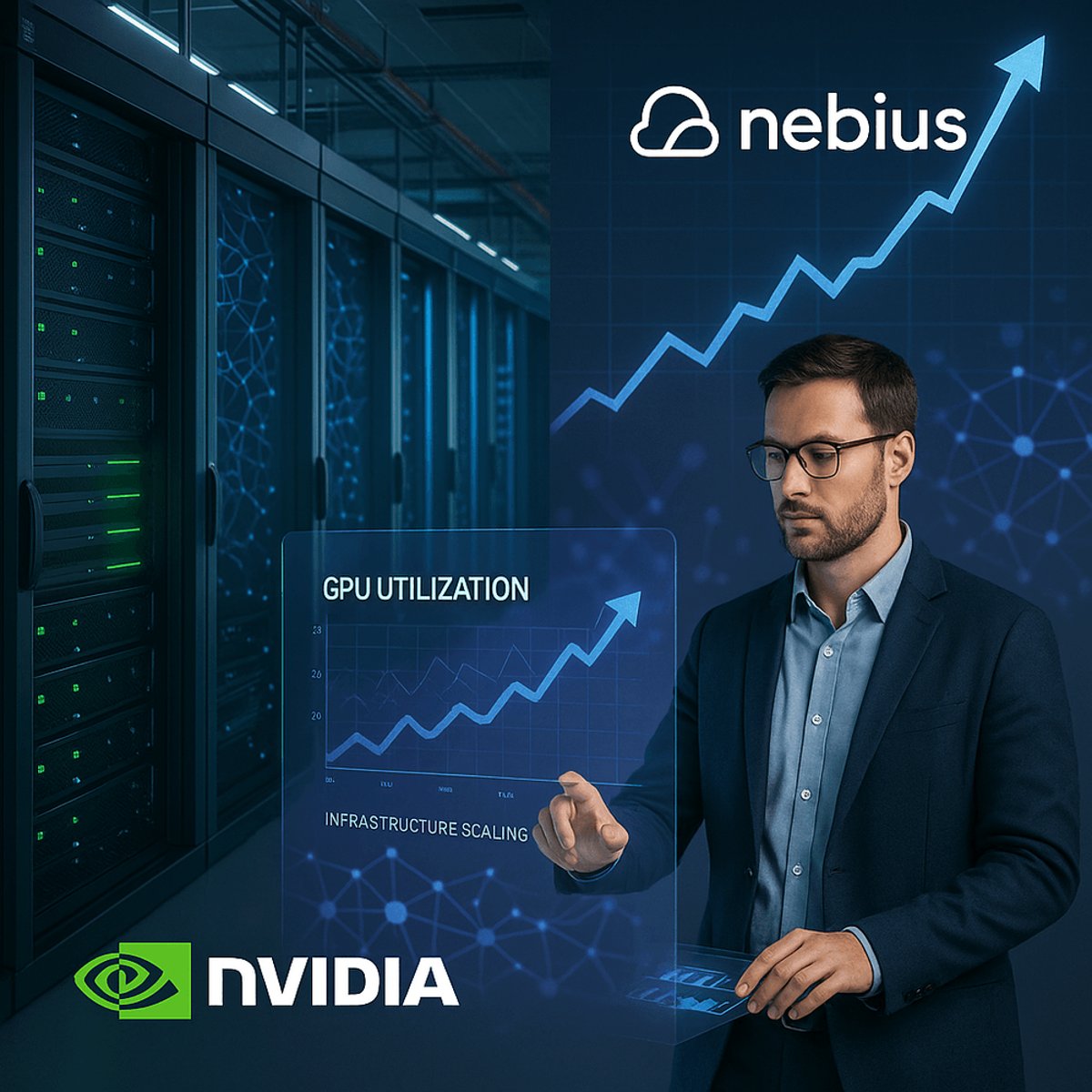
NVIDIA just locked in a strategic partnership with Nebius Group to build out the next wave of hyperscale AI cloud infrastructure. The deal, announced today from Santa Clara and Amsterdam, positions the NASDAQ-listed Nebius as a key partner in NVIDIA's push to expand AI compute capacity beyond the hyperscaler oligopoly. It's a notable move as enterprises scramble for GPU access and cloud providers race to build out AI-optimized infrastructure that can handle increasingly demanding workloads.
NVIDIA is doubling down on its cloud infrastructure strategy. The chip giant announced a strategic partnership with Nebius Group today to develop and deploy what they're calling the next generation of hyperscale cloud built specifically for AI workloads. The timing isn't accidental - enterprises are still struggling to secure GPU capacity, and NVIDIA's betting that specialized cloud providers like Nebius can help fill the gap that Amazon Web Services, Microsoft Azure, and Google Cloud haven't fully addressed.
Nebius, which trades on NASDAQ under the ticker NBIS, represents a different kind of cloud player. While the company's background and specific infrastructure footprint remain less publicized than the major hyperscalers, this partnership signals NVIDIA's strategy to diversify its cloud ecosystem beyond the big three. It's a recognition that the AI infrastructure market has room for specialized players who can move faster and cater to specific enterprise needs that don't fit neatly into the hyperscaler model.
The "full-stack" language in the announcement is telling. NVIDIA's been pushing hard on its complete AI platform approach, bundling GPUs with networking, software, and reference architectures. This partnership likely means Nebius will deploy NVIDIA's entire ecosystem - from H100 or next-generation Blackwell GPUs through NVLink interconnects and the NVIDIA AI Enterprise software stack. It's the same playbook NVIDIA's used to maintain its stranglehold on AI infrastructure, making it nearly impossible for enterprises to swap out components without losing performance.
What's driving deals like this is simple math. Training large language models and running inference at scale requires massive GPU clusters, and the waiting lists at major cloud providers stretch for months. Meta has been building its own infrastructure. Tesla operates its Dojo supercomputer. But most enterprises don't have the capital or expertise to go it alone. They need cloud providers, and NVIDIA needs more cloud providers to soak up its chip production.
The partnership comes as NVIDIA continues to dominate the AI accelerator market with an estimated 80% share, according to industry analysts. But that dominance depends on distribution - getting chips into data centers where customers can actually access them. By partnering with emerging cloud players like Nebius, NVIDIA hedges against over-reliance on hyperscalers who are simultaneously customers and competitors, given their investments in custom silicon like Amazon's Trainium and Google's TPUs.
For Nebius, the NVIDIA partnership provides instant credibility and access to the most sought-after AI hardware on the planet. It's a chance to carve out a niche as an AI-first cloud provider while the big players balance AI workloads against their massive existing businesses. The company's NASDAQ listing gives it access to capital markets to fund the infrastructure build-out, which won't be cheap - modern AI data centers with thousands of GPUs can cost hundreds of millions of dollars.
The announcement lacks specific details on deployment timelines, GPU quantities, or geographic footprint. That's typical for initial partnership announcements, but the details matter enormously. Is Nebius deploying thousands of GPUs or tens of thousands? Will they focus on specific regions or go global? What's the pricing model compared to established players? These questions will determine whether this partnership moves the needle or remains a footnote.
What's clear is that NVIDIA's partnership strategy is expanding. The company can't rely solely on hyperscalers to absorb its production, especially as those same hyperscalers develop competing chips. Specialized AI cloud providers represent a new distribution channel - one that could grow significantly if they can offer better availability, pricing, or performance for AI-specific workloads. Nebius is betting it can compete on those terms, and NVIDIA's betting that fragmenting the cloud market actually serves its interests better than concentration.
This partnership reveals NVIDIA's calculated bet on ecosystem diversification. As AI infrastructure demand continues surging past what traditional hyperscalers can deliver, specialized cloud providers like Nebius gain an opening. For enterprises still stuck on GPU waiting lists, more cloud options mean better availability - but only if these new players can deliver at scale. The real test comes when Nebius starts lighting up data centers and customers get to compare performance and pricing against the established giants. NVIDIA wins either way, but the cloud market just got more interesting.