Nvidia CEO Jensen Huang just reframed the entire AI infrastructure conversation. In a strategic post published today, Huang declares that AI factories - massive compute centers that transform energy and data into intelligence - now represent the defining infrastructure of the modern economy. His core thesis: in the AI economy, compute isn't just a cost center, it's direct revenue generation. The timing couldn't be more pointed as hyperscalers and enterprises race to secure chip supply, power capacity, and the physical real estate needed to build what Huang calls the 'infrastructure of intelligence.'
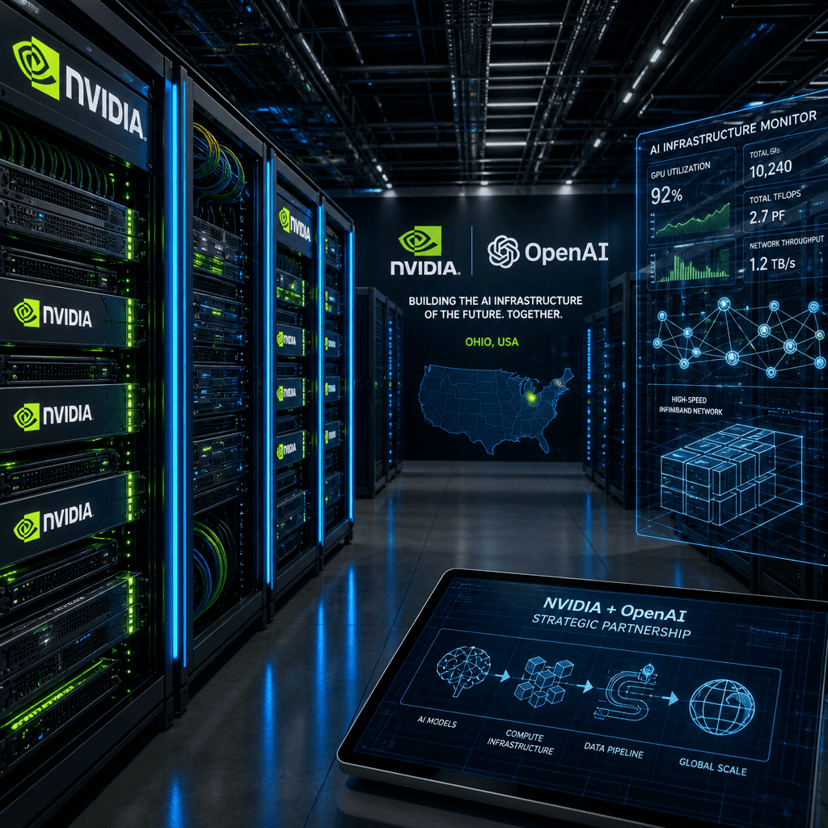
Nvidia CEO Jensen Huang is making his boldest infrastructure bet yet. In a post titled 'Securing the Infrastructure of Intelligence' published this morning, Huang lays out a vision where AI factories - not traditional data centers - become the economic engines powering every business, industry and nation. The framing is deliberate and the timing is critical.
'AI factories are the defining infrastructure of the AI era - where compute transforms energy and data into intelligence that powers every business, industry and country,' Huang writes in the official Nvidia blog. But it's his next line that reframes the entire conversation: 'In the AI economy, compute is revenue.'
That's not just marketing speak. Huang is articulating what CFOs and infrastructure planners are already seeing in their spreadsheets - that the companies controlling compute capacity are the ones monetizing AI at scale. OpenAI, Anthropic, and every enterprise deploying large language models are converting GPU hours directly into billable intelligence. The infrastructure isn't supporting the business anymore. It is the business.
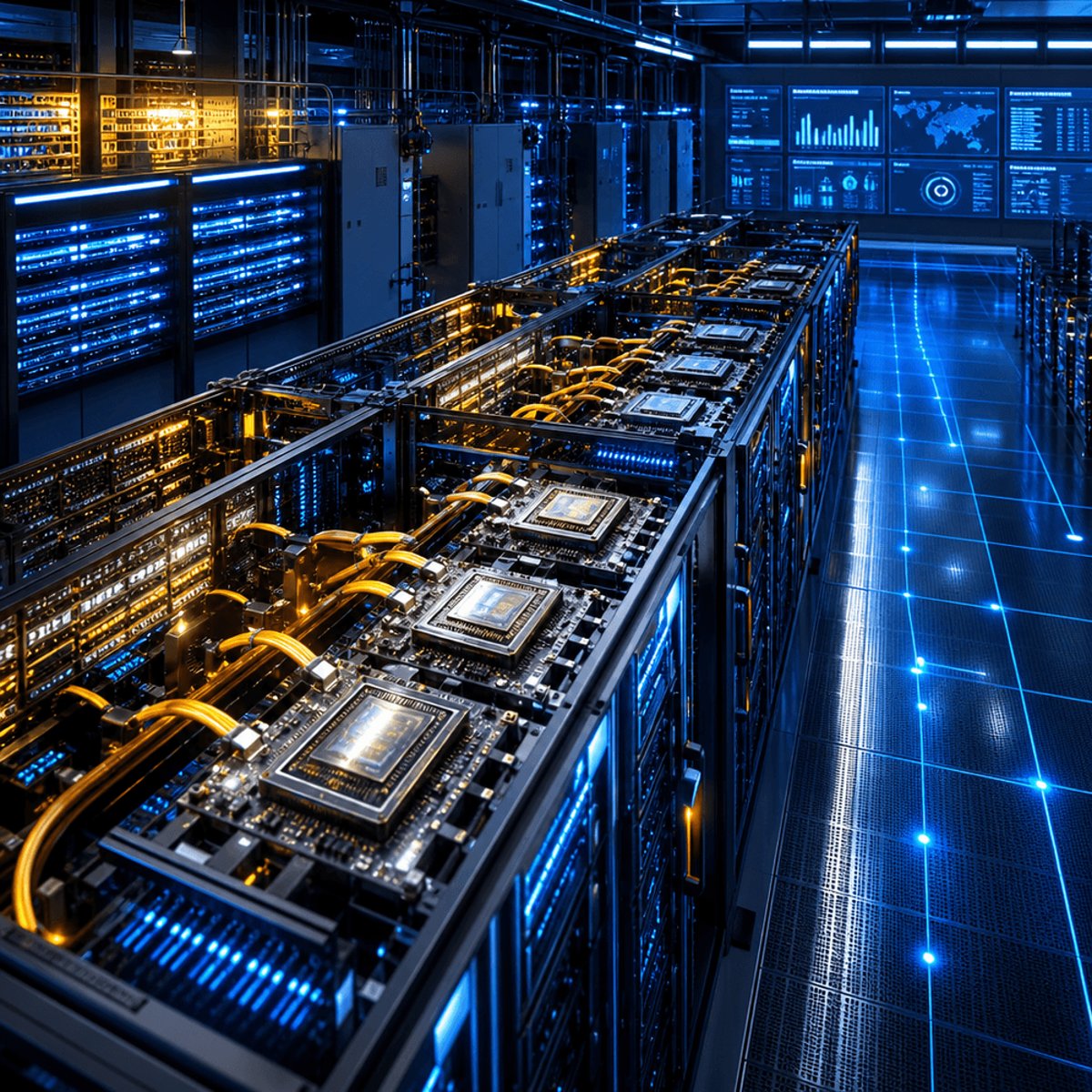
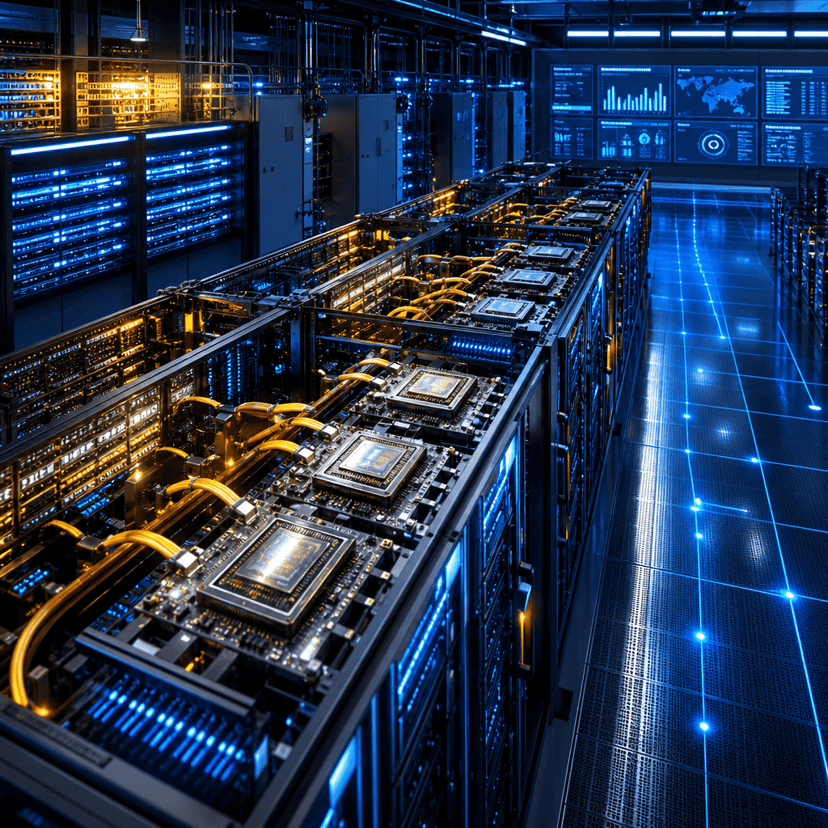
The architecture Huang describes requires what he calls 'a full stack of critical resources' - advanced chips, packaging, memory, and networking on the silicon side, plus land, power and physical facilities on the infrastructure side. It's a shopping list that's currently causing chaos across supply chains. TSMC is sold out of advanced packaging capacity through 2027. Utilities are fielding requests for gigawatt-scale power connections. Industrial real estate near fiber backbones is trading at premiums.
Meta disclosed in recent earnings calls that it's spending over $30 billion annually on infrastructure, most of it AI-focused. Microsoft and Google are in similar territory. Amazon Web Services is building out what it internally calls 'AI regions' - entire data center clusters dedicated to training and inference workloads. These aren't incremental upgrades. They're the AI factories Huang is describing.
What makes this moment particularly significant is that Huang isn't just selling chips - though Nvidia controls an estimated 80-90% of the AI accelerator market according to industry analysts. He's defining the architecture of competition for the next decade. Countries are listening too. The United Arab Emirates, Saudi Arabia, and several Asian nations have announced sovereign AI initiatives that look remarkably like the infrastructure stack Huang outlines.
The compute-as-revenue thesis also explains why Nvidia's market cap has swung wildly this year, crossing $3 trillion at peaks. Investors aren't just betting on chip sales - they're betting on Nvidia's position as the infrastructure layer for an economy where intelligence is the product. Every percentage point of margin improvement in AI inference, every efficiency gain in training, flows through Nvidia's ecosystem.
But there's tension in this buildout. Power constraints are real - data centers are already consuming 1-2% of global electricity, and AI workloads are far more power-intensive than traditional computing. Goldman Sachs research suggests AI could drive data center power demand up 160% by 2030. That's faster than renewable capacity is coming online in most markets.
Chip packaging, the technology that connects multiple dies into a single high-performance unit, has become the unexpected bottleneck. TSMC's CoWoS (Chip-on-Wafer-on-Substrate) capacity can't keep up with demand from Nvidia, AMD, and other AI chip designers. It's why Nvidia has diversified to Amkor and others - securing 'the full stack' Huang references requires redundancy across the entire supply chain.
Memory is another pressure point. High-bandwidth memory (HBM), the specialized DRAM stacked onto AI accelerators, is in chronic shortage. SK Hynix and Micron are ramping production, but lead times stretch 52 weeks or more. Without HBM, the most advanced AI chips can't reach their performance targets - another critical dependency in the infrastructure stack.
Huang's framing also carries geopolitical weight. If compute is revenue, then controlling compute infrastructure is controlling economic output. That's why the US has tightened export controls on advanced AI chips to China, and why China is pouring resources into domestic alternatives. The 'infrastructure of intelligence' isn't just a technical architecture - it's becoming a map of economic power in the 2030s.
Huang's AI factory framework does more than sell hardware - it redefines infrastructure as a profit center rather than overhead. As businesses and governments race to secure chip allocations, power capacity, and the talent to operate these systems, the question isn't whether to build AI factories, but who controls them. The companies and countries that solve the full-stack puzzle - silicon, packaging, memory, networking, power, and facilities - won't just participate in the AI economy. They'll own the means of production for intelligence itself. That's the real message in Huang's post, and it's why every hyperscaler, every sovereign wealth fund, and every utility executive should be paying attention.