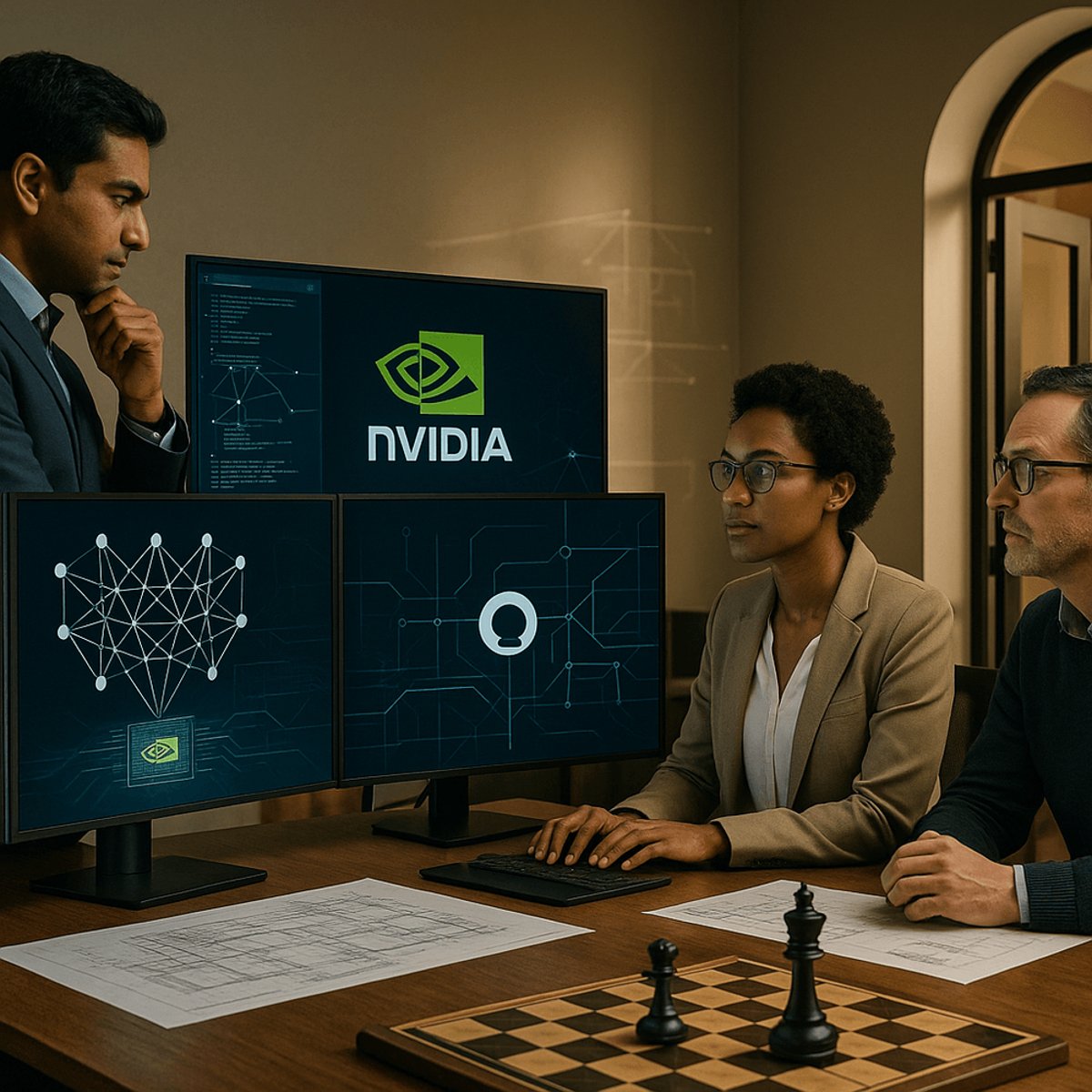
Nvidia CEO Jensen Huang is making a calculated bet that might surprise the tech world - embracing open-source AI not as a gift to developers, but as a survival strategy. According to a new CNBC column, the GPU giant's shift toward openness signals something deeper: the company's traditional hardware moat is under siege, and Huang knows it. The move marks a pivotal moment for the $2 trillion chip maker as competitors circle and customers grow restless.
Nvidia has spent years as the undisputed king of AI hardware, commanding over 80% of the data center GPU market. But Jensen Huang's latest play reveals the uncomfortable truth - chip superiority isn't enough anymore.
The company's embrace of open-source AI tools and frameworks represents a fundamental strategy shift. Where Nvidia once relied purely on CUDA's proprietary lock-in and bleeding-edge silicon, it's now betting that becoming the default platform for open AI development will prove more durable than any single chip generation. It's a tacit admission that the competitive landscape has changed.
AMD has been aggressively courting enterprise customers with its MI300X accelerators, while Google and Amazon have poured billions into custom AI chips designed to reduce dependence on Nvidia. Microsoft is developing its own Maia processors, and dozens of startups are attacking niche segments with specialized silicon. The siege is real, and Huang sees it coming.
But here's where it gets interesting. By open-sourcing key AI software components and making Nvidia's tools the de facto standard for AI development, the company is building a different kind of moat - one based on developer mindshare rather than pure performance metrics. If every AI researcher and engineer learns on Nvidia's stack, trains models with Nvidia's frameworks, and optimizes code for Nvidia's architecture, switching costs become enormous even if a competitor ships a faster chip.
The strategy echoes Meta's playbook with Llama, where giving away the model for free created an ecosystem that reinforced Meta's technical leadership and attracted top talent. Nvidia is applying the same logic to infrastructure. Make the tools open, own the platform, and let the community do the rest.
Timing matters here. Nvidia's stock has had a remarkable run, but investors are getting nervous about sustainability. The company reported $60.9 billion in revenue for fiscal 2024, with data center sales accounting for the lion's share. Yet analysts are starting to ask hard questions about what happens when hyperscalers finish their initial AI buildouts and buying patterns normalize.
Huang's open-source pivot gives Nvidia a hedge. Even if hardware margins compress or sales cycles lengthen, controlling the software layer means the company stays relevant. It's insurance against commoditization - the nightmare scenario that has haunted every chip maker since Intel's PC dominance crumbled.
The approach isn't without risks. Open-sourcing tools means competitors can use them too, potentially accelerating rival hardware development. And if Nvidia's software becomes truly open, maintaining control gets harder. The company will need to walk a fine line between genuine openness and strategic advantage.
Industry watchers see echoes of past platform battles. Intel dominated for decades not just through better chips but by owning the x86 ecosystem and reference designs that made PC manufacturing easier. When that moat eroded, so did Intel's position. Huang clearly studied that history.
What makes this fascinating is the speed of the shift. Just 18 months ago, Nvidia was content to let CUDA and raw performance do the talking. Now the company is actively courting open-source communities, releasing models, and positioning itself as an enabler rather than a gatekeeper. That's not generosity - that's strategic repositioning in response to market pressure.
The question is whether it'll work. Building a software moat takes years and requires consistent execution. Nvidia has the resources and technical chops, but it's entering a crowded field where OpenAI, Google, and others have head starts in different areas. And unlike hardware, where Nvidia had a multi-year lead, software moves faster and forks easier.
For customers, this could be good news. More open tools mean less vendor lock-in and faster innovation. But it also means navigating a more complex landscape where the lines between open and proprietary blur, and where today's free tool might become tomorrow's premium feature.
Huang is betting that Nvidia's brand, talent density, and first-mover advantage in AI infrastructure will let the company define the standards even in an open ecosystem. It's a bold wager, and one that reveals just how seriously Nvidia takes the emerging threats to its dominance.
Nvidia's open-source pivot is less about altruism and more about survival instincts kicking in at the right moment. Jensen Huang recognizes that chip leadership alone won't sustain a trillion-dollar empire when every major tech company is designing custom silicon and competitors are closing the performance gap. By making Nvidia's tools the default platform for AI development, the company is building a software moat to complement its hardware prowess. Whether that's enough to fend off the mounting competition remains to be seen, but it's clear Huang isn't waiting around to find out. The AI infrastructure wars just entered a new phase, and the battlefield has shifted from pure silicon performance to ecosystem control.