OpenAI just dropped a major Codex update that lets its coding agent take control of your desktop apps, setting up a direct collision with Anthropic's Claude Code. The new capabilities - including background app operation, multi-agent workflows, image generation, and persistent memory - signal OpenAI's determination to dominate the rapidly heating agentic coding assistant market. For developers who've watched these AI coding tools evolve from autocomplete helpers to full development partners, this marks another leap toward truly autonomous software creation.
OpenAI is making its boldest move yet in the agentic coding wars. The company just unveiled a sweeping Codex upgrade that brings desktop app control, multi-agent orchestration, and persistent memory to its development platform - features that put it in direct competition with Anthropic's Claude Code.
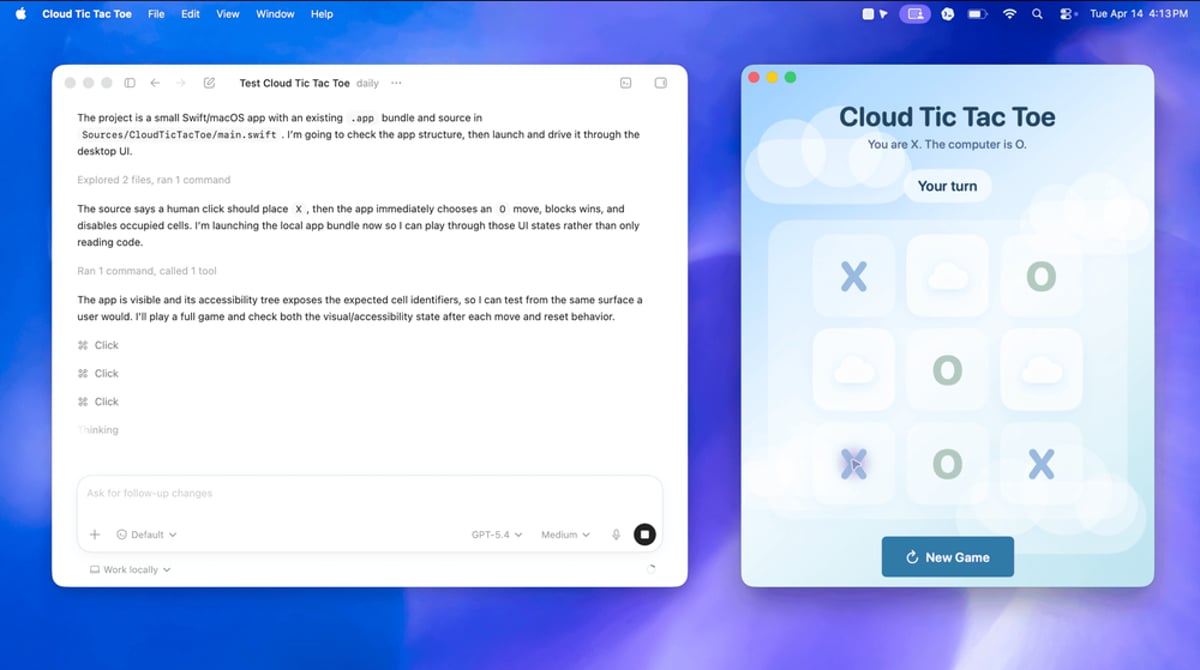
Codex can now operate desktop applications on your computer, OpenAI announced in a blog post detailing the updates. The system works in the background, so it won't interrupt your workflow in other apps, and multiple agents can run simultaneously. "This is helpful for testing and iterating on frontend changes, testing apps, or working in apps that don't expose an API," the company explains.
The timing isn't coincidental. Anthropic has been aggressively promoting Claude's computer use capabilities, positioning itself as the go-to solution for developers who need AI that can actually interact with software interfaces. Now OpenAI is firing back with features that match - and in some cases exceed - what Claude offers.
What makes this particularly potent is the multi-agent architecture. While one Codex instance tests frontend changes in a browser, another could simultaneously verify backend API responses or run security checks in a terminal window. That parallel processing capability transforms Codex from a coding assistant into something closer to an entire development team working in concert.
The desktop control feature starts rolling out to Codex desktop app users on macOS, according to The Verge's reporting. OpenAI hasn't specified an exact timeline for broader availability, but the phased rollout suggests they're testing stability before opening the floodgates.
Beyond computer control, OpenAI packed this update with features that address real developer pain points. Codex now generates images on demand - useful when you need placeholder graphics or want to visualize UI concepts without leaving your coding environment. More critically, it remembers context from past sessions, eliminating the frustrating need to re-explain your project architecture every time you start a new conversation.
That persistent memory capability hints at where this technology is headed. Today's coding assistants lose context between sessions, forcing developers to repeatedly provide background information. A Codex that remembers your codebase structure, coding preferences, and project goals becomes exponentially more useful - and more competitive with human developers.
The feature set reveals OpenAI's strategy: build a coding agent that handles the full development lifecycle, not just code generation. By controlling desktop apps, Codex can test in browsers, interact with design tools, manipulate databases, and verify deployments. It's the difference between a tool that writes code and one that ships products.
Anthropic won't take this lying down. Claude Code has carved out significant market share among developers who prioritize safety and reliability in their AI tools. The company's focus on constitutional AI and careful capability releases has built trust in an industry that's rightfully skeptical of AI hype. OpenAI's aggressive feature push puts pressure on Anthropic to accelerate its own roadmap.
For developers caught between these competing platforms, the escalation brings both opportunity and confusion. More capable tools mean higher productivity, but the rapid pace of releases makes it hard to commit to any single platform. Every few weeks brings another breakthrough that reshuffles the competitive landscape.
The real winners might be developers who stay platform-agnostic, using whichever tool best fits each specific task. Codex for complex multi-step workflows requiring desktop control, Claude for safety-critical code that needs extra scrutiny, GitHub Copilot for quick autocomplete - the future looks increasingly like a multi-tool approach rather than loyalty to any single vendor.
What we're watching unfold is the formation of a new software category: agentic development environments where AI doesn't just suggest code but actively participates in building, testing, and deploying applications. The companies that win this race will define how the next generation of software gets created.
OpenAI's Codex update represents more than feature parity with Anthropic - it's a declaration that the agentic coding assistant market is now a high-stakes battlefield. Desktop control, multi-agent workflows, and persistent memory transform Codex from a smart autocomplete tool into something approaching an autonomous development partner. As these platforms race to add capabilities, developers gain powerful new tools but face the challenge of navigating an increasingly fragmented ecosystem. The question isn't whether AI will reshape software development - that's already happening - but which companies will control the infrastructure that powers it.