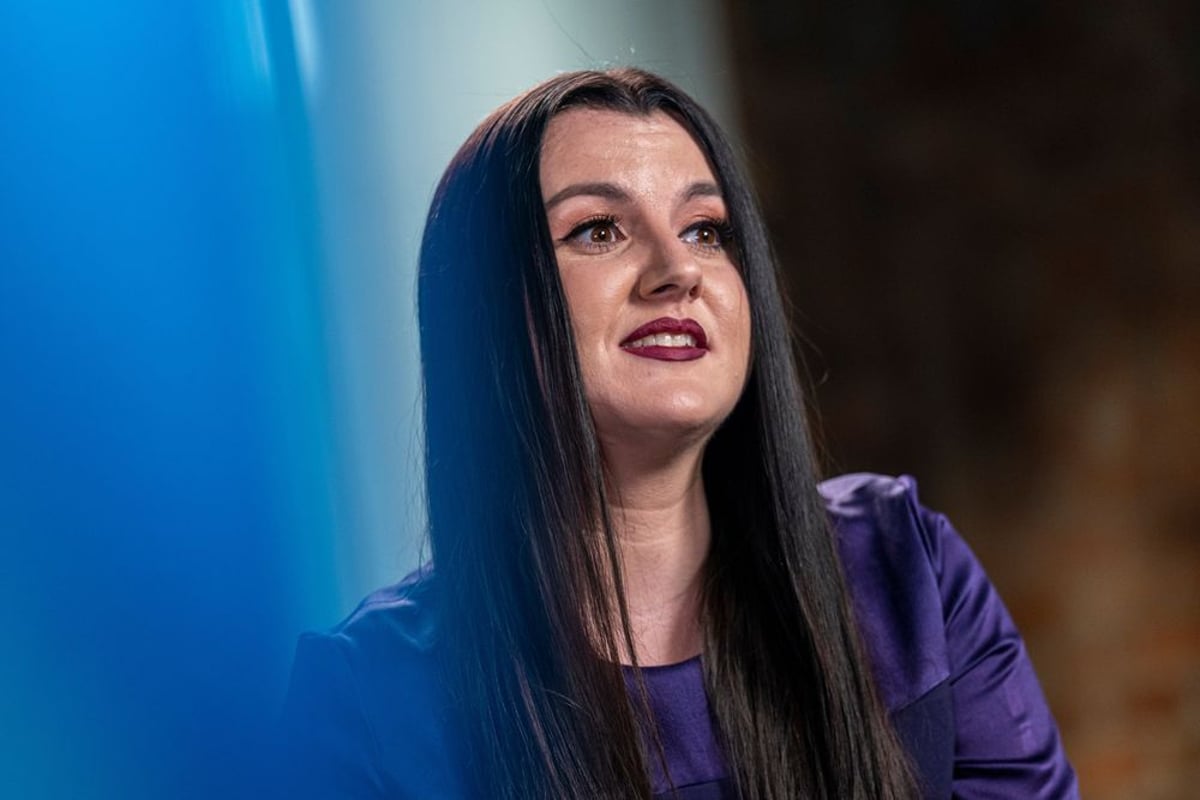
OpenAI just lost another top executive. Fidji Simo is stepping down from her role as AGI chief and transitioning to a part-time advisor position, she announced on X Wednesday evening. The departure comes just three months after Simo took medical leave for a neuroimmune condition, and marks the third major leadership change at the AI giant in recent months. It's raising fresh questions about OpenAI's executive stability as the company races toward artificial general intelligence.
OpenAI is losing its AGI chief. Fidji Simo confirmed Wednesday that she's leaving her full-time role leading the company's artificial general intelligence efforts, transitioning instead to a part-time advisory position as she manages ongoing health challenges.
The announcement, shared on X, brings an end to what's been a tumultuous few months for Simo and OpenAI's executive team. She'd only held the AGI chief title since early 2026, after being promoted from her position as CEO of applications. But the role proved short-lived.
In April, Simo disclosed on The Verge that she was taking medical leave to address a neuroimmune condition. At the time, she characterized it as a brief absence - a few weeks to focus on treatment and recovery. What seemed like a temporary health setback has now resulted in a permanent shift away from the demanding C-suite role.
"After careful consideration and conversations with my doctors, I've made the decision to step back from my full-time responsibilities," Simo wrote in her announcement. She'll continue working with OpenAI in an advisory capacity, but the day-to-day leadership of AGI development now falls to others within the organization.
The timing couldn't be more critical. OpenAI is locked in an increasingly intense race with Google, Microsoft, and Meta to achieve artificial general intelligence - AI systems that can match or exceed human capabilities across a wide range of tasks. Losing a key leader at this stage creates uncertainty about the company's strategic direction.
But Simo's departure isn't happening in isolation. It's part of a broader pattern of executive turnover that's been quietly reshaping OpenAI's leadership structure. Around the same time Simo announced her medical leave, COO Brad Lightcap also stepped down from his operational role to focus on what the company vaguely described as "special projects." The move raised eyebrows in the industry, coming without much explanation about what those projects might entail.
Then there's Kate Rouch, OpenAI's CMO, who also stepped back from her full-time role to address health concerns. Like Simo, Rouch planned to return in a reduced capacity - a "more narrowly scoped role" once her health improved, according to The Verge. Three senior executives stepping away from their posts within months of each other isn't typical corporate churn.
The pattern suggests either an unusually demanding work environment or simple bad luck with timing. Either way, it leaves OpenAI navigating a leadership vacuum at a moment when the company needs steady hands. CEO Sam Altman remains at the helm, but the loss of experienced operators like Simo and Lightcap forces other executives to absorb additional responsibilities.
Industry observers are watching closely. OpenAI has been on a hiring spree, bringing in talent from across the tech world to staff up its AGI efforts. But integrating new leaders while losing institutional knowledge creates friction. The company hasn't announced who will formally take over Simo's AGI responsibilities, though insiders suggest the work will be distributed among existing technical leadership.
Simo joined OpenAI from Meta, where she'd led the company's app family as head of the Facebook app. Her background in consumer products made her an interesting choice for the applications CEO role - someone who understood how to take complex technology and make it accessible to millions of users. The AGI chief position seemed like a natural evolution, positioning her to shape how OpenAI would eventually deploy superintelligent systems.
Now that trajectory has shifted. In her advisory role, Simo will likely provide strategic input without the operational burden of running teams or making daily decisions. It's a common arrangement for executives managing health issues or transitioning out of demanding roles.
For OpenAI, the challenge is maintaining momentum. The company recently secured additional funding at a valuation reportedly exceeding $150 billion, cementing its position as one of the most valuable private companies in tech. But investors are betting on execution, not just potential. Leadership instability can spook backers who want to see a clear path from today's large language models to the AGI future OpenAI has promised.
Competitors aren't standing still. Google continues advancing its Gemini models, while Microsoft - despite being OpenAI's largest investor - is hedging its bets with in-house AI development. Meta is pushing open-source models that threaten OpenAI's commercial advantage. Losing a senior leader who understood both the technical and business sides of AI creates a gap that's hard to fill quickly.
The news also humanizes the often breathless narrative around AI development. Behind the headlines about breakthrough models and existential risks are real people dealing with real health challenges. Simo's decision to prioritize her wellbeing over her career ambitions is worth noting in an industry that often glorifies overwork and sacrifice.
What happens next at OpenAI remains to be seen. The company has proven resilient through previous leadership dramas, including Altman's brief ouster and reinstatement in late 2023. But the cumulative effect of multiple executive departures will test the organization's depth.
Simo's departure caps a challenging quarter for OpenAI's executive team, with three senior leaders stepping back from full-time roles in rapid succession. While the company maintains its technical momentum and financial backing, the leadership churn introduces uncertainty at a critical moment in the AI race. How OpenAI fills these gaps - and whether it can retain institutional knowledge while integrating new leaders - will shape its ability to deliver on the AGI vision that's driven billions in investment. For now, the focus shifts to who takes the reins of the company's most ambitious technical efforts, and whether the remaining leadership can maintain the pace that's made OpenAI the industry's most watched company.