The tech industry is staring down its biggest bet yet. With AI infrastructure spending racing past $3 trillion, the question that's keeping investors up at night just got a whole lot more urgent: will any of this actually make money? It's the return of the AI ROI debate, but this time the stakes are existential - and the numbers are big enough to reshape the entire technology sector if the answer turns out to be no.
The AI gold rush just hit a sobering milestone. As capital expenditure on artificial intelligence infrastructure blows past $3 trillion, the industry's most uncomfortable question is back with a vengeance: where are the returns?
This isn't the first time investors have demanded answers. The debate erupted earlier when Sequoia Capital published its now-famous analysis questioning AI economics. But the numbers have exploded since then, and so have the consequences of getting this wrong.
Every major tech company is now locked in an arms race of spending. Microsoft, Google, Amazon, and Meta are pouring tens of billions into data centers, chips, and computing infrastructure. Startups are burning through venture capital at unprecedented rates to train ever-larger models. The collective industry bet on AI has become too big to fail - or too big to succeed.
The math is getting harder to ignore. According to industry analysis, companies need to generate roughly $3 in revenue for every dollar spent on AI infrastructure just to break even on capital costs. Right now, most aren't even close. Enterprise adoption is growing, but not at the exponential rate needed to justify exponential spending.
Apollo Global Management and other institutional investors are starting to ask pointed questions during earnings calls. Where's the business model? When do we see profits, not just promises? The patience of capital markets isn't infinite, even for the hottest technology trend in decades.
The pressure is showing up in unexpected places. Some companies are quietly scaling back their most ambitious AI projects. Others are pivoting from pure research to products they can actually sell. The era of "build it and they will come" is giving way to brutal fiscal reality.
What makes this moment particularly treacherous is the competitive dynamics at play. No company wants to be the first to blink and cut AI spending, potentially ceding the future to rivals. But continuing to pour money into infrastructure without clear returns is its own kind of suicide - just slower and more expensive.
The enterprise software market offers some hope. Companies are starting to pay real money for AI tools that demonstrably improve productivity or cut costs. But the revenue generated so far is a fraction of the capital being deployed. The gap between investment and returns isn't just wide - it's a chasm.
Sequoia's earlier warnings about AI's "$200 billion question" now look almost quaint. The stakes have grown by an order of magnitude, and the timeline for proving value is compressing. Investors who were patient two years ago are demanding concrete metrics today.
Some insiders argue the concerns miss the point - that AI is infrastructure for the next computing era, and infrastructure takes time to pay off. They point to cloud computing's long gestation period before becoming massively profitable. But cloud had a clear path to monetization from day one. AI's business model is still being figured out in real-time.
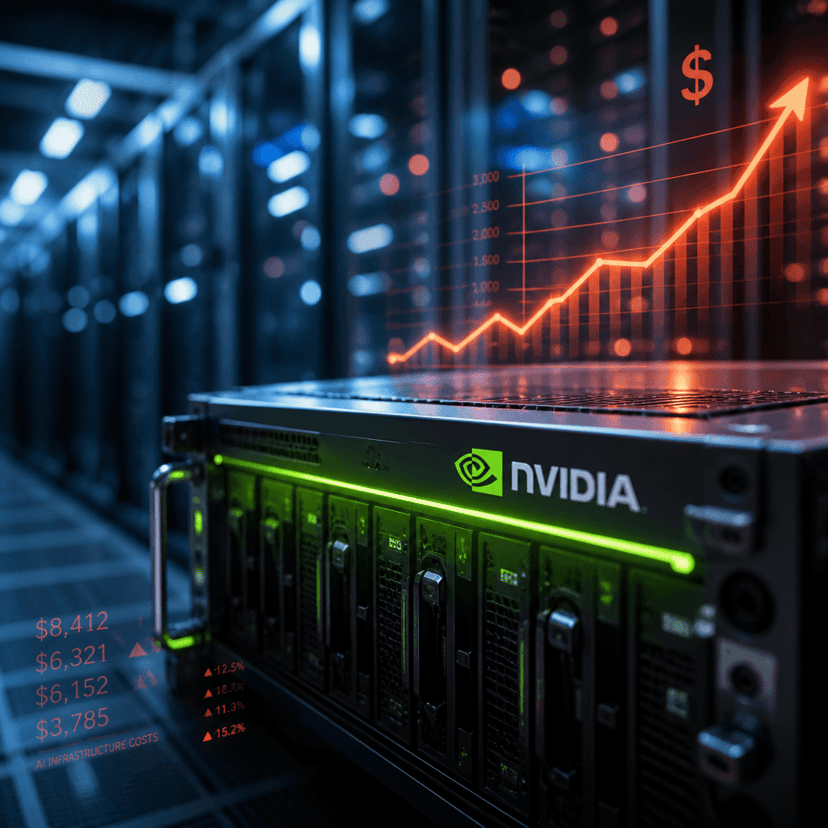
The semiconductor industry is watching especially closely. Nvidia has been the biggest beneficiary of AI spending, but even its fortunes depend on sustained demand. If the ROI question turns negative and companies slash AI budgets, the ripple effects would hit the entire tech supply chain.
What happens next will likely determine the shape of the technology industry for the next decade. If companies can demonstrate real returns from AI investments, the spending will accelerate and doubters will be silenced. If they can't, we're looking at one of the biggest misallocations of capital in tech history - and a brutal reckoning for companies that bet wrong.
The $3 trillion question isn't just an accounting problem - it's an existential test for the entire AI industry. Companies have maybe 12 to 18 months to show that massive infrastructure investments are translating into real business value. If they succeed, AI becomes the foundation of the next technology era. If they fail, we'll look back on this as one of the most spectacular capital misallocations in modern business history. Either way, the answer is coming soon, and it'll reshape everything.