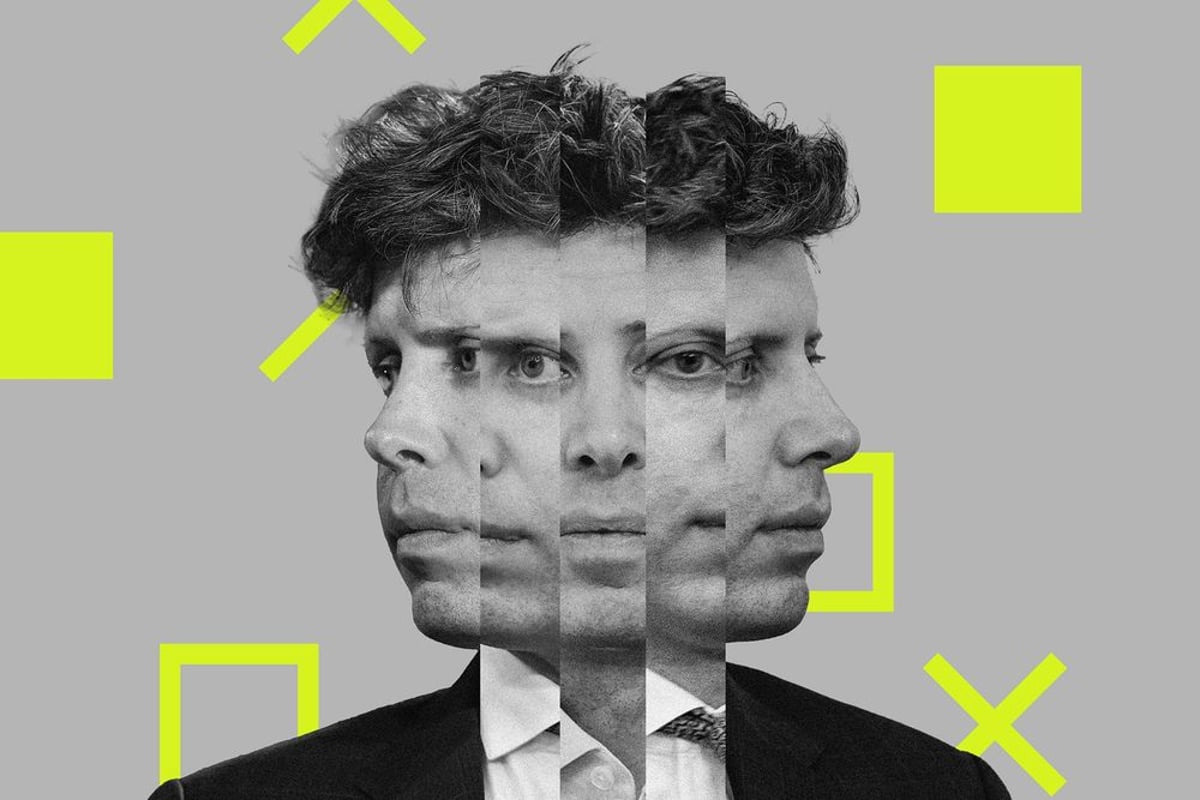
Ronan Farrow just dropped a bombshell investigation into OpenAI CEO Sam Altman that's sending shockwaves through Silicon Valley. After 18 months and interviews with over 100 sources, Farrow's New Yorker deep-dive exposes what board members, investors, and even Microsoft executives are now saying out loud: Altman has an 'unconstrained relationship with the truth.' The reporting reveals how a pivotal WilmerHale investigation was kept out of writing, how board votes were allegedly misrecorded, and why investors who went to war to reinstate Altman after his 2023 firing now harbor serious doubts about whether he can lead OpenAI to its long-awaited IPO.
The AI industry just got its most unflinching portrait yet. Investigative journalist Ronan Farrow, who broke the Harvey Weinstein story, spent a year and a half pulling back the curtain on OpenAI CEO Sam Altman. What he found is a founder who, in the words of one former board member, possesses two traits almost never seen in the same person: a strong desire to please people and an almost sociopathic lack of concern for the consequences of deceiving someone.
The timing couldn't be more critical. OpenAI is racing toward an IPO while hemorrhaging cash, pivoting its product strategy, and watching its top researchers defect to Anthropic. And now, according to Farrow's reporting in The Verge podcast Decoder, the insiders who fought to bring Altman back after his shocking November 2023 firing are having second thoughts.
The investigation reveals stunning details about what happened behind closed doors. WilmerHale, the prestigious law firm that investigated Enron and WorldCom with voluminous public reports, conducted an investigation into Altman's firing. But this time? They kept it entirely oral. No written report exists beyond an 800-word press release describing a breakdown in trust. Multiple legal experts told Farrow this approach was shocking and potentially problematic under Delaware corporate law if OpenAI goes public.
In the eyes of many legal experts I spoke to, and shockingly in the eyes of many people in this company, they kept it out of writing, Farrow explained. When he asked Altman directly whether the oral briefing was given to all board members, Altman said yes. But sources with direct knowledge told Farrow that's simply untrue.
The Microsoft angle is particularly revealing. The tech giant went to war to reinstate Altman, with CEO Satya Nadella desperately trying to understand what happened. But now Microsoft executives harbor acute and recently catalyzed concerns about their star investment. On the same day OpenAI reaffirmed exclusivity with Microsoft for stateless AI models, it announced a major deal with Amazon for stateful AI agents. Microsoft engineers insist that's impossible without touching the underlying technology covered by their exclusivity agreement.
One senior Microsoft executive gave Farrow a chilling assessment: there's a small but real chance Altman's legacy ends up resembling Bernie Madoff or Sam Bankman-Fried rather than Steve Jobs. What's more striking? When Farrow called around Microsoft to verify this sentiment, he didn't hear that's crazy. He heard yep, a lot of people here think that.
The story of Altman's November 2023 firing and dramatic reinstatement takes on new dimensions with Farrow's reporting. The board that fired him - designed specifically to prioritize safety over profit and hold executives accountable - was, in the words of one former member, very JV and fumbled the ball hard. They received what some now acknowledge was bad legal advice, reducing their concerns to the vague phrase lack of candor and then refusing to take calls from investors or even Microsoft.
Investors rallied to Altman's side in that information vacuum, looking for traditional red flags like financial crimes or sexual misconduct. What they missed, Farrow argues, was a more subtle but potentially more dangerous pattern: a steady accumulation of smaller deceptions that could have massive stakes for both the business and the world. Now, those same investors are voicing regret. I look back, and I think I should have had more concerns if I had known fully what the claims were, one told Farrow.
The investigation even uncovers the existence of the Ilya memos - documentation kept by former Chief Scientist Ilya Sutskever and Anthropic CEO Dario Amodei detailing their concerns about Altman. These memos circulate in Silicon Valley whisper networks but remain publicly undiscussed - a silence Farrow attributes to a lot of cowardice in an industry that's ruthlessly self-interested and ruthlessly business-oriented.
Altman himself acknowledged the pattern to Farrow, attributing it to people-pleasing and conflict aversion that he's working to overcome. But investors remain unconvinced. One prominent backer who helped orchestrate Altman's return said he wasn't taken out behind the woodshed enough, and the behavior appears to be a stable trait manifesting in ongoing business relationships.
The pressure is mounting from all sides. OpenAI just released a policy paper calling for government AI efficiency stipends, even as researchers question whether the technology can deliver on its grand promises. The company is refocusing from consumer search to enterprise tools, chasing Anthropic's commanding lead in that sector. Sora and other ancillary projects are being shut down to focus resources. The vibes, as one Verge report put it, are decidedly off.
Farrow spent hours on the phone with Altman and approached the story with empathy, seeking to understand how someone carries the weight of so many people calling them a pathological liar. He got what he describes as West Coast platitudes about breathwork but not a lot of deep self-confrontation. The concerning part? Altman seems able to genuinely believe his shifting sales pitches or at least bluster through them without meaningful self-doubt.
The investigation also tackles the seedier side of Silicon Valley's opposition research machine. Farrow spent months investigating salacious allegations against Altman - including claims of sexual assault of minors and even murder - that circulate at cocktail parties and conference circuits as assumed fact. He found no corroboration, attributing many claims to opposition dossiers pushed by rivals like Elon Musk that amount to nothing when scrutinized. But this noise, Farrow argues, obscures the more evidence-based critiques that deserve urgent attention.
What makes this all more concerning is the lack of external oversight. OpenAI's original nonprofit structure, designed to prioritize safety, has been effectively neutered. There's no federal statute protecting AI company whistleblowers who raise safety concerns. Pre-deployment safety testing remains voluntary in the US, though Europe is implementing requirements. And as Greg Brockman and other AI executives flood money into political action committees, the prospect of meaningful regulation dims.
We are in an environment where the systems that should be providing oversight are just hollowed out, Farrow told The Verge. He points to simple solutions - Sarbanes-Oxley-style whistleblower protections, mandatory written records for internal investigations, robust national security reviews for Middle Eastern infrastructure deals - that could make a difference if there's political will.
The ultimate question hanging over all of this: can OpenAI make it to the finish line? The company is burning money faster than it's making it. Its entire cost structure depends on a charitable interpretation of fair use for training data. If copyright lawsuits go the wrong way, the economics crater. And now, with this investigation exposing deep concerns about leadership trustworthiness from the company's biggest backer and own investors, the path to a successful IPO looks increasingly treacherous.
This isn't just about one CEO's relationship with truth - it's about an entire industry racing toward transformative technology without meaningful checks and balances. Farrow's investigation exposes a troubling dynamic where investors who went to war for Altman now question their judgment, where critical investigations are kept out of writing, and where Silicon Valley's ruthless self-interest means people fold like napkins rather than stand by their convictions. As OpenAI barrels toward an IPO with mounting doubts from its biggest backers, the stakes extend far beyond one company's bottom line. The question isn't just whether Altman can be trusted to lead OpenAI - it's whether an unconstrained industry can be trusted to shape our collective future.