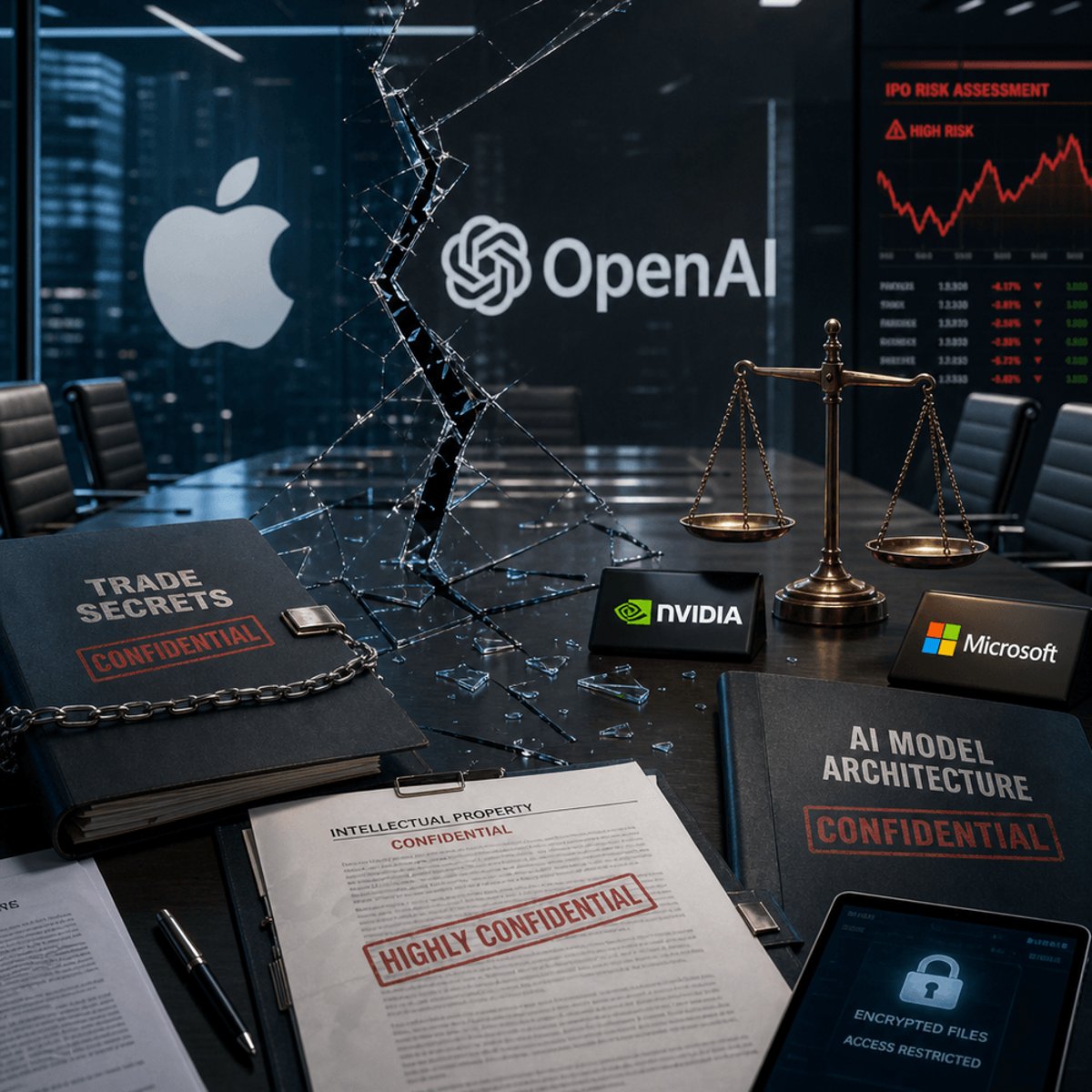
Apple just dropped a legal bombshell that could derail OpenAI's highly anticipated IPO. The Cupertino giant filed a trade secrets lawsuit last Friday alleging systematic misconduct involving more than 400 former Apple employees now working at the AI startup, with accusations reaching all the way to OpenAI's chief hardware officer. The timing couldn't be worse for OpenAI, which has been quietly preparing for a public debut that could value the company north of $100 billion.
Apple isn't playing around with its latest legal salvo. The company filed a trade secrets lawsuit against OpenAI last Friday that reads less like a routine corporate dispute and more like an indictment of Silicon Valley's talent poaching culture run amok.
The complaint alleges that more than 400 former Apple employees now work at OpenAI, and according to the filing reported by TechCrunch, Apple claims this mass exodus wasn't just about better compensation packages. The lawsuit points to a pattern of misconduct that allegedly reaches OpenAI's chief hardware officer, suggesting the AI company may have actively solicited proprietary information during its aggressive hiring spree.
For OpenAI, the timing is catastrophic. The company has been laying groundwork for an IPO that insiders say could happen within the next 12 to 18 months, with a potential valuation exceeding $100 billion. But this lawsuit throws a wrench into those plans at the worst possible moment. IPO underwriters typically conduct exhaustive due diligence on potential legal liabilities, and a trade secrets case from one of the world's most valuable companies is exactly the kind of risk that makes Wall Street nervous.
OpenAI's response so far has been notably cautious. The company issued a carefully worded statement that neither confirms nor denies the specific allegations, instead emphasizing its commitment to ethical hiring practices and respect for intellectual property. That hedged language suggests OpenAI's legal team knows they're on shaky ground. When companies have solid defenses, they tend to push back harder.
The core of Apple's argument centers on what those 400-plus employees might have brought with them when they jumped ship. Apple has been quietly building its own AI capabilities for years, investing heavily in machine learning hardware, on-device processing, and privacy-focused AI features. The company's work on neural engines, custom silicon optimized for AI workloads, and advanced computer vision represents billions in R&D investment.
Now Apple is essentially arguing that OpenAI built part of its operation on the back of that investment. The lawsuit specifically calls out OpenAI's hardware initiatives, which have ramped up significantly over the past two years as the company looks to reduce dependence on Nvidia chips and cloud providers like Microsoft. If Apple can prove that former employees used proprietary knowledge to accelerate OpenAI's hardware roadmap, the damages could be substantial.
The case also highlights a broader tension in the AI industry. OpenAI has positioned itself as an open research organization, but it's increasingly operating like a traditional tech company, competing directly with the same firms whose employees it's been aggressively recruiting. Apple, Google, and Microsoft have all lost significant talent to OpenAI's mission-driven pitch and generous equity packages.
But there's a difference between hiring competitors' employees and allegedly encouraging them to bring confidential information along for the ride. If Apple's allegations hold up in discovery, it could set a precedent that makes Silicon Valley's revolving door spin a bit less freely. Tech companies have generally operated under an unspoken agreement that employees are free to move between firms, even direct competitors, as long as they don't literally copy files or violate non-compete agreements.
The IPO implications are significant. OpenAI would need to disclose this lawsuit in its S-1 filing, along with potential liability estimates. That kind of uncertainty is poison for public market debuts. Investors want growth stories, not legal quagmires. Just ask Uber, which had to navigate multiple lawsuits and regulatory challenges during its path to going public, ultimately leading to a disappointing first-day performance.
For now, all eyes are on the discovery phase. If Apple can compel OpenAI to turn over internal communications showing executives knew employees were bringing confidential information, this case could escalate quickly. On the other hand, if Apple's evidence is thin, OpenAI might weather the storm with a settlement and some policy changes.
This lawsuit represents more than just a legal skirmish between two tech giants. It's a referendum on how the AI industry has been built, with companies racing to hire talent and asking questions later. For OpenAI, the path to a successful IPO just got significantly more complicated. The company will need to either settle this case quickly or prepare for a protracted legal battle that could spook investors and delay its public market debut. Apple, meanwhile, is sending a clear message to the rest of Silicon Valley: there are limits to the talent wars, and crossing them comes with consequences. The next few months will determine whether OpenAI's IPO dreams survive this collision with one of tech's most litigious giants.