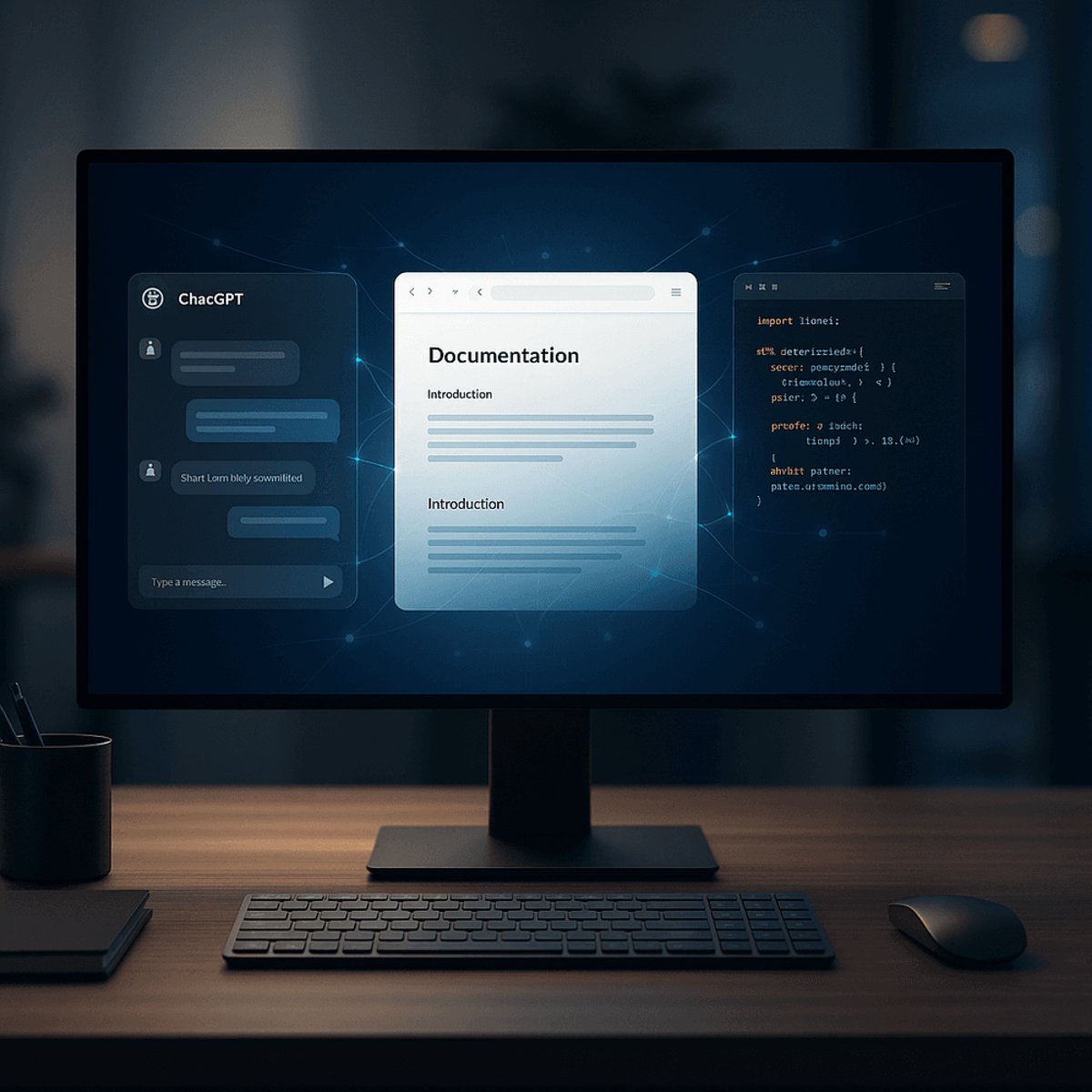
OpenAI is consolidating its ChatGPT app, web browser, and Codex developer tools into a single desktop super app, according to a CNBC report. The move signals the AI company's ambition to become a one-stop workspace that could directly challenge Microsoft's Office suite and Google Workspace. The unified experience aims to streamline how users interact with AI across chat, web browsing, and code development in one place.
OpenAI is making a bold play to own your desktop. The company plans to merge its ChatGPT application, web browser, and Codex coding assistant into a single super app, streamlining what's currently a fragmented user experience across multiple tools.
The consolidation effort puts OpenAI on a collision course with tech's biggest players. Microsoft, despite being OpenAI's largest investor and partner, has spent years integrating AI into its Office suite. Google has similarly embedded AI across Workspace, Chrome, and its productivity tools. Now OpenAI wants to build its own unified platform that could make both offerings look outdated.
The timing is strategic. OpenAI has spent the past year expanding beyond its ChatGPT roots, launching a web browser to challenge Chrome and Safari, and reviving Codex as a developer-focused coding assistant. But asking users to juggle three separate apps creates friction. A super app solves that problem by putting conversational AI, web navigation, and code generation under one roof.
For developers especially, this could be transformative. Imagine switching seamlessly between researching documentation in the browser, asking ChatGPT to explain a concept, and having Codex write the actual code, all without leaving a single window. That's the kind of workflow integration that Microsoft's GitHub Copilot and Visual Studio Code have achieved, and OpenAI clearly wants a piece of that action.
The move builds on OpenAI's recent acquisition of Astral, a Python tooling company that significantly bolstered Codex's capabilities. That deal signaled OpenAI's serious commitment to the developer market, not just casual ChatGPT users. Now the super app strategy suggests the company sees an opportunity to become developers' primary workspace.
But there's a complexity here that can't be ignored. Microsoft has invested over $13 billion in OpenAI and has exclusive rights to commercialize its technology in certain categories. A unified OpenAI desktop app that competes with Microsoft 365 could strain that relationship, even as both companies insist they're partners. The dynamics get messier when you consider Microsoft already embeds OpenAI's models across Windows, Edge, and Office.
The super app approach also reflects a broader industry trend. Companies like Notion and Airtable have evolved from point solutions into all-in-one workspaces. Users increasingly prefer platforms that reduce context-switching rather than best-of-breed tools that don't talk to each other. OpenAI is betting that AI-native integration, where the browser knows what you're coding and ChatGPT remembers what you browsed, will create a stickier product than three disconnected apps.
What remains unclear is how OpenAI will handle the enterprise market. Big companies have compliance, security, and IT management requirements that consumer apps don't address. Microsoft and Google have spent decades building enterprise-grade admin controls, data governance, and support infrastructure. OpenAI will need to show it can operate at that scale if it wants to truly compete for workplace budgets.
The announcement comes as AI companies face mounting pressure to demonstrate sustainable business models beyond API access. A desktop super app with potential subscription tiers, enterprise licensing, and ecosystem lock-in offers a clearer path to revenue than selling tokens. It's the difference between being infrastructure and being the product itself.
Competitors are watching closely. Anthropic has kept Claude focused on conversational AI. Google's Gemini spans products but hasn't unified them into a standalone super app. Microsoft has Copilot everywhere but not as a dedicated workspace. OpenAI might have found an opening that its rivals haven't fully exploited yet.
OpenAI's super app gambit represents more than product consolidation. It's a declaration that the company wants to own the workspace layer where AI actually gets used, not just provide the models underneath. Whether that vision can coexist with Microsoft's ambitions or if it forces an uncomfortable reckoning between investor and investee remains the biggest question. For users and developers, though, the promise is clear: one app to replace the tab chaos of modern knowledge work. If OpenAI can deliver on that vision without sacrificing the power of its individual tools, it might just pull off what few companies have managed: making a super app that people actually want to use.