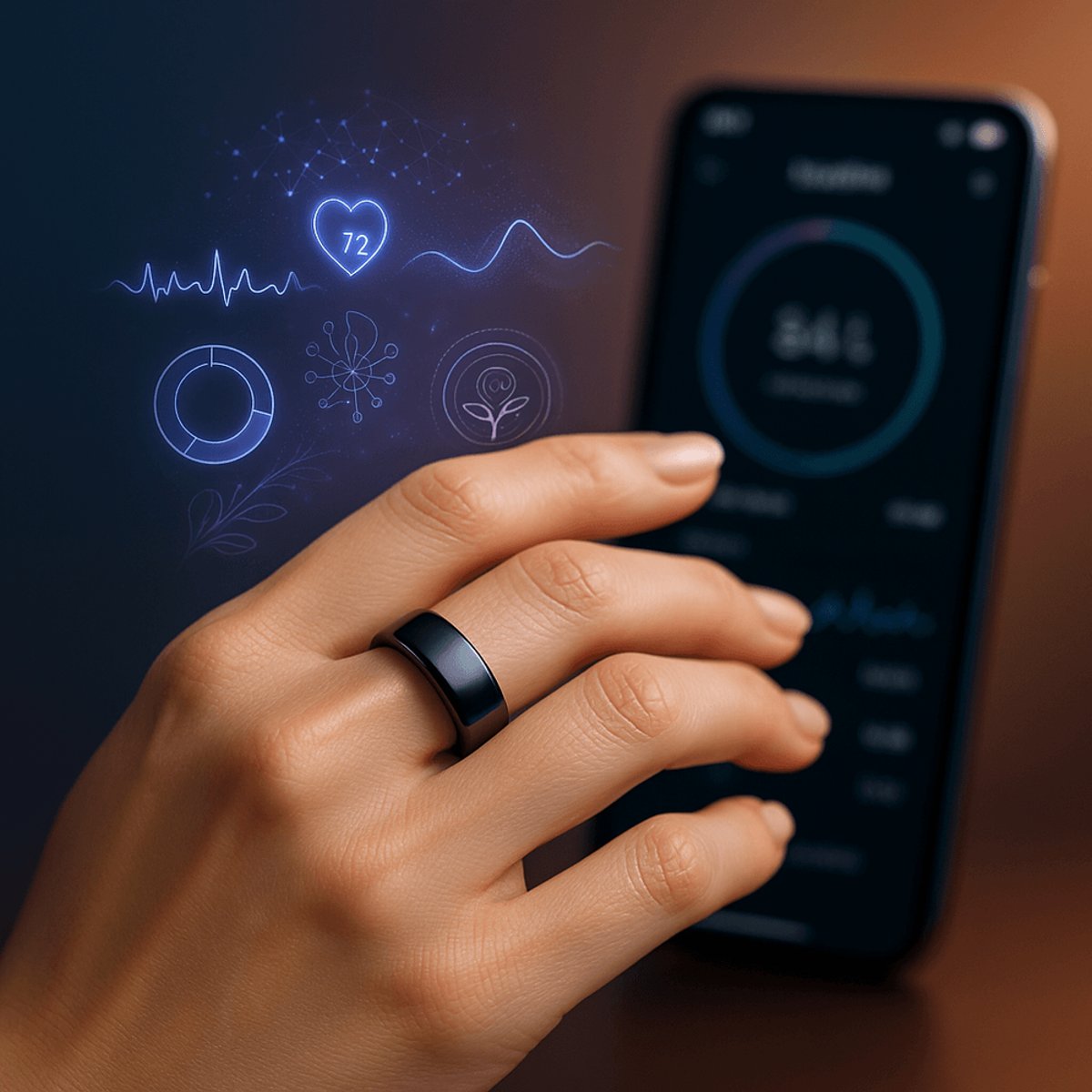
Oura, the smart ring maker valued at $5.2 billion, just launched its first proprietary AI model designed exclusively for women's reproductive health. The model handles questions spanning the full spectrum from early menstrual cycles through menopause, marking a significant shift in how wearable tech companies approach gender-specific health insights. It's a direct challenge to competitors like Apple and Fitbit, who've relied on generic AI assistants for health queries.
Oura is making a calculated bet that women's health needs specialized AI, not just another chatbot. The Finnish wearables company announced today it's rolling out a proprietary AI model built specifically to answer questions about reproductive health, from tracking irregular periods to navigating perimenopause symptoms.
The timing isn't coincidental. Women's health tech has exploded into a $50 billion market, yet most wearable companies still treat it as an afterthought, bolting basic cycle tracking onto devices designed primarily for male physiology. Oura is flipping that script entirely.
What makes this launch particularly interesting is what Oura isn't doing. Instead of licensing OpenAI's GPT models or Google's Gemini like most health tech companies, Oura built its own model from scratch. That decision gives them complete control over training data, privacy protocols, and the ability to fine-tune responses based on the millions of data points flowing from Oura rings every day.
The model draws on Oura's treasure trove of biometric data - heart rate variability, body temperature fluctuations, sleep patterns, and activity levels - collected from over 2.5 million active users. That's a dataset most AI labs would kill for, especially given how notoriously underrepresented women's health data is in medical research.
Oura's approach tackles questions that generic AI models fumble. Ask ChatGPT about fertility windows and you'll get textbook answers. Ask Oura's model and it can reference your personal temperature trends, sleep disruptions, and HRV patterns from the past three months. The difference between generic advice and personalized insight.
The competitive implications are huge. Apple added cycle tracking to Apple Watch years ago but still routes health questions through Siri, which relies on web search and general medical databases. Fitbit, now owned by Google, has similar limitations. Oura just leapfrogged both by making women's health its AI-first priority.
But the launch also raises thorny questions about data privacy and AI reliability in healthcare. Training an AI model on reproductive health requires incredibly sensitive personal information. Oura hasn't disclosed specifics about data anonymization, model validation, or how it prevents the AI from giving dangerous medical advice. The company will need to address these concerns quickly, especially as regulators scrutinize health AI more aggressively.
The move fits Oura's broader strategy of positioning itself as the premium choice for health-obsessed consumers willing to pay $5.99 monthly for advanced analytics. Adding AI-powered reproductive health coaching gives subscribers another reason to justify that recurring fee, especially compared to one-time purchase competitors.
Industry watchers see this as the opening salvo in a broader war over vertical AI models. Rather than one general-purpose health assistant, we're heading toward specialized AI for diabetes management, cardiovascular health, mental wellness, and now reproductive health. Each trained on domain-specific data, each offering deeper insights than any generalist model could match.
For Oura, the stakes are existential. The company operates in a brutally competitive market where Apple and Samsung can outspend it 100-to-1 on R&D. Specialized AI might be the moat that keeps Oura relevant, turning its smaller user base into an advantage through hyper-focused data collection and model training.
The launch also signals where consumer AI is heading more broadly. We're past the era of chatbots that try to do everything poorly. The next wave is narrow AI that does one thing exceptionally well, backed by proprietary datasets competitors can't replicate. Oura just planted its flag in women's reproductive health.
Oura's proprietary AI model represents more than a feature update - it's a strategic pivot toward vertical AI that could redefine competitive advantages in wearable tech. By focusing exclusively on women's reproductive health and leveraging years of biometric data, Oura is betting it can deliver insights that generic AI assistants simply can't match. The real test won't be the technology itself but whether Oura can navigate privacy concerns, prove clinical reliability, and convince women that a $300 ring plus $6 monthly subscription offers insights worth paying for. If it works, expect every health tech company to start building their own specialized models. The age of one-size-fits-all health AI is over.