Palantir Technologies reports its fourth-quarter earnings after the market close today, and Wall Street is watching closely to see if surging global defense spending and the company's AI push can revive a stock that's taken a beating. Analysts point to escalating conflicts worldwide and a massive U.S. defense budget as potential catalysts for the data analytics giant, which has built its business on government contracts and is now racing to prove its commercial AI platform can compete. The Denver-based company faces a critical test: can it show momentum strong enough to justify its premium valuation after a rough stretch?
Palantir Technologies is about to face Wall Street's judgment. The company reports its fourth-quarter earnings today after the closing bell, and the stakes couldn't be higher for a stock that's shed significant value while the broader defense tech sector has rallied. According to CNBC, analysts are betting that global conflicts and an expanded U.S. defense budget could breathe new life into the beaten-down shares.
The setup is intriguing. While Palantir's stock has struggled, the macro environment for defense contractors has rarely looked better. Escalating tensions across multiple global hotspots have governments opening their wallets, and the U.S. defense budget continues its upward trajectory. For a company that built its reputation on classified government work - from intelligence agencies to military operations - this should be prime time.
But Palantir isn't just a defense play anymore, and that's where things get complicated. The company has been pushing hard into commercial markets with its Foundry platform and newer AI tools, trying to prove it can sell its data integration and analytics capabilities beyond the secure government facilities where it made its name. The question investors want answered today is whether that commercial expansion is gaining real traction or if Palantir remains fundamentally dependent on government contracts.
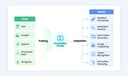
The AI angle matters enormously right now. Every enterprise software company is racing to position itself as an AI leader, and Palantir has been particularly aggressive in claiming its platforms are uniquely positioned for the generative AI era. The company's Artificial Intelligence Platform, or AIP, launched with considerable fanfare as a way to help organizations deploy large language models on their own data. If today's earnings show strong AIP adoption and growing commercial deals, it could shift the narrative around Palantir's growth potential.
Defense spending provides a solid foundation, but it's also a double-edged sword. Government contracts are notoriously lumpy, with revenue that can swing dramatically based on contract timing and budget cycles. Palantir has long dealt with this volatility, and analysts will be looking closely at the company's guidance to understand whether the current geopolitical environment is translating into sustained contract wins or just short-term spikes.
The stock's recent weakness reflects broader concerns about valuation and growth sustainability. Palantir has traded at premium multiples throughout its public market life, justified by the company's unique technology and high-profile government relationships. But as competition in enterprise AI has intensified - with everyone from Microsoft to specialized startups offering AI-powered analytics - maintaining that premium has become harder. Investors need to see proof that Palantir's technology advantage is real and defensible.
Wall Street is also watching margins closely. Palantir has improved profitability significantly over the past few years, a shift that's been crucial for the stock's credibility. But the company's push into commercial markets and AI product development requires investment, and there's always tension between spending for growth and delivering the strong margins investors now expect. How management balances this trade-off in guidance will be telling.
The timing of this report is significant beyond just the quarterly calendar. Defense tech companies broadly have been benefiting from the changed geopolitical landscape, but the market is getting pickier about which companies can truly capitalize. Palantir needs to show it's not just riding a wave of defense spending but actively winning competitive deals and expanding its footprint. The company's relationship-driven sales model has been both a strength and a limitation - it's allowed for massive contract wins but also made scaling more challenging.
What happens after the closing bell could set the tone for Palantir's entire year. A strong print with robust guidance would validate the bull case that defense tailwinds and AI momentum are converging at the right time. A miss or cautious outlook, on the other hand, would raise harder questions about whether the company's best growth days are behind it. Given how much the stock has already declined, there's room for upside surprise if results clear even modestly raised bars.
Today's earnings report is a defining moment for Palantir as it tries to prove it can thrive in both its core government business and the increasingly crowded commercial AI market. The macro backdrop of elevated defense spending should provide support, but investors are clearly looking for more than just government contract renewals. They want evidence that Palantir's AI platform is gaining commercial traction and that the company's technology advantage justifies its premium valuation. Whether the stock rallies or extends its decline likely depends on management's ability to show momentum on both fronts and convince Wall Street that this isn't just a defense budget story but a genuine AI platform play.