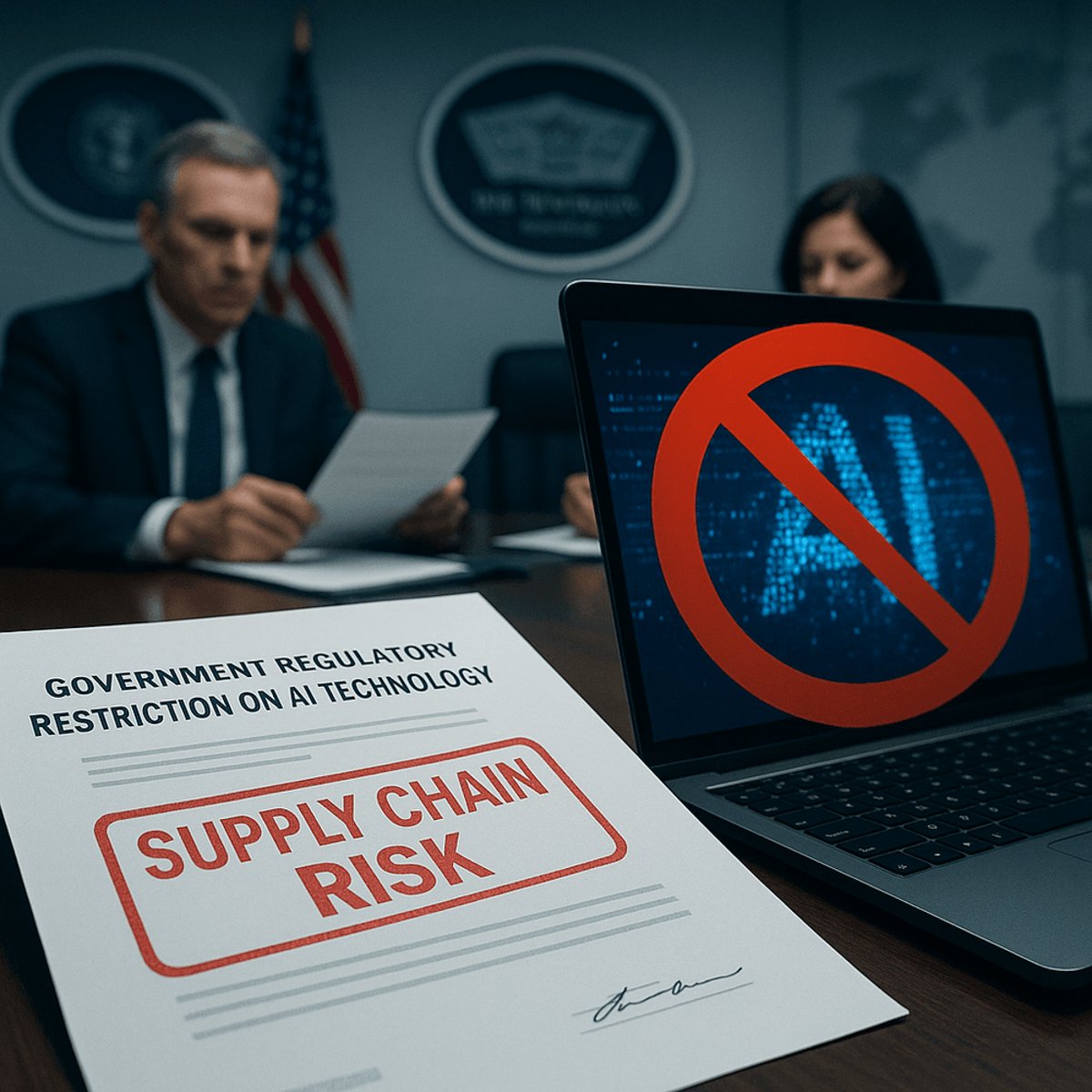
The Pentagon just dropped a bombshell on one of AI's most prominent startups. The Department of Defense formally designated Anthropic as a supply chain risk, forcing defense contractors to certify they don't use Claude models in Pentagon work - while new intelligence reveals the AI is already being deployed in Iran. The move marks an unprecedented crackdown on a U.S.-based AI company and signals how quickly geopolitical concerns are reshaping the industry's landscape.
The Department of Defense isn't pulling punches anymore. In a formal declaration that sends shockwaves through Silicon Valley, the Pentagon has officially labeled Anthropic - the $30 billion AI startup behind Claude - as a supply chain risk. But this isn't just bureaucratic posturing. The designation comes with teeth: every defense contractor and vendor working with the DOD must now certify in writing that they're not using Anthropic's models anywhere in their Pentagon-related work.
What makes this particularly explosive is the timing. According to the formal notice, U.S. intelligence has confirmed that Claude is being actively deployed inside Iran, raising immediate red flags about how American AI technology is reaching sanctioned adversaries. The Pentagon hasn't disclosed specifics about how Claude entered Iranian networks, but the implications are staggering for an industry that's spent years insisting it can self-regulate on national security matters.
This marks the first time the Defense Department has taken such aggressive action against a major U.S.-based AI company. While Chinese AI firms like SenseTime have faced similar restrictions, seeing an American startup - one backed by Google and valued at tens of billions - get the supply chain risk label represents a dramatic escalation in how Washington is approaching AI governance.
The certification requirement isn't symbolic. Defense contractors from Lockheed Martin to countless smaller vendors will need to audit their entire AI stack and provide formal attestations. For companies that have integrated Claude into their workflows - whether for code generation, document analysis, or operational planning - this means immediate replacement and potential contract complications. Industry sources suggest the ripple effects could impact hundreds of millions in existing contracts.
Anthropichas built its reputation on AI safety and responsible deployment, making this designation particularly ironic. The company's constitutional AI approach and emphasis on alignment were supposed to make Claude the "safe" choice for enterprise customers. Instead, the startup now finds itself in the unprecedented position of being deemed too risky for U.S. defense work while simultaneously operating in an adversarial nation.
The Iran connection adds a geopolitical dimension that goes far beyond typical supply chain concerns. How did a cutting-edge American AI model end up deployed in a country under comprehensive U.S. sanctions? The possibilities range from API access through intermediaries to unauthorized redistribution of model weights. Each scenario carries different implications for AI export controls and the broader question of whether these systems can be contained once released.
Defense industry insiders say the Pentagon's move could trigger a cascade effect. Allied nations often mirror U.S. supply chain designations, meaning Anthropic could soon face restrictions across NATO countries and Five Eyes partners. For a company trying to compete with OpenAI and Google in the enterprise market, losing access to the entire defense and intelligence sector across Western democracies would be devastating.
The timing couldn't be worse for Anthropic's enterprise ambitions. The company has been aggressively pitching Claude as the go-to AI for regulated industries and security-conscious organizations. Now those same customers are receiving guidance that the Pentagon considers the technology a supply chain risk. Expect compliance officers across healthcare, finance, and critical infrastructure to start asking very hard questions.
What's particularly striking is how quickly the calculus around AI safety has shifted from technical alignment to geopolitical containment. All the research into constitutional AI and helpful, harmless, and honest systems means little when your models are operating in Tehran. The Pentagon's action suggests Washington has concluded that technical safeguards alone can't prevent strategic AI capabilities from reaching adversaries.
The formal designation also exposes the uncomfortable reality that AI companies have limited visibility into how their models are actually being used. Anthropic's API-based approach means Claude could be accessed through chains of resellers and proxy services that obscure the end user. The company's standard terms of service prohibit use by sanctioned entities, but enforcing those terms in practice has proven nearly impossible.
For the broader AI industry, this is a watershed moment. If a safety-focused startup backed by Google can end up on the Pentagon's restricted list, no AI company is immune. Expect investors to start demanding much more rigorous export control compliance and end-use monitoring. The era of "move fast and scale globally" in AI may be ending faster than anyone anticipated.
The Pentagon's formal supply chain risk designation against Anthropic represents more than just one company's troubles - it's the opening salvo in a new era of AI geopolitics. When American-built AI models start showing up in Iran while the DOD is simultaneously trying to maintain technological superiority, Washington's response was inevitable. For Anthropic, this means a painful reckoning with how little control AI companies actually have once their models leave the lab. For the industry, it's a clear signal that technical innovation alone won't shield you from geopolitical realities. The question now isn't whether other AI companies will face similar restrictions, but when - and whether the industry can develop containment mechanisms that satisfy national security requirements without fragmenting into incompatible regional systems. Defense contractors have their marching orders. The rest of the AI world should be watching very carefully.