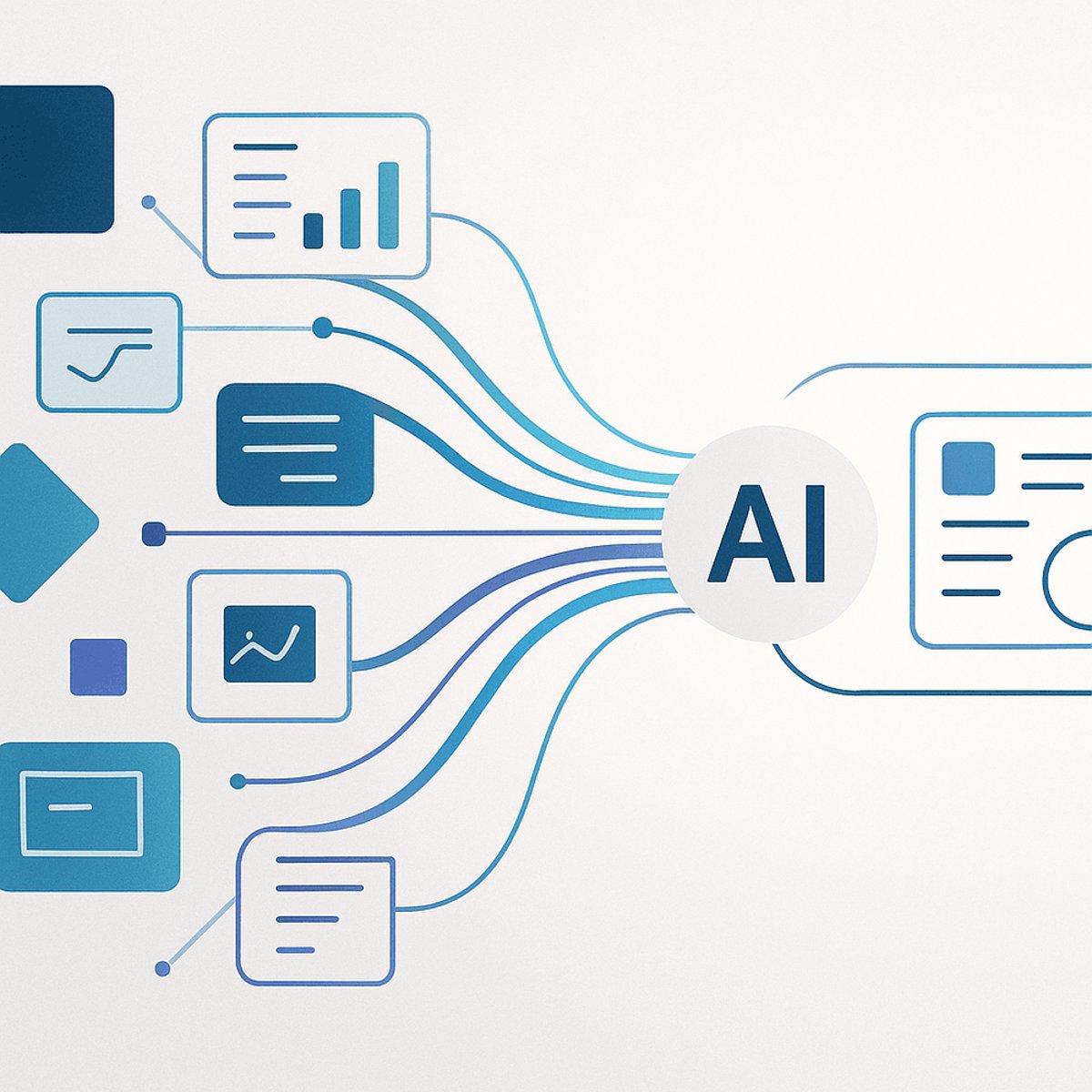
AI search startup Perplexity just launched Computer, a unified platform that the company says brings together "every current AI capability into a single system." The move signals a strategic bet that users are tired of juggling multiple AI tools and want one interface to rule them all. As the AI market fragments across dozens of specialized models from OpenAI, Anthropic, Google, and others, Perplexity is positioning itself as the great consolidator.
Perplexity is making a bold play to simplify the increasingly chaotic AI landscape. The company's newly launched Computer platform unifies multiple AI models and capabilities into what it describes as a single, cohesive system - directly tackling one of the industry's most frustrating pain points.
The launch comes as AI users face an overwhelming array of choices. Need coding help? There's GitHub Copilot. Want conversational AI? Pick between ChatGPT, Claude, or Gemini. Research tasks? Maybe Perplexity's own search tool. Image generation? Midjourney or DALL-E. The fragmentation has created what industry insiders call "AI tool fatigue."
"Perplexity Computer unifies every current AI capability into a single system," the company states in its announcement. While details remain sparse, the platform appears designed to let users access multiple underlying AI models through one interface, rather than forcing them to maintain separate subscriptions and learn different interaction patterns.
This aggregation strategy puts Perplexity on a collision course with the major model developers. OpenAI has doubled down on making GPT-4 and its successors do everything, recently expanding into search and multimodal capabilities. Anthropic similarly positions Claude as a single, powerful solution. Google bundles AI across its product ecosystem. But Perplexity is betting these walled gardens aren't what users actually want.
The startup has been quietly building toward this moment. Founded in 2022, Perplexity initially made its name as an AI-powered search engine that cited sources - a direct challenge to Google's dominance. The company raised significant venture funding and reached a reported valuation exceeding $500 million, though it's faced controversy over content attribution and publisher relationships.
Computer represents a strategic evolution. Instead of competing solely on search or trying to build the best foundational model, Perplexity is positioning itself as the orchestration layer - the place where different AI capabilities come together seamlessly. It's a play borrowed from the app aggregation playbook that made platforms like Zapier valuable by connecting disparate tools.
The enterprise angle looks particularly compelling. Companies struggle to manage AI sprawl as different teams adopt different tools, creating security headaches, billing complexity, and training burdens. A unified platform that provides governed access to multiple AI capabilities could solve real pain points for IT departments and procurement teams.
But Perplexity faces significant challenges. The major AI companies aren't sitting still - OpenAI recently expanded its enterprise offerings, while Google and Microsoft leverage their existing enterprise relationships. And if Computer relies on API access to other companies' models, Perplexity will be vulnerable to pricing changes, capability restrictions, or competitive dynamics that could undermine its value proposition.
The launch also raises questions about differentiation. If Computer is essentially a wrapper around other companies' AI models, what prevents users from accessing those models directly? Perplexity will need to prove it adds substantial value through its integration, user experience, or unique capabilities that justify another layer in the stack.
Timing matters too. The AI market is moving incredibly fast, with new models and capabilities launching constantly. Perplexity will need to keep Computer updated with the latest and greatest AI tools while maintaining a coherent user experience - no small feat when the underlying technologies change weekly.
The product name itself is intriguing. "Computer" evokes the all-knowing AI from Star Trek or the universal problem-solving machines of science fiction. It suggests ambition beyond incremental improvement - a vision of AI as a general-purpose tool that doesn't require users to understand the underlying complexity.
Industry observers will watch closely to see if Perplexity's aggregation thesis proves correct. Are users really willing to pay for a unified layer on top of AI tools they could access separately? Or do they value the direct relationship with model providers and the specialized interfaces those companies build?
Perplexity's Computer launch represents a critical test of whether the AI market wants aggregation or specialization. If users embrace a unified platform that simplifies access to multiple models, Perplexity could carve out a valuable position between infrastructure providers and end users. But if the major AI companies successfully bundle capabilities into their own ecosystems - or if users prefer best-of-breed point solutions - Computer could struggle to find product-market fit. Either way, the launch highlights a key tension in the maturing AI industry: as capabilities proliferate, someone needs to make them usable. Perplexity is betting that someone is them.