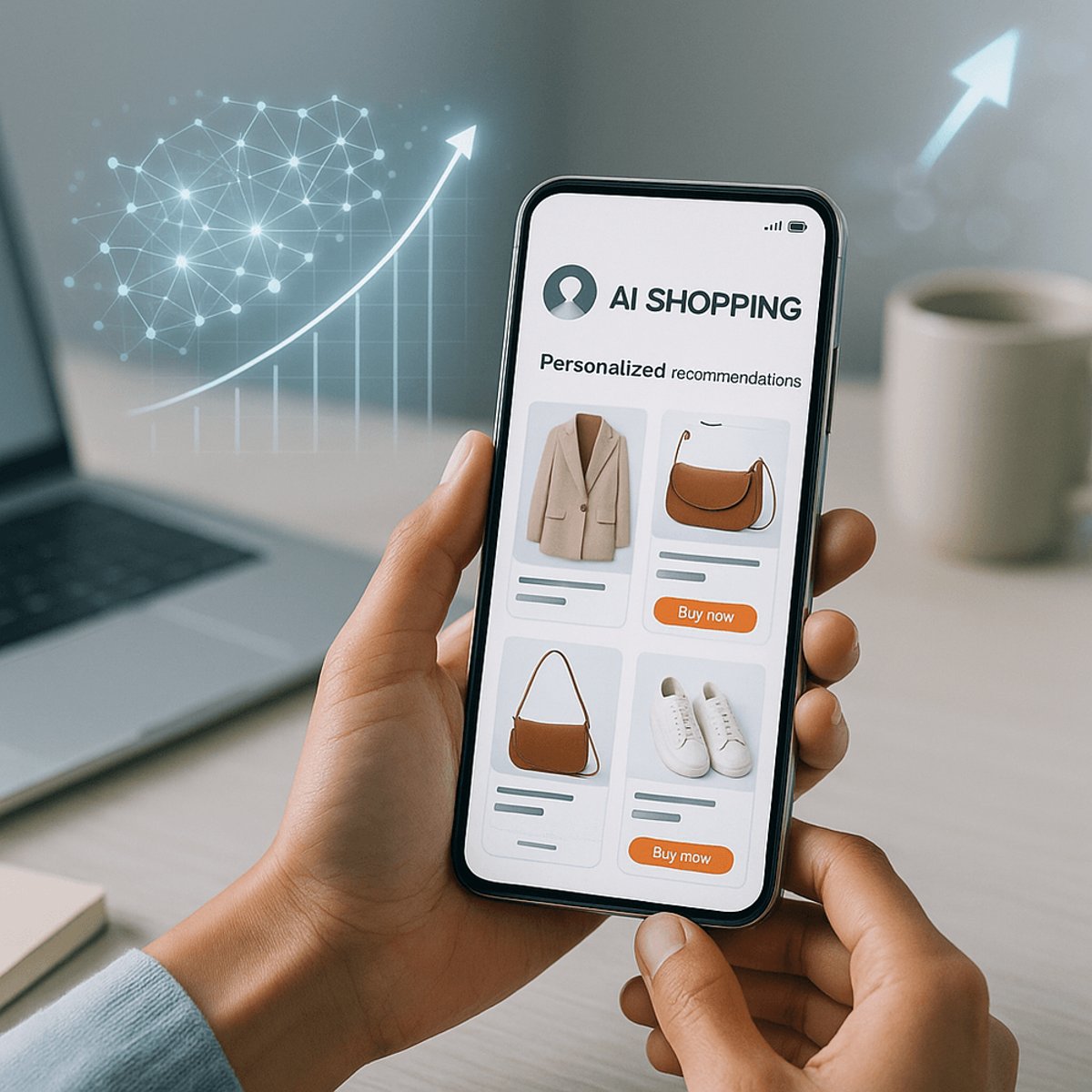
Phia, the AI shopping startup founded by Stanford roommates Phoebe Gates and Sophia Kianni, just closed a $35 million Series A led by Notable Capital with participation from Khosla Ventures and returning investor Kleiner Perkins. The ten-month-old company has already achieved 11x revenue growth and secured 6,200 retail partners while attracting hundreds of thousands of monthly active users. For context, this comes just three months after Phia raised $8 million from celebrity investors including Kris Jenner and Sheryl Sandberg, signaling fierce investor appetite for AI-powered commerce platforms.
Phia isn't letting a New York snowstorm slow its momentum. While founders Phoebe Gates and Sophia Kianni sheltered at home during this week's blizzard, their startup just announced a $35 million Series A that validates an ambitious bet: AI can actually make online shopping fun again.
The round, led by Notable Capital with participation from Khosla Ventures and returning investor Kleiner Perkins, comes just three months after Phia secured $8 million from a roster of celebrity backers. That's the kind of fundraising velocity that turns heads in venture circles, especially for a company that's only ten months old.
"We are just at such a prime time of opportunity," Gates told TechCrunch in an exclusive interview. "Commerce itself for the consumer hasn't really been adapted in the last 30 years, and the opportunity to make a truly personalized, end-to-end shopping experience is today."
The numbers back up that confidence. Phia has logged 11x revenue growth since launch and onboarded 6,200 retail partners while building a user base that now spans hundreds of thousands of monthly actives. Those aren't vanity metrics - they represent real traction in a notoriously difficult market where AI shopping assistants have promised transformation for years but rarely delivered.
Right now, Phia operates as both a mobile app and browser extension that surfaces smarter buying options. Looking at a $200 Anthropologie dress? Phia might show you the same item on Poshmark for $80. It's a sustainability play wrapped in savings - Kianni is a climate activist and former UN advisor - but the founders are pragmatic about what drives adoption.
"A lot of brand partners were very much taking a bet on us and joining the platform when we had less proof points," Kianni explained. Now armed with performance data, Phia can promise retail partners a 15% lift in average order value, 30% stronger new customer acquisition, and 50% lower return rates. The company earns its cut through an affiliate model when shoppers buy through the platform.
That founder-led growth engine is hard to replicate. Gates and Kianni have built a combined 2 million followers across social platforms, including their podcast "The Burnouts" where they've interviewed everyone from longevity entrepreneur Bryan Johnson to Paris Hilton. It's the kind of authentic reach that makes customer acquisition costs look almost quaint.
But the real ambition goes way beyond deal-finding. Gates envisions what she calls a "holistic shopping agent" - think less coupon clipper, more AI stylist that knows your closet, your sizes, and your taste. "Gone are the days where you would go to a static HTML page that's not personalized for you," she said.
That vision requires serious engineering firepower, which is exactly where this $35 million is headed. "Our number one goal was always bringing the top engineering talent specifically into our company," Kianni said. The current team of about twenty employees works out of Phia's New York office, and Kianni is blunt about the hiring strategy: "It's not even about team size anymore. It's just about the quality of the talent you're attracting."
They're going to need that talent to navigate some tricky territory. Last November, Fortune reported that cybersecurity researchers discovered Phia's browser extension was capturing HTML code from websites users visited - essentially logging browser history. The company quickly removed the feature and insisted in a statement that it "never in the past, or at present, stored this data."
Kianni pushed back on privacy concerns. "We always are extremely transparent with users about the reasons why we are requesting certain permissions, and everything is displayed very clearly up front," she told TechCrunch. "All data is aggregated, anonymous, and only used for the purpose of being able to help users find the best products as efficiently as possible."
It's the kind of growing pain that could either become a cautionary tale or a footnote, depending on how Phia handles data collection as it scales. The startup is betting big that consumers will trade some privacy for genuinely useful personalization - a gamble that's worked for recommendation engines elsewhere but remains contentious in e-commerce.
The competitive landscape is getting crowded fast. Google has been testing AI shopping features in Search, Amazon is weaving AI recommendations deeper into its platform, and a wave of AI commerce startups are chasing similar visions. Phia's edge might be its founder-market fit - Gates and Kianni are building for themselves and their Gen Z cohort, the generation that's most comfortable letting AI make suggestions.
"I think that's where AI agents play a huge role," Kianni said. "All this cumbersome, manual work really can become compressed and be able to get you to the shortest path possible to the perfect item."
"We're on the cusp of a completely new way of shopping," Gates added. "We want to make the entire ecosystem just way more efficient and make shopping fun again."
With Notable Capital now in their corner - the firm has backed breakouts like Notion and Airtable - and a war chest to attract top machine learning engineers, Phia has the resources to test whether personalized AI shopping is the future or just the latest overhyped promise. The next twelve months will tell us whether this Stanford dorm room idea can actually reinvent how millions of people shop online.
Phia's rapid fundraising momentum and early traction numbers suggest investors believe AI-powered commerce is finally ready for primetime. But the real test isn't whether Gates and Kianni can raise money or build a following - it's whether they can deliver on the promise of genuinely useful personalization without creeping users out. The startup has the capital, the team-building runway, and the founder-market fit to take a serious run at reinventing online shopping. Now they just need to execute while navigating privacy concerns, intense competition from tech giants, and the challenge of building machine learning systems that actually understand what people want before they know it themselves. If they pull it off, this could be remembered as the moment shopping finally got smart. If they don't, it'll be another cautionary tale about AI hype outpacing reality.