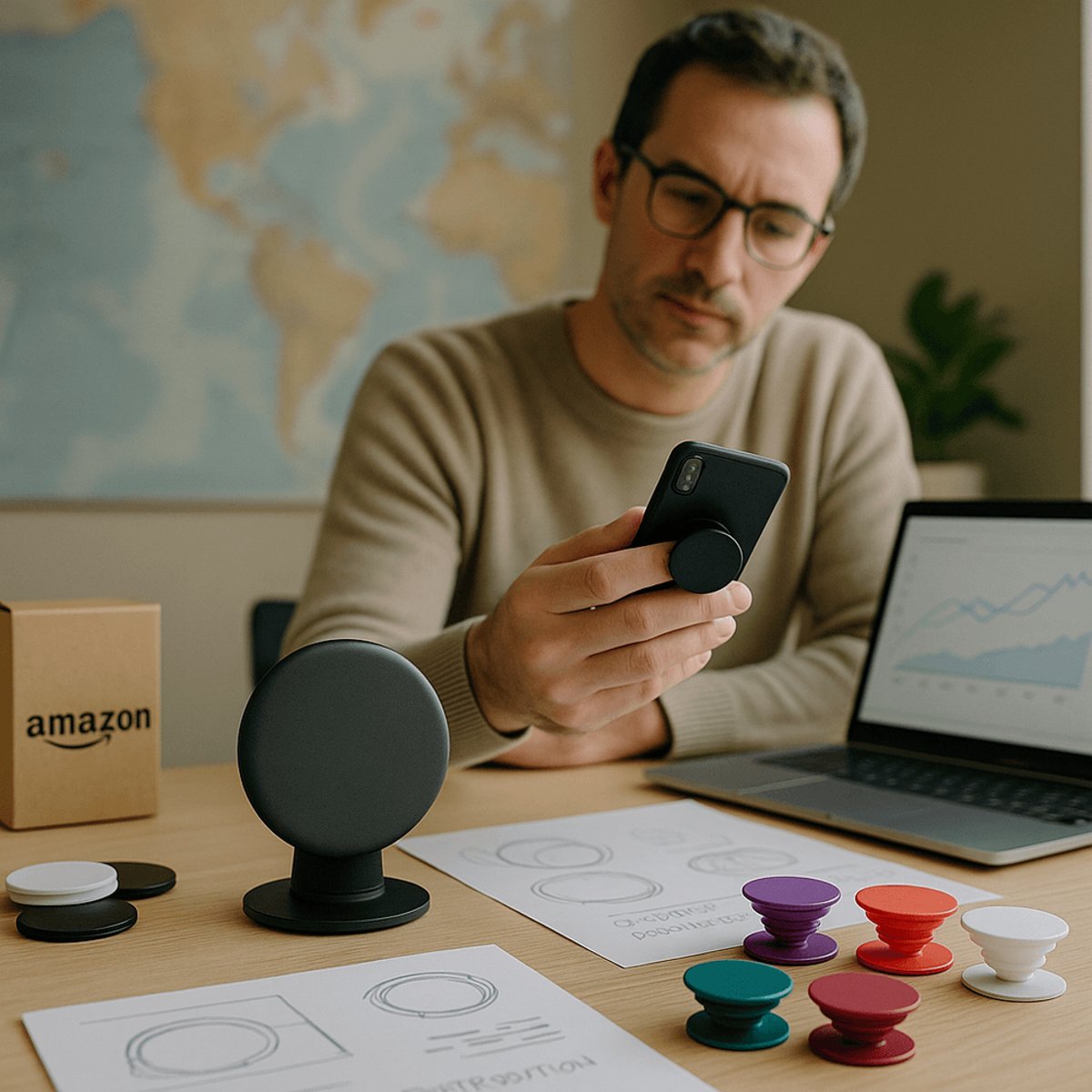
PopSockets just rewrote the playbook for consumer hardware startups. While Silicon Valley preaches the gospel of venture capital, the phone grip empire quietly moved 290 million units across 115 countries without taking a dime from institutional investors. The company's founder, a philosophy professor who pivoted from academia after his house burned down, built the global brand on less than $500,000—insurance money and sheer determination. It's a counternarrative the startup world desperately needs right now.
The story starts with a house fire and ends with one of the most unlikely success stories in consumer hardware. PopSockets, the collapsible phone grip that became a cultural phenomenon, has moved 290 million units worldwide without following the traditional venture capital playbook. In an industry where founders routinely hand over massive equity stakes for growth capital, PopSockets' former CEO kept control while building a business that redefined what's possible outside the VC ecosystem.
The numbers tell a remarkable story. Less than $500,000 in initial capital—much of it from insurance payouts after the founder's house burned down—launched a brand now present in 115 countries. According to TechCrunch, the company achieved this over eleven years without institutional investors, a timeline that would make most hardware entrepreneurs reach for their pitch decks.
What makes PopSockets particularly fascinating is who built it. A philosophy professor—not a Stanford dropout or ex-Google engineer—saw an opportunity in the simple problem of tangled headphone cords. That academic background shaped an unconventional approach to business building, one that prioritized sustainable growth over blitzscaling. While competitors burned through millions in funding rounds, PopSockets focused on unit economics and organic expansion.
The manufacturing challenge alone typically drives hardware startups straight to venture capitalists. Tooling costs, minimum order quantities, and inventory risk have killed countless bootstrapped hardware ventures. PopSockets somehow navigated this minefield while maintaining profitability. The company figured out how to scale production without the safety net of Series A capital, a feat that contradicts every piece of conventional wisdom about hardware startups.
Retail distribution presented another hurdle. Breaking into major retailers like Amazon usually requires the kind of marketing budgets that only venture backing can provide. PopSockets cracked this code differently, building viral momentum through word-of-mouth and strategic partnerships. The grips became ubiquitous without the multimillion-dollar ad campaigns that typically accompany consumer hardware launches.
Patent protection added another layer of complexity. Hardware companies face constant threats from copycats, especially once a product gains traction. Defending intellectual property requires legal resources most bootstrapped companies can't afford. PopSockets managed to protect its design and market position while competitors flooded Amazon with knockoffs, a testament to strategic legal maneuvering on a startup budget.
The broader implications challenge startup orthodance. Silicon Valley has spent years pushing the narrative that hardware requires massive capital infusions to succeed. Sand Hill Road VCs argue that only institutional funding can support the supply chain complexity, inventory costs, and marketing spend that hardware demands. PopSockets' trajectory suggests that narrative serves investors more than founders.
Timing played a role too. The company rode the smartphone accessory wave at exactly the right moment, when consumers were hungry for personalization options. But thousands of other phone accessory companies launched during the same period with venture backing and failed spectacularly. Capital alone doesn't guarantee success—execution matters more than cap tables.
The founder's decision to step down as CEO while the company thrived signals another divergence from startup norms. Most founders who bootstrap refuse to relinquish control, having fought so hard to maintain it. PopSockets' leadership transition suggests a maturity that prioritizes company longevity over founder ego, another lesson lost in the founder-worship culture of venture-backed startups.
For hardware entrepreneurs watching from the sidelines, PopSockets offers a roadmap few thought possible. The company proved you can negotiate with manufacturers, crack retail distribution, defend patents, and scale globally without surrendering equity to institutions. It won't work for every product category—semiconductors and electric vehicles still require enormous capital—but the phone grip empire just expanded the universe of what's possible on a shoestring budget.
PopSockets didn't just build a successful consumer hardware company—it demolished the myth that venture capital is the only path to scale. The company's 290 million units sold and presence in 115 countries prove that careful execution, sustainable growth, and founder determination can compete with VC-fueled competitors. For an industry obsessed with unicorn valuations and growth-at-all-costs, PopSockets offers something more valuable: a viable alternative. The question now is whether other hardware entrepreneurs will take the hint, or if the siren song of easy capital will continue drowning out the bootstrapper's path.