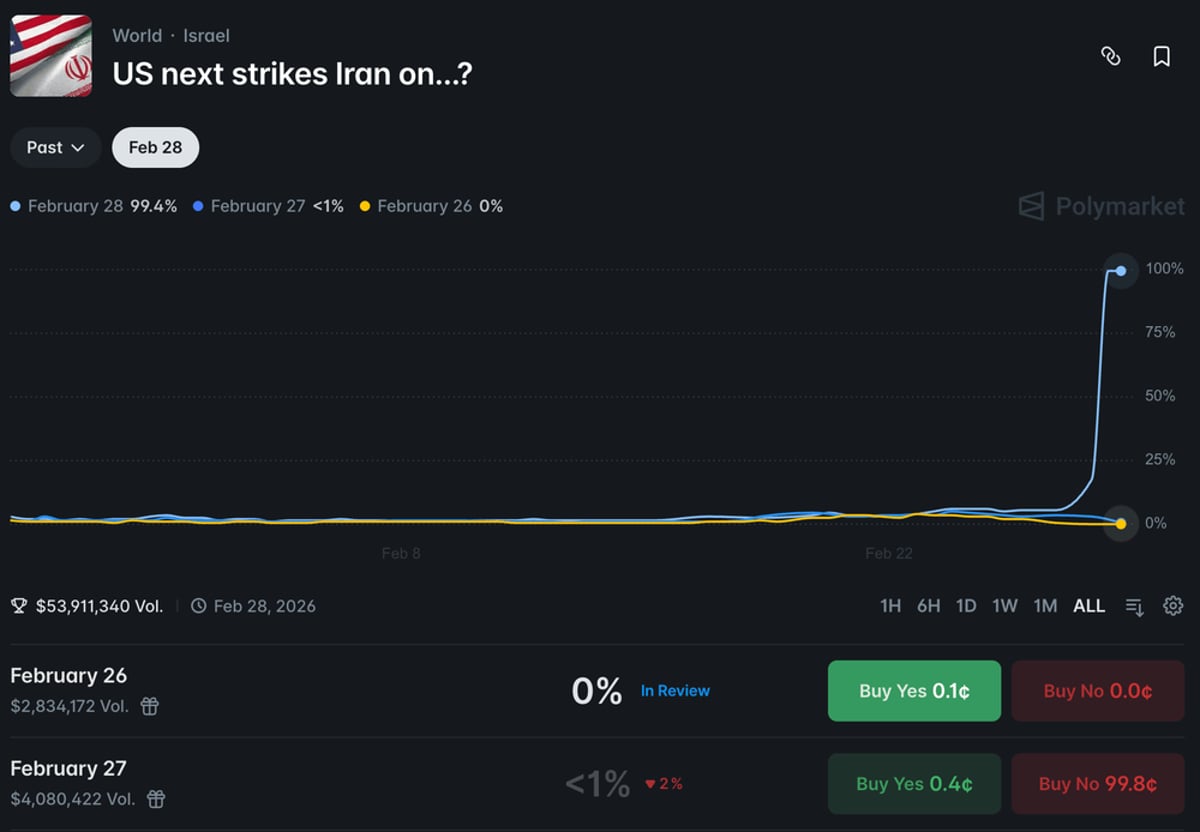
Polymarket is doubling down on its controversial decision to let users bet on military strikes. The crypto prediction market faces mounting criticism after the US launched attacks on Iran, turning what was speculation into deadly reality for some users who wagered on the timing of conflict. In a defiant statement, the platform defended its war betting markets as an "invaluable" news source while taking shots at traditional media and X, adding fuel to an already heated debate about the ethics of profiting from geopolitical violence.
Polymarket just made its most controversial bet yet - defending the right to wager on war. The crypto-based prediction market is pushing back hard against criticism after hosting markets where users bet on when the US would strike Iran next. Now that those strikes have actually happened and people have died, the platform's facing serious heat.
In a statement that reads more like a manifesto than damage control, Polymarket called its war betting markets "invaluable" before pivoting to attack traditional media outlets and Elon Musk's X. The platform's tone-deaf defense comes at a moment when users literally cashed out on correctly predicting military action that resulted in casualties.
This isn't Polymarket's first rodeo with controversy. The platform has been under scrutiny for suspected insider trading on seemingly innocuous events. Someone suspiciously nailed their bets on the Super Bowl halftime show, raising eyebrows about whether performers or their teams might have leaked information. Then there was the Venezuelan President Nicolás Maduro capture situation, where someone made a killing betting on geopolitical events with potentially life-or-death stakes.
But betting on war escalates things to an entirely different level. The US strikes on Iran market allowed users to speculate on the precise timing of military action. For winners, the result meant profit. For people on the ground in conflict zones, it meant something far more serious. The optics are, to put it mildly, terrible.
Polymarket's defense hinges on positioning itself as a superior information source compared to traditional news outlets. The platform has been pushing this narrative hard, even sponsoring journalism to legitimize prediction markets as news tools. The argument goes like this: when people put money on the line, they're incentivized to gather the best information possible, creating a kind of crowdsourced intelligence that beats punditry.
There's some truth to that theory. Prediction markets have occasionally outperformed polls and expert forecasts on elections and other events. But critics argue there's a massive difference between betting on election outcomes and profiting from warfare. One deals with democratic processes, the other with human casualties.
The timing couldn't be worse for the prediction market industry. Polymarket and competitors like Kalshi have been fighting for mainstream acceptance and regulatory legitimacy. They've positioned themselves as the future of information aggregation, arguing that financial incentives produce better forecasts than traditional analysis. War betting threatens to undermine that entire pitch.
The platform's swipe at traditional media and X suggests Polymarket sees itself as under siege from established information gatekeepers. But the criticism isn't just coming from legacy outlets or social media platforms - it's coming from users, ethicists, and observers who question whether everything should be a betting market.
This controversy also highlights the broader tension in crypto and prediction markets between radical transparency and basic human decency. The blockchain world often celebrates the idea that everything can and should be tokenized, financialized, and put on-chain. But war betting tests the limits of that philosophy in the starkest possible terms.
Polymarket operates in a regulatory gray area. The platform technically doesn't serve US users directly, though Americans have found ways to access it. That offshore status gives Polymarket freedom to host markets that would likely face immediate shutdown in regulated jurisdictions. It's the same playbook that crypto exchanges used for years - operate outside US jurisdiction while serving a global audience that includes Americans willing to use VPNs.
The platform's defiant stance suggests it has no plans to back down or remove war-related markets. Instead, Polymarket appears to be betting (fittingly) that it can weather the criticism and emerge as a battle-tested platform that refuses to bow to pressure. Whether that calculus pays off depends largely on how regulators, users, and the broader public respond.
What's clear is that this won't be the last time prediction markets face ethical scrutiny. As these platforms grow and expand into more markets, they'll continue pushing boundaries around what's acceptable to bet on. Polymarket's war betting defense may be remembered as either a principled stand for information freedom or a cautionary tale about the dangers of financializing everything.
Polymarket's war betting controversy marks a turning point for prediction markets trying to gain mainstream legitimacy. The platform's aggressive defense and refusal to back down signals a fundamental clash between the crypto world's 'financialize everything' ethos and traditional ethical boundaries around profiting from violence. As regulators and the public wrestle with where to draw lines, this incident will likely shape how prediction markets evolve - or whether they face regulatory crackdowns that limit their scope. For now, Polymarket is betting it can weather the storm, but the stakes extend far beyond one platform's reputation.